
cultural safety + being a white-male minority
The idea of “cultural safety” came up in class today, and it came to mind that even as an ostensible majority (white, male, educated, Western, relatively affluent) I often don’t feel culturally safe in a lot of social and professional settings because of my divergent, alternative and marginal(ised) spiritual values and beliefs.
It feels like a weird thing to say, that I feel marginalised or like a minority, considering that in many ways (white, male, educated, Western, relatively affluent) I am a majority. But what even is a majority these days anyway? When I fill in forms lately I’ve been listing my cultural background as “marginalised alternative”.
fauxpi prophecy of the rainbow warriors
I say fauxpi because apparently the prophecy of the rainbow warrior was appropriated by “hippies” from a Christian tract and attributed to the Hopi people.
Seeing a fauxpi prophecy about how the warriors of the rainbow would emerge to transform a ravaged earth, I was reminded that a much-bigger scale exists outside my puny concerns.
I’m not terribly interested in whether the alleged prophecy is “fakelore” or not, because it’s enough to be reminded that traditional societies had a much bigger vision of where we fit among the scheme of things.
I saw the prophecy after I’d been talking to Nikki at length about how I’m not doing well enough as a stepfather, and during all that talk I had remembered at least that I’m not the cause of or the solution for all of my stepson’s problems. A much-bigger scale exists outside my puny concerns, and in some way it’s borderline hubristic to think that my influence could make or break his future. There are many factors, outside me and/or my control that are causing Zane’s so-called problems.
Proverbs … because I kept hand-writing “prophecy” as proverbs, which fits better anyway, I think … And proverbs like the faux-Hopi one suggest a cosmology that reminds me it’s quite arrogant to think I could be the difference between Zane doing well or not.
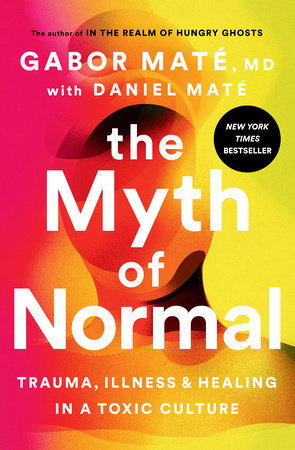
There’s a much-bigger cultural momentum at the heart of these problems, as Gabor Maté identifies in The Myth of Normal, and the challenge of the rainbow warrior is to make change at a cultural level, not just at the family level.
I believe that is already happening. We are seeing more-awakened humans emerging to restore the ravaged Earth.
The prophecy might be spurious, but that doesn’t matter to me. The present is what matters, and I see change happening in the present ~ in myself, and in others around me. The hippie movement is alive and well and it’s wearing all sorts of clothes other than bell-bottomed jeans.
Seeing the prophecy recently has emboldened me to take seriously the calling to continue joining and co-creating the community movement to restore ways of being that are harmonious and sustainable.
I don’t know other words to describe it, but the feeling is strong: heal the internal wounds and help others do so to bring about a healthy world and culture; be healthy and happy and lead by example by, e.g., getting off sugar, learning tummo, healing my back pain and experiencing then integrating kensho, and/then help others to realise these ways of being,
as a service to the planet and our shared existence.
This comes off the back of angsting about Zane and reflecting that I can’t help him much but I can help people who are willing to be helped, people who are reaching out, and helping many this way to help the culture has more value than helping one teenager-I-can’t-help just because we happened to become family. The best I can do is continue working on myself so that I am able to be there when he’s ready.
Meanwhile I find it consoling that there is a much-bigger process of evolution I am a part of that transcends the wellness of a single stepson, stepdad and mother. By healing myself and helping to heal others, I serve a much broader cause.
identifying as trans(personal)
Related to the rainbow-warrior subculture and the experience of being “marginalised alternative”, I am starting to realise that I desire belonging among a suitable subculture, tired as I am of just drifting around on the edges of society, trying to be content with not quite fitting anywhere.
A student at TAFE shared their experience of coming out as trans in the Australian culture and how certain attitudes made this confronting for them. Not unusual ~ it’s well-known that coming out is confronting in a culture that has traditionally been quite homo- and trans-phobic.
It just makes me think of and realise that I feel a similar discomfort and don’t have a banner to fly under such as the rainbow flag of the queer community, though I’ve recently identified with the Mad Pride movement. That’s not quite what I’m looking for either because this unites folk under a banner of spiritual emergency (and even of being proudly pathologised) rather than spiritual emergence.
Where is the subculture for people who value the gradual benefits of prioritising transpersonal practices over, say, the gradual benefits of acquiring material wealth?
In that sense I am trans, in the sense I identify as more than just my personal self or ego. The “trans” label is already taken, so I’m not sure where to go from here. I don’t really need a label exactly, except that it might help me find more of my tribe. I think it’s not dissimilar from someone who realies they are neither male nor female and realises they can identify as non-binary. I feel something similar, except I would call it “non-dualist”. Non-dualary?

the destruction of small ideas

A classmate was talking about virtue signalling and how the teacher shouldn’t be politicising the classroom by subtly (and not so subtly) advocating that we all vote YES in the Voice referendum. I get it, there should be a separation between politics and education, the same as between church, state and the press, and I value that this classmate brings a self-identified “conservative” perspective because I value having my biases challenged.
Somehow though, we got on the topic of … wait, how did we get there … that’s right, this classmate had been triggered (their word) when other classmates that morning had said Australia is a racist country. This classmate believes Australia is much-less racist than it was, and I agreed ~ I said though, among your everyday people there is much less racism and yet, institutional and systemic racism persists:
First Nations people are marginalised, more incarcerated, have less access to opportunity because of systemic racism, that is undeniable.
Institutions and government departments take generations to catch up with the popular view.
He asked me, “What institutions and departments need to catch up?” and I sensed at this point that I was no longer in a conversation or reasoned debate, and was now embroiled in highly emotional polemic.
I said, “I don’t know,” which seemed to signal an opening to that I deserved to be torn down for my ignorance.
They said, “If they’re marginalised it’s because of alcohol.”
Starting to back away, I said, “What do you mean?”
They told me that when the conservative government took away cash from communities and they couldn’t buy alcohol, things improved. When the Labor government came in and revoked that because they are “do-gooders”, things went to shit again.
I asked, “Do you think we should deprive them of their right to choose and their right to dignity of risk by denying them cash?”
“If they were able to make informed choices we wouldn’t need to do that.”
“Wouldn’t it be better then, to provide education instead of revoking their freedoms?”
At which point, they said, “Yeah but hey, would you let a 4 year old play in the street?”
I said, “Okay, I’m going to call it because I need to go to the toilet and have lunch anyway, and these kinds of views make me deeply uncomfortable.”
By this point I’ve been feeling triggered myself for a while because blaming First Nations marginalisation on alcoholism was staggering enough, so I don’t remember exactly the defense they uttered, but as I walked away, I said, “I’m going to leave you with it to think about whether that’s appropriate.”
I find it unfathomable that a twenty-first century adult could so flippantly infantalise a whole demographic of humans. I find it unfathomable that seventeenth-century adults were able to do this without feeling appalled. But this person, when I told them I was struggling to know what to do about my stepson’s drug addiction, told me I should storm into his room and dump all of his shit onto the footpath if I didn’t want drugs in the house.
I don’t know if I’m some kind of virtue-signalling pinko-lefty bleeding-heart liberal, but I prefer to identify as a budding transpersonal psychotherapist. I had already seen some belligerence and bigotry in their way of presenting their views, so I’m not surprised it has come to this. I’m just glad it wasn’t my sarcasm that caused the problem, as I had been worried about.
the Buddhist path of recovery from addiction
Related to the faux-Hopi prophecy about an awakened people emerging to heal the ravaged earth, I was talking to my Zen teacher Arno recently in the car on the way home from the zendo, and a resolution formed (a sankalpa, you could call it): Why not just go for it and develop an addiction-recovery program that is unashamedly based on Buddhism. I confirmed with Arno that the attachment in Buddhism is like addiction, to illusion. I said, “Once we drop that addiction to illusion, aren’t we free?” and Arno agreed.
It’s a natural progression from there that a Buddhist path to recovery from addiction makes a lot of sense as a Heartwards offering.
He said it’s tricky though because the Buddha taught a transpersonal methodology and teaching Buddhism as an addiction-therapy program kind of detracts from that, or sells it short. But Buddhism is both therapeutic and transpersonal: as a person makes progress along the transpersonal path (letting go of their attachment/addiction to an illusory self) they are naturally going to experience therapeutic benefits. And the “therapeutic” practices like self-compassion support/complement the transpersonal progress/development.
As one practices letting go of their addiction to an illusory self, the “lesser” addictions will naturally fall away as well.
The hinaddictions to drugs and sex and whatnot, if the “greater” addiction to the illusory self, is the mahaddiction.
Such a program would be like Cultivating Emotional Balance (CEB), based on Buddhism and other ancient traditional contemplative practices, secularised and supported by neuro(science). Noah Levine is doing something similar already with Refuge Recovery, so there are models around already.
 Kokoro 心 Heart