Blog

literary narrative therapy, a modularity

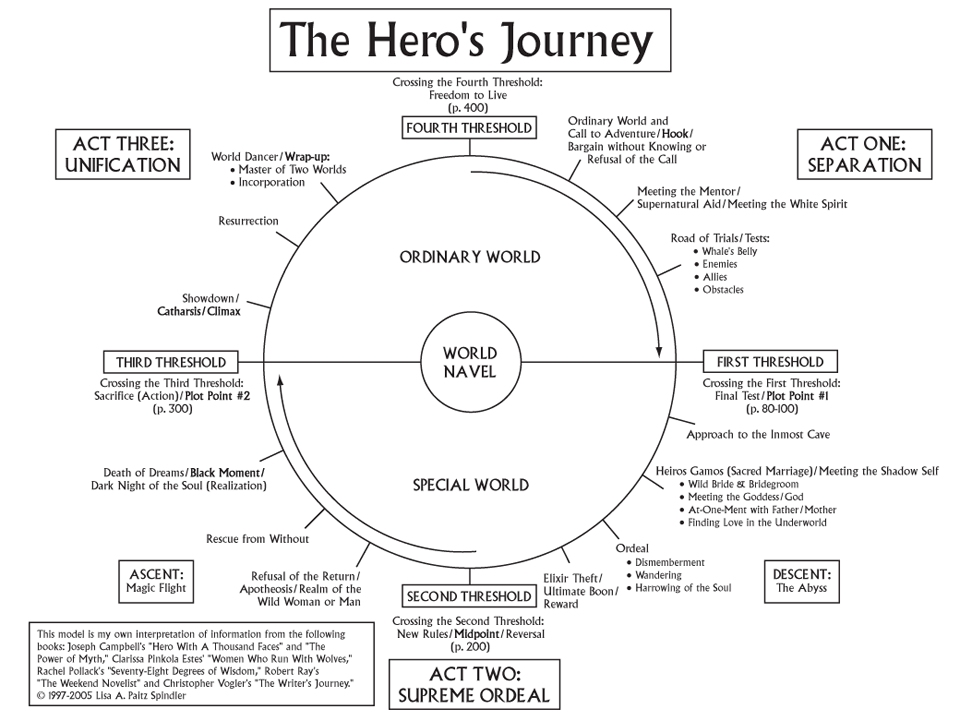
I am developing a psychological healing modality that uses narrative therapy as a way to rewrite the stories we tell ourselves about the past. This is not new — simply my iteration of something others have already been working on. I’m having fun with it. The structure of the program is based on Joseph Campbell’s mythological archeology of the Hero’s Journey, as described in [The Hero with a Thousand Faces].

To call it a modality sounds a bit too much like it’s anything like a comprehensive suite of training and practices that’ll be the cure for what ail’s ya, but of course no single modality is a panacea. They should be called modularities, because each nests with others in a way that is complementary toward some kind of whole. Literary Narrative Therapy (NFT) is being designed as a complement to other modalities in this way.

I’m uploading the documentation as an experiment in something like public-beta testing. I’m really excited about this because it feels bold and vulnerable and open-source to share this process publicly, a work/practice I am developing and exploring myself and for myself, with the intention of sharing the material and process in a more-formal package down the track.

Play with this and think of it like a sandbox. If you want to contribute, leave feedback and get in touch. The Journey is a narrative structure and set of narrative devices we can use to practice rewriting the neural pathways of old beliefs that no longer serve us. Often we feel like victims of our experience – of the things that happen to and around us, of culture and social pressures. Literary narrative therapy can help us to change our self-perspective from one of the Victim to one of the Hero.

The documentation can be downloaded as a PDF if you’d prefer to take these files AFK and play with them in the park, where they might get caught in the breeze and take you to nether regions of the spirit you may never have previously imagined. Here is the Journey Worksheet. Here is a worksheet for Background Reflections / Documentation.

These documents and the process will evolve at the Literary Narrative Therapy page on Kokoro 心 Heart.

starting the fifth chapter of The Fifth Season

Photo by Katriona McCarthy on Unsplash

I have started reading The Fifth Season, as I promised myself I would.

Essun has lost Uche, the man with the stone-eater friend has broken Earth in Yumenes, the floating obelisks have been described, the boy has crawled out of the geode. And I am confused about the chronology of it all, but I’m not terribly worried about that right now.

I am really enjoying it – the language is delicate and beautiful, taking its time to paint the details and create an atmosphere that feels unique. The author has her own voice, and is confident with using it. I like that.

Damaya has been taken from her afraid parents by her Guardian, Syenite has performed her service with the ten-ringer, and Essun has betrayed her identity to the town of Tirimo — first by protecting Uche’s body from the shake, and then by defending herself against the linch mob’s crossbow bolt. Last I heard, at the start of Chapter 5, she was on the run, looking for Jija in the hopes their daughter is still alive.

There has been enough allusion to theme that I feel like I’m getting an edifying read, but not so much that I’m feeling whacked over the head by any kind of moral. I like that too.

I’m expecting this book to be one of those light-reading heavy-lifting metaphors: the subtitle (every age must come to an end) and the epigraph (for all those who have to fight for the respect that everyone else is given without question) suggest themes that I dig.

I know that the status quo of our current “age” cannot last forever, and that in our future there is equality, harmony and sustainability for all, regardless of race, gender, religion, whatever. I know that books such as The Broken Earth trilogy are helping to change the narratives we tell ourselves about what is an acceptable or normal state of affairs.

The caste system has been alluded to, the towns are in lockdown with curfews, the sky smells of sulphur, and the feared and loathed orogenes are being pressed into service of the State. I appreciate that Rask was honourable and empathic enough to jeopardise his political position by helping Essun through the locked gates, and I’m sad that he got caught in the ice. I’m glad that Karra copped it though — his hate-filled reactivity is what got him killed. It’s impressive that Essun was able to sense the aquifer breaking underneath her, and I like how this sets up the reader to observe the domino effect this will have on the town and on The Stillness.

In general I appreciate that Jemisin is confidently revealing such dribs and drabs and trusting the reader can hold all the threads together. I trust her, and am happy to be going along for whatever this ride will bring.

on self-esteem as a precursor for achievement …

… rather than achievement as a prerequisite for self-esteem

Photo by Pawel Czerwinski on Unsplash

I’ve been taking stock today — taking it slow and allowing myself to get back in the groove of being a bit more organised than I have been lately. I’ve been posting a lot more here recently, but a few other things like life-admin and chores have gone by the wayside a bit.

This is okay — I’ve been riding the enthusiasm I feel for this blog and the community we can build here. It’s been making me happy. I will find the balance between running this blog and running the rest of my life, as the pendulum swings to and fro.

When I’m taking stock I like to go through my various browsers, closing tabs I’ve had open for yonks. It helps me feel a bit more organised by cutting out some of the mental noise I feel at some kind of subconscious level when I know I’ve been opening tabs like they’re going out of fashion.

Something I stopped on today was this article about how some overachievers turn to drugs for escape because no achievement is ever sufficiently satisfying. It’s published by an addiction-recovery and mental-health clinic, and covers a lot of ground (in three short sections) about how societal expectations drive a lot of us to be always achieving, never satisfied to just exist and accept ourselves for our inherent worth.

I understand this compulsion intimately, though I’m not sure I had quite made the connection between the constant need for achievement and the temptation of drugs that promise a reprieve from this pressure.

I am pleased to be able to say, though, that since I’ve been working more full-time on Kokoro 心 Heart and the business around it, I can relate more to this statement from the article:

Our attempts to achieve and succeed should have their roots in a healthy, already-existent sense of self-esteem, rather than being motivated by its absence.

I can honestly say that I wake up each morning feeling committed to doing this work that fulfils my purpose. Not because I need to supplement a low self-esteem, but because doing this work feels as natural and necessary as breathing, or making nutritious food, or walking in the bush. It’s an act of self-care, this work, and feels like something I am just meant to do — no one else expects me to do it.

I value the work I am doing here, and I do it because I believe it has worth — I wouldn’t be able to do that without others’ expectations if I didn’t have a higher sense of self-esteem than I had previously recognised.

So that’s a nice thing to have realised, and was well worth taking stock for. I am grateful, and very fortunate.

Check out the article, and let me know what you think. I think it’s essential we question the narratives telling us we need to achieve more — always more, never enough.

What is your enough?

If societal expectations drive a lot of us to be always achieving, never satisfied to just exist and accept ourselves for our inherent worth, but also no achievement is ever sufficiently satisfying, what to do?

books made of human skin

Books made of human skin, Da Vinci’s Codex Leicester selling for US$30,802,500, and Fran Lebowitz being outraged at someone putting a cup down on a book …

The Booksellers, a charming documentary about the endearingly whacko people who trade in rare and iconic books.

We watched it the other night and it was lovely to just wander through these people’s lives, through their enthusiasm for hunting and protecting these books for posterity.

If you’re looking for a light documentary about the simple cultural pleasure of physical books, check out The Booksellers by D W Young.*

*That’s an affiliate link, so if you buy something through that link I’ll get some money for a coffee, at no extra cost to you.

a long-ish review-ish post about The Call by Peadar Ó Guilín

Out with the Bathwater: The psychospiritual perils of displacing a whole people along with their mythological heritage

In this reading of Peadar Ó Guilín’s The Call, I wonder
how Australian perceptions could shift to make room for truth in our history.

That said, disclaimer: I ended up writing more than expected about the parallels between The Call and the black history of Australia. It may need to be stated up front that I am as white as it comes, so I recognise the awkwardness of me speaking about the experience of First Nations people. Their experience is not my story to tell. That said, my experience of Australian culture without the inclusion of First Nations people is something I can speak about. I wish our history hadn’t gone down the way it did, and I live with a longing that our communities were informed by the wisdom of our indigenous elders.

You can download this post as a PDF if that’s how you roll.

Ó Guilín, P. (2017). The Call. David Fickling Books.*

brutal and captivating

Sometimes oppo finds end up being among the best books I’ve read. Mostly not. I was saying to a friend the other day that sourcing your books almost exclusively from op shops is a gamble. Oppo books are, come to think of it, the books that others have discarded. So Nikki and I are thinking of dropping this practice – life is just too short to spend hours over months wading through the dross in the hopes of finding a gem.

We often drop $30 or $40 at the oppo and come home with maybe fifteen books, which sit on the shelf for a long time because we know mostly they are long shots. I’m reading only fifteen or twenty books a year at the moment, so we’re accumulating a lot of books that we may never read if we do this even four or five times a year. And we have plans to live in a bus one day, so gathering books at this rate is just no longer practical.

Continue reading “a long-ish review-ish post about The Call by Peadar Ó Guilín”

my review of The Enlightenment of the Greengage Tree by Shokoofeh Azar

I’ve published my review of The Enlightenment of the Greengage Tree by Shokoofeh Azar.

I’m a huge fan of this book and I recommend it to anyone looking for a literary novel that’s easy to read, but illuminating and enjoyable. It is one of those rare books that yields high value and meaning without being too much like hard work.

The reader can expect a magic-realist dirge about injustice, grief, repressed spirituality, the futility of revenge, and the importance of survivors’ struggle to move forward into life, after death – an engaging contribution to the humanisation of the victims of
large-scale fundamentalist violence.

reaching out ~ what to do with a truant teen

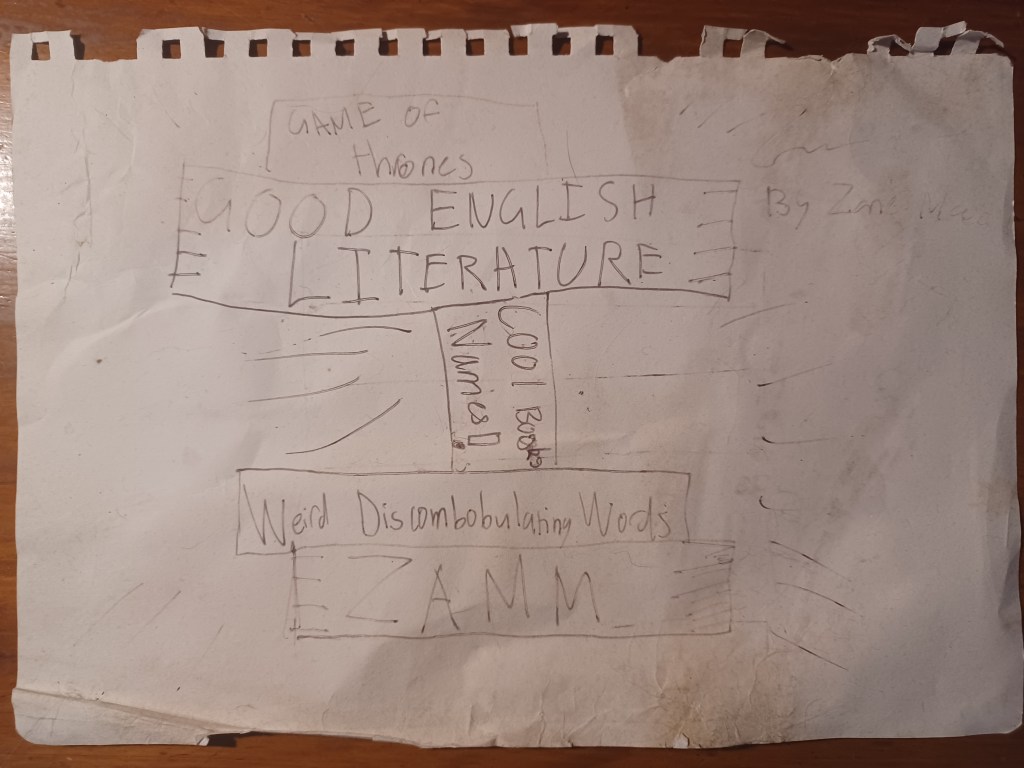
Zane buggered off again today ~ skipped school and bailed on meeting us to drop his uniform to him. We found him, but boy has it brought up a lot of stuff!

My conditioning dictates that I should be angry, but I’m trying to be positive and bring a compassionate perspective.

This is all in the context of me trying to rediscover my place in the dynamics of the family, so I’m feeling very unsure about what my part should be in responding to this truancy again.

I’m a step-dad who has minimal-to-no relationship with Zane, and therefore limited agency for either discipline or influence. The only part I know is supporting Nikki, but she insisted I stay at the library while she drove around looking for him.

At least if I’m not there for the potential confrontation when Zane decides to show up and face the consequences of breaking our trust again, maybe I’ll have the chance to calm down a bit and play the part of compassionate supporter ~ I do want to understand why he’s making these decisions, but in which parallel universe is a 13-year-old boy going to share this with his step-dad?

In which parallel universe does a 13-year-old boy know himself why he behaves one way or another?

We need the skills of introspection and emotional intelligence to know the nuances of our internal motivations ~ skills that are not taught in our sausage-factory schools.

This gap in our education culture is a huge part of why I’m doing Kokoro 心 Heart: we need to learn how to manage our own psychospiritual wellbeing enough to stop perpetuating a culture that results in 13-year-old kids wagging class to smoke bongs down the creek. (That’s just one specific symptom of the cultural malaise I hope to address in the posts here and in the work I’m doing in the business around Kokoro 心 Heart.)

I spent my whole high-school career smoking bongs down the creek, and my decades-long drug and alcohol dependency left me in my late 20s with the emotional development of the teenager I was when I started using drugs, because I didn’t have the mentors to help me learn how to deal with my emotions any other way.

We are letting down our children and our future by allowing these gaps to remain in the upbringing of the emerging generations.

Nikki and I are doing all that we can to access services that will make up for the deficits in our own and Zane’s development.

If you’re going through or have been through this, let me know in the comments. We need all the guidance we can get, lest our son become like Trent from Punchy.

~ ~ ~

For more post updates, find me on Twitter, on WordPress at the follow link below, or sign up for my little mailing-list newsletter here. I’m also on LinkedIn and Unifyd.

the importance of connection in parenting

connection in parenting — obviously important, difficult to achieve

We spoke to a parenting coach today through an organisation called ReachOut, and it was very helpful — she validated and confirmed a lot of what we’ve been learning about some changes we’d like to make in our approach to parenting, as well as gently challenging some of those ideas.

For example, I had started to understand and experiment with using “I” statements if I want to intervene with Zane’s behaviour. Say, “I don’t like it when you swing the cat by her tail,” instead of “Don’t do that!” This is more of a boundary statement than a disciplinary action or a criticism.

We were advised recently by our counsellor that discipline is not my role: I am not his bio-father, Zane is therefore not individuating from me but from Nikki, his bio-mother; and my attempts at discipline without much of a relationship through other interactions were mostly just contributing to conflict.

The coach agreed that using “I” statements is a healthy way to assert a boundary without crossing … well, the boundary between discipline and boundary-setting. But after talking about where my relationship is at with Zane, the coach encouraged me to pull back even from making “I” statements at this stage, until Zane and I have got our relationship into a condition where boundaries will be respected.

Continue reading “the importance of connection in parenting”