I just realised that being politically conservative might actually be a prolonged trauma response, and maybe that being politically progressive is too. A person’s whole political worldview might be determined in the period of our childhood prior to the emergence of conscious awareness, and during other traumatic experiences later in life. Just like any other coping mechanism that may or may not be maladaptive.
Therefore, helping people recover from trauma becomes political activism by helping people become less extremist on the dualist political spectrum.
the construction of happiness
Happiness does not come automatically. It is not a gift that good fortune bestows upon us and a reversal of fortune takes back. It depends on us alone. One does not become happy overnight, but with patient labour, day after day. Happiness is constructed, and that requires effort and time. In order to become happy, we have to learn how to change ourselves.
Luca and Francesco Cavalli-Sforza
achievement + self-worth
There is a balance to be struck between achieving to gain a sense of self-worth and achieving from a place of already existing self-worth: our worth is inherent because we have buddha-nature and is therefore not dependent upon achievement, but we also need to achieve to put our worth to good use.
The same as we practise radical acceptance of things at the same time as exerting influence to make change as long as we are not attached to outcomes, so we can make effort to accomplish achievements and try to remain mindful that our happiness doesn’t become attached to the outcome (the achievement).
But if we rely on achievement to be happy we will always want more achievement even after we have achieved: it is not a source of lasting satisfaction. Contact with our sense of inner worth is the only lasting source of genuine satisfaction.
holistic mindset approach
To change our mindset we need to do more than just cognitive affirmations. We need to work on the subconscious level as well, and on an embodied level, if only because neural pathways are a physical part of our body that’s as relevant as the cognitive parts of our mind.
I generally think of how equanimity will help me be graceful among suffering or misfortune that is not my fault ~ a sort of forbearance that’s easy to imagine compared to equanimity among suffering I perceive to be caused by my own mistakes and inadequacies, if I think I’ve done something wrong or fallen short, such as feeling insecure as a parent. But these are the times we need equanimity the most, when we are the most hard on ourselves.
#
I wish I had a healthier relationship with anger. I wish we all did and our culture wasn’t so anger-averse. It is on the one hand celebrated (in movies and the aggrandisment of war) and on the other hand repressed (in our children). That’s a mixed message!
I lost my temper recently, yelled at my stepson for abusing his mother while she was trying to help him, threw a tube of hydrolytes across the room, slammed a few doors.
Nothing major ~ and it’s normal, you might say: teenagers are impossible and their moods and bullshit are acutely triggering. Maybe so, but is it normal for a situation like this to cause such an acute sense of shame and self-loathing and a powerful flight response in the form of suicidal ideation!? I guess nervous-system dysregulation is the new normal.
I need this to change. Nervous system balance and emotional fluidity needs to be the new black. Trauma-informed, transpersonal and holistic self-recovery from the damage we’ve done to ourselves and others with our moralistic view of the human-emotion spectrum: anger is bad; joy is good; surprise is neutral until cognitions force our reaction into duality.
Emotions evolved to keep us safe by motivating us to act without needing to rationalise. The social disgust that became anger this morning has a healthy evolutionary and social function if we can just let it be without casting judgement upon it.
I was talking to Nikki about the acute cognitive distortions I experience when I’m triggered about my capacity to be a good dad, which I wrote about recently. My wounded parts tell me I can’t participate in the family anymore because I need to keep my distance for the sake of harm-minimisation. If I lose my temper, I might cause trauma.
Between my own trauma and the toxic culture pitted against parents, I don’t feel I can do any good (certainly not with the perfectionism my personality subconsciously demands) and the result is that I just want to opt out or tap out. I don’t want to do it anymore. I’m not being a good dad anyway. I have so little to do with Zane, am I being a dad at all?
I did manage to call myself out on that language, remembering that I am being the only dad I know how to be, and that has to be good enough because I didn’t have a good model to start with.
And there would be some neuroscientific understanding about what my upbringing did to the development of my brain that has left me deficient in chemical pathways or something. Here I am trying to live values such as kindness and compassion
when perhaps my brain doesn’t actually know the pathway or the pathway may never have been laid down. I’m talking about how certain experiences in childhood leave a person with the right brain-plumbing. I may be fighting to cognitively apply values my brain physiology literally does not recognise.
When I was still triggered, Nikki tried to suggest a way things could be done differently next time and pointed out connection before correction. I could not entertain a way I would do things differently next time,
and the suggestion is predicated on the assumption I am capable of making connection in the first place. If I am not capable of maintaining that connection, I also lose capacity to assert boundaries and this leads to major anger-spectrum stuff.
I don’t know how to do connection safely in the context of the trauma I live with ~ I am afraid of rejection, so I don’t take the risk. And I find so many things triggering about Zane, I guess because of repressed shadow and disconnection from self.
My desire to flee from the family and no longer participate as a father may be a flee response and/or it may be a reasonable and logical conclusion of me being neither fit nor willing. It’s hard to tell among whirling thoughts.
I never wanted to have kids and there was a reason for that. Now I’m a stepdad and it simply may not be a good idea. I don’t believe in nuclear families anyway. The pressure between trauma and a toxic culture makes it extremely difficult to parent well. I have other things I could do well if I weren’t trying to live up to an illusory idea and paly roles I may not want to play and which don’t meet the other’s needs anyway.
I catch myself again, and remember we are progressive adults and can imagine new dynamics ~ we don’t need to play by the rules of a culture that has fucked us up, and in fact doing so would be cruel insanity.
The only way to respond to these kinds of cognitive distortions is by prioritising self-compassion. The same approach I was moving toward anyway: privacy, solitude, time alone to make connection with self; cultivating the heart qualities and dropping the identification with roles like ‘parent’ and ‘husband’; authenticity though it jeopardises attachment.
I would rather have the authenticity from connection with self than any attachment relationship that requires the sacrifice of authenticity.
The idea of “cultural safety” came up in class today, and it came to mind that even as an ostensible majority (white, male, educated, Western, relatively affluent) I often don’t feel culturally safe in a lot of social and professional settings because of my divergent, alternative and marginal(ised) spiritual values and beliefs.
It feels like a weird thing to say, that I feel marginalised or like a minority, considering that in many ways (white, male, educated, Western, relatively affluent) I am a majority. But what even is a majority these days anyway? When I fill in forms lately I’ve been listing my cultural background as “marginalised alternative”.
fauxpi prophecy of the rainbow warriors
I say fauxpi because apparently the prophecy of the rainbow warrior was appropriated by “hippies” from a Christian tract and attributed to the Hopi people.
Seeing a fauxpi prophecy about how the warriors of the rainbow would emerge to transform a ravaged earth, I was reminded that a much-bigger scale exists outside my puny concerns.
I’m not terribly interested in whether the alleged prophecy is “fakelore” or not, because it’s enough to be reminded that traditional societies had a much bigger vision of where we fit among the scheme of things.
I saw the prophecy after I’d been talking to Nikki at length about how I’m not doing well enough as a stepfather, and during all that talk I had remembered at least that I’m not the cause of or the solution for all of my stepson’s problems. A much-bigger scale exists outside my puny concerns, and in some way it’s borderline hubristic to think that my influence could make or break his future. There are many factors, outside me and/or my control that are causing Zane’s so-called problems.
Proverbs … because I kept hand-writing “prophecy” as proverbs, which fits better anyway, I think … And proverbs like the faux-Hopi one suggest a cosmology that reminds me it’s quite arrogant to think I could be the difference between Zane doing well or not.
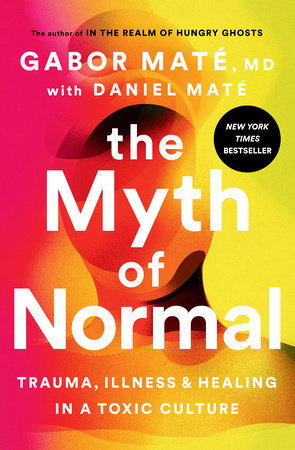
There’s a much-bigger cultural momentum at the heart of these problems, as Gabor Maté identifies in The Myth of Normal, and the challenge of the rainbow warrior is to make change at a cultural level, not just at the family level.
I believe that is already happening. We are seeing more-awakened humans emerging to restore the ravaged Earth.
The prophecy might be spurious, but that doesn’t matter to me. The present is what matters, and I see change happening in the present ~ in myself, and in others around me. The hippie movement is alive and well and it’s wearing all sorts of clothes other than bell-bottomed jeans.
Seeing the prophecy recently has emboldened me to take seriously the calling to continue joining and co-creating the community movement to restore ways of being that are harmonious and sustainable.
I don’t know other words to describe it, but the feeling is strong: heal the internal wounds and help others do so to bring about a healthy world and culture; be healthy and happy and lead by example by, e.g., getting off sugar, learning tummo, healing my back pain and experiencing then integrating kensho, and/then help others to realise these ways of being,
as a service to the planet and our shared existence.
This comes off the back of angsting about Zane and reflecting that I can’t help him much but I can help people who are willing to be helped, people who are reaching out, and helping many this way to help the culture has more value than helping one teenager-I-can’t-help just because we happened to become family. The best I can do is continue working on myself so that I am able to be there when he’s ready.
Meanwhile I find it consoling that there is a much-bigger process of evolution I am a part of that transcends the wellness of a single stepson, stepdad and mother. By healing myself and helping to heal others, I serve a much broader cause.
identifying as trans(personal)
Related to the rainbow-warrior subculture and the experience of being “marginalised alternative”, I am starting to realise that I desire belonging among a suitable subculture, tired as I am of just drifting around on the edges of society, trying to be content with not quite fitting anywhere.
A student at TAFE shared their experience of coming out as trans in the Australian culture and how certain attitudes made this confronting for them. Not unusual ~ it’s well-known that coming out is confronting in a culture that has traditionally been quite homo- and trans-phobic.
It just makes me think of and realise that I feel a similar discomfort and don’t have a banner to fly under such as the rainbow flag of the queer community, though I’ve recently identified with the Mad Pride movement. That’s not quite what I’m looking for either because this unites folk under a banner of spiritual emergency (and even of being proudly pathologised) rather than spiritual emergence.
Where is the subculture for people who value the gradual benefits of prioritising transpersonal practices over, say, the gradual benefits of acquiring material wealth?
In that sense I am trans, in the sense I identify as more than just my personal self or ego. The “trans” label is already taken, so I’m not sure where to go from here. I don’t really need a label exactly, except that it might help me find more of my tribe. I think it’s not dissimilar from someone who realies they are neither male nor female and realises they can identify as non-binary. I feel something similar, except I would call it “non-dualist”. Non-dualary?
the destruction of small ideas
The Destruction of Small Ideas by 65daysofstatic
A classmate was talking about virtue signalling and how the teacher shouldn’t be politicising the classroom by subtly (and not so subtly) advocating that we all vote YES in the Voice referendum. I get it, there should be a separation between politics and education, the same as between church, state and the press, and I value that this classmate brings a self-identified “conservative” perspective because I value having my biases challenged.
Somehow though, we got on the topic of … wait, how did we get there … that’s right, this classmate had been triggered (their word) when other classmates that morning had said Australia is a racist country. This classmate believes Australia is much-less racist than it was, and I agreed ~ I said though, among your everyday people there is much less racism and yet, institutional and systemic racism persists:
First Nations people are marginalised, more incarcerated, have less access to opportunity because of systemic racism, that is undeniable.
Institutions and government departments take generations to catch up with the popular view.
He asked me, “What institutions and departments need to catch up?” and I sensed at this point that I was no longer in a conversation or reasoned debate, and was now embroiled in highly emotional polemic.
I said, “I don’t know,” which seemed to signal an opening to that I deserved to be torn down for my ignorance.
They said, “If they’re marginalised it’s because of alcohol.”
Starting to back away, I said, “What do you mean?”
They told me that when the conservative government took away cash from communities and they couldn’t buy alcohol, things improved. When the Labor government came in and revoked that because they are “do-gooders”, things went to shit again.
I asked, “Do you think we should deprive them of their right to choose and their right to dignity of risk by denying them cash?”
“If they were able to make informed choices we wouldn’t need to do that.”
“Wouldn’t it be better then, to provide education instead of revoking their freedoms?”
At which point, they said, “Yeah but hey, would you let a 4 year old play in the street?”
I said, “Okay, I’m going to call it because I need to go to the toilet and have lunch anyway, and these kinds of views make me deeply uncomfortable.”
By this point I’ve been feeling triggered myself for a while because blaming First Nations marginalisation on alcoholism was staggering enough, so I don’t remember exactly the defense they uttered, but as I walked away, I said, “I’m going to leave you with it to think about whether that’s appropriate.”
I find it unfathomable that a twenty-first century adult could so flippantly infantalise a whole demographic of humans. I find it unfathomable that seventeenth-century adults were able to do this without feeling appalled. But this person, when I told them I was struggling to know what to do about my stepson’s drug addiction, told me I should storm into his room and dump all of his shit onto the footpath if I didn’t want drugs in the house.
I don’t know if I’m some kind of virtue-signalling pinko-lefty bleeding-heart liberal, but I prefer to identify as a budding transpersonal psychotherapist. I had already seen some belligerence and bigotry in their way of presenting their views, so I’m not surprised it has come to this. I’m just glad it wasn’t my sarcasm that caused the problem, as I had been worried about.
the Buddhist path of recovery from addiction
Related to the faux-Hopi prophecy about an awakened people emerging to heal the ravaged earth, I was talking to my Zen teacher Arno recently in the car on the way home from the zendo, and a resolution formed (a sankalpa, you could call it): Why not just go for it and develop an addiction-recovery program that is unashamedly based on Buddhism. I confirmed with Arno that the attachment in Buddhism is like addiction, to illusion. I said, “Once we drop that addiction to illusion, aren’t we free?” and Arno agreed.
It’s a natural progression from there that a Buddhist path to recovery from addiction makes a lot of sense as a Heartwards offering.
He said it’s tricky though because the Buddha taught a transpersonal methodology and teaching Buddhism as an addiction-therapy program kind of detracts from that, or sells it short. But Buddhism is both therapeutic and transpersonal: as a person makes progress along the transpersonal path (letting go of their attachment/addiction to an illusory self) they are naturally going to experience therapeutic benefits. And the “therapeutic” practices like self-compassion support/complement the transpersonal progress/development.
As one practices letting go of their addiction to an illusory self, the “lesser” addictions will naturally fall away as well.
The hinaddictions to drugs and sex and whatnot, if the “greater” addiction to the illusory self, is the mahaddiction.
Such a program would be like Cultivating Emotional Balance (CEB), based on Buddhism and other ancient traditional contemplative practices, secularised and supported by neuro(science). Noah Levine is doing something similar already with Refuge Recovery, so there are models around already.
It has come to my attention that there is an opportunity to trade in crypto, and I don’t know what that means beyond a few ill-informed thoughts and half-considered assumptions:
crypto is gambling
shuffling currency around the market is just ‘skimming value’ off the top without actually contributing to society, and it’s immoral to make money without making value ~ to profit from merely shunting other people’s values around
I deserve to die poor
you need to be able to maths
I am not great at mathing.
The opportunity might be an opportunity to challenge a few of these beliefs.
At this stage I don’t know the difference between the terms “crypto” and “bitcoin”, I thought they were the same thing, but I do have a sense the ideology will resonate with me this time.
I think the opportunity has arisen due to a shift internally resulting from the work I’ve been doing to change the way I relate to myself and the world ~ these things present themselves when we are ready to embark on understanding them, in the same way we can try to read a certain book and not resonate or get anywhere with it, until one day it just does.
I’m thinking of The Prophet, which I just couldn’t get into despite many attempts until one day I found myself reading the whole thing aloud by the fire with the pet dog of a guy who had taken me in one winter when I was adrift on my bike for a while.
Another thing about crypto is it might change my relationship with money/currency and how it “should” be gained. After hearing maybe 15 years ago that money should only be made by trading goods and services that bring value to the community ~ shuffling existing value around (such as renting property or trading shares or currencies) was just ‘skimming’ off the top of what others contributed to society ~ I latched on to this belief. I still of course value bringing value and being of service and am now just wondering whether the “game” of crypto might be legitimised by the intention to use any proceeds for supporting services to community psychospiritual health, namely the activities falling under the umbrella of Heartwards.
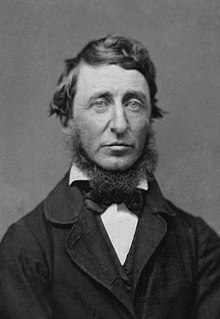
HDT, the OG of tiny homes!
Along the way, if it changes my relationship to the sort of abundance I need and deserve, then great. Because yes I’ve got some big plans and they’ll need more resources than I am accessing by through welfare.
I remember a fragment of a dream now, where a woman I knew was proudly declaring she was free of the welfare system.
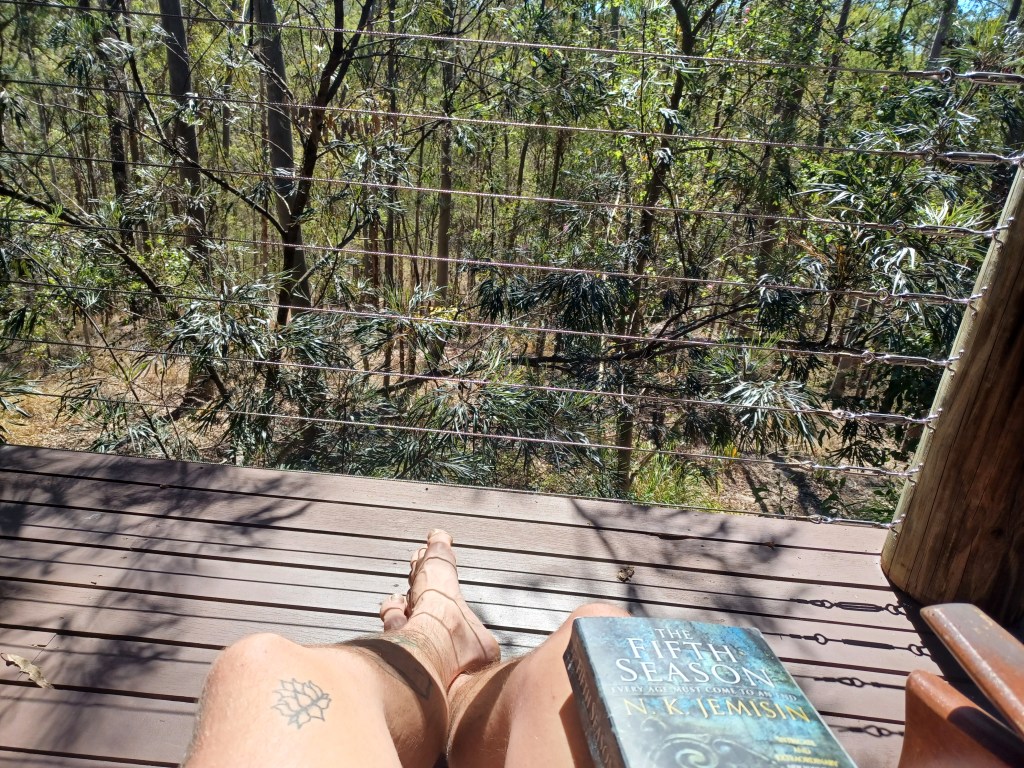
Free of the waged-employment system is also important, which makes me want to read more of the Transcendentalists like Henry David Thoreau and explains my curiosity about crypto. It was N K Jemisin’s Broken Earth trilogy that got me going about this in the morning when I was enjoying the back deck on a Sunday.
The first in the series, The Fifth Season, is a very powerful indictment of imperialism, slavery and exploitation that has got me thinking again about modern wage slavery.
There is no way to get ahead in our economy as someone who sells their time in physical or intellectual labour.
I want to make products and services that are valuable ~ products that sell themselves and services/programs that are replicable, maintaining a turnover of income. One thing that may not sell but would promote the training services and products would be a webinar perhaps about the modularity. People could then buy a self-paced course or recruit me as their trainer. That’s what I’m imagining and I feel it’s practical these days ~ not right now during TAFE but in the present as in the continuation of the future from here.
I’d like to have passive income, to work smarter not harder, but this requires undoing the coding that was written in me by my parents and their generation.
thoughtlogging
A blogging style has been inspired by Dave Winer, one of the OG bloggers from way back when the practice was about logging the web. Thought bubbles dropped in the browser throughout the day are then released at night, just a flow of thoughts and links, if only to keep my browser tabs from overflowing.
humility
Something else alive right now that I just want to note and would like to add to my somewhat daily recitals is that I have an opportunity to make some good connections at TAFE and do some good professional peer work. People are respecting me and valuing me (one of my fellow students even PMd to say so!) and I want to make sure that as I become more confident, because I am getting such positive feedback, that I don’t tip over too much into arrogance.
The risk of sarcasm and irony is high as well, because there is a lot of joking in class and we’re all mucking around a bit because the content is not very challenging and folk are a bit bored.
And hopefully if something happens and I fall from someone’s high-esteem (say I get too sarcastic and hurt someone’s feelings, as I’ve worried about with one classmate in particular who I like a lot and feel respect for but whose ideology is very different from mine) I am not too hard on my self, recognising that mistakes happen and I’m trying to keep my humility about me as my confidence grows again.
I’ve been through this before when I moved from Adelaide to Melbourne to work as a journal editor in my early 20s and suddenly meet with a peer group who valued and respected me. I didn’t know what to do with that feeling, but I think I did pretty well at not treading on too many people’s toes.
It’s related to something I’ve written about before, where I have an excess of joy to regulate when I come out of the depressive cycle, short of being manic-depressive.
wellness + recovery
I appreciated a peer practitioner saying in a video I cannot find right now, that
You don’t have to be perfectly well, to be in recovery
and, I would add, to hold the lamp for someone else on the path. I found the video👇🏼




 Kokoro 心 Heart