
in habits I trust
With my room in a flu(mmo)x of books, towers of dishevelled documents, magazines, unhung decorations and an underwear drawer down to its last pair of trunks … I would have said previously that things are in disarray, but now I see that things are in a formative state ~ and that things, all things always, are in a formative state, as in always forming and reforming, never settling into one state or another, and as I type this I feel the relief that comes with beginning to know this at a deeper and deeper experiential level.1
I am still settling in at home, and I feel I have the time to be patient because there is a relatively secure future here. (I say “relative” because who knows what might happen.) Also I trust myself and the universe and I feel the universe trusts me because it senses that I am sensing that I am it.
I am of the universe in the same way a wave is of the ocean, not separate.
I deepen into becoming an instrument of this divine oceanic reality, and I am equipped to accommodate anything that happens, whether I like what happens or not.
I realised recently that I am not the boss of reality and I have been saying this jokingly to friends, but I mean it. [5.55]
Reality is the boss, and there is very little I can do to influence the untold number of events that unfold on its watch. But I watch what I can, and what I can influence is how I respond to events. By training myself to respond constructively to everything I observe, I form new mental, emotional and behavioural habits that are more and more wholesome every day.
In habits I trust.
I am piecing together some ideas that interest me very much about the (w)holistic importance of being responsible for my (and only my) mental, emotional and behavioural habits.
These ideas are grounded in the #dharma, sustained by near-constant mindfulness and #meditation in all action, and increasingly backed by #neuroscience, which makes me feel all boisterous and joyful because these ideas (when and only when applied) lead inexorably to the experience of something called sukkha (in Buddhism, and probably many other things in the world’s many spiritual traditions), which means “genuine happiness”.
Not fleeting happiness, not pleasure conflated with happiness.
Genuine, abiding contentment with all that is, without the overlay of judgement saying, “This is good, now I am happy,” or “This is bad, now I am unhappy.”
These (w)holistic ideas about personal responsibility have profound implications for collective wellbeing and long-term sustainability (a healthy world arises out of healthy minds) but their application does start with the individual. If the individual is lucky (as I am) to meet with what we all deserve, they will have the support of a community that understands these implications at least on some level,
and this collective support is what turns individual awareness and responsibility into a bonafide superpower. #sangha
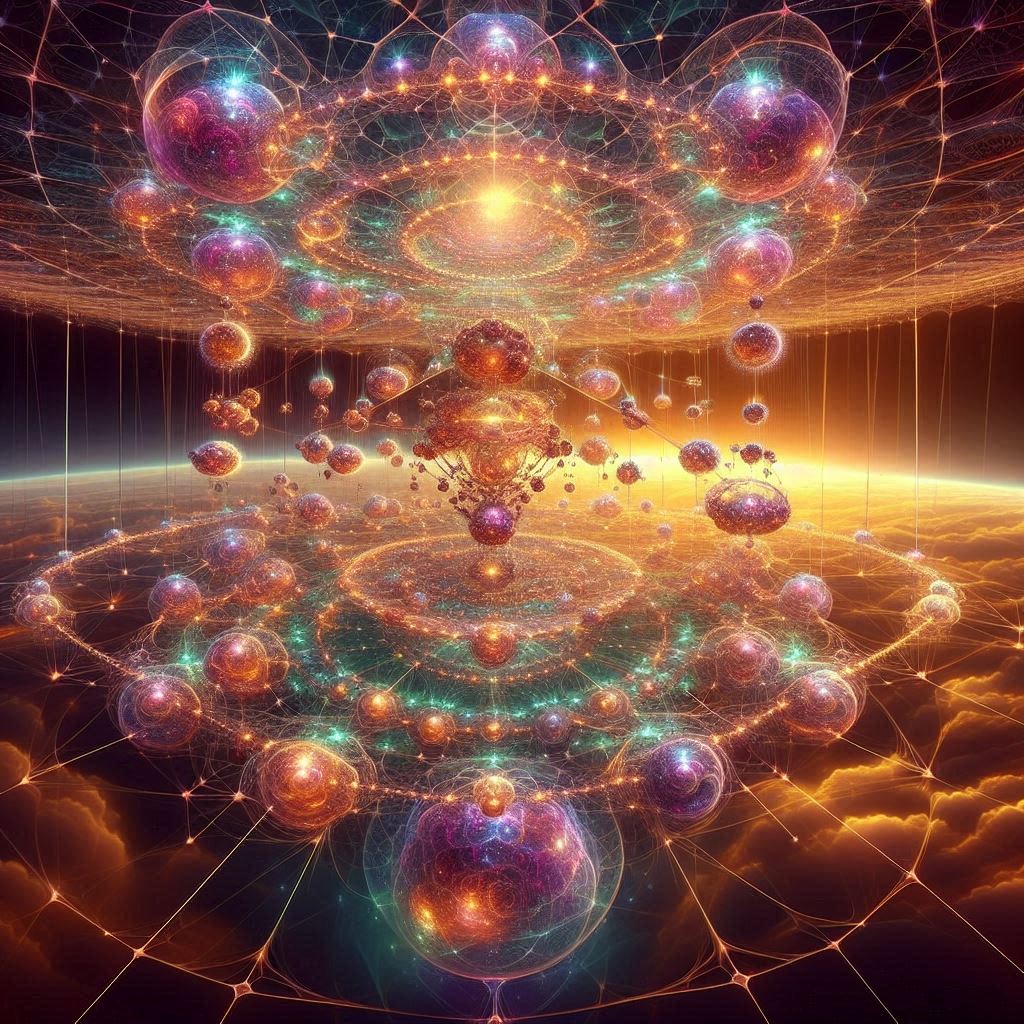
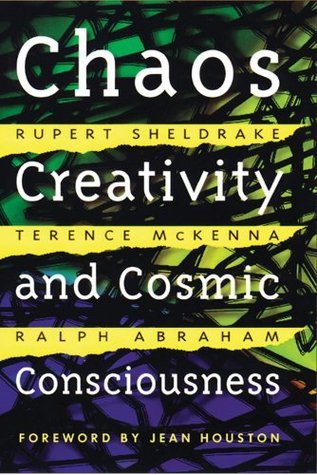
These ideas have some very cool names … Indra’s Net (thanks Marc) … the morphogenetic field or morphic resonance (thanks Rupert Not Murdoch) … the holographic universe (thanks Einstein, Michael Talbot, et. al.), the #dharma … and are exemplified by the saying, “A rising tide lifts all boats” (thanks Pierce ~ may we discover together that JFK did indeed lift this from the Bible, and that maybe the Flood is actually a metaphor about a time in Biblical history when a flood of awakening wiped out swathes of ignorance in the psyche of humankind, because we know … or at least, strongly suspect … these episodes of collective awakening come in waves through history and can never really be talked about directly, so: metaphor to the rescue).
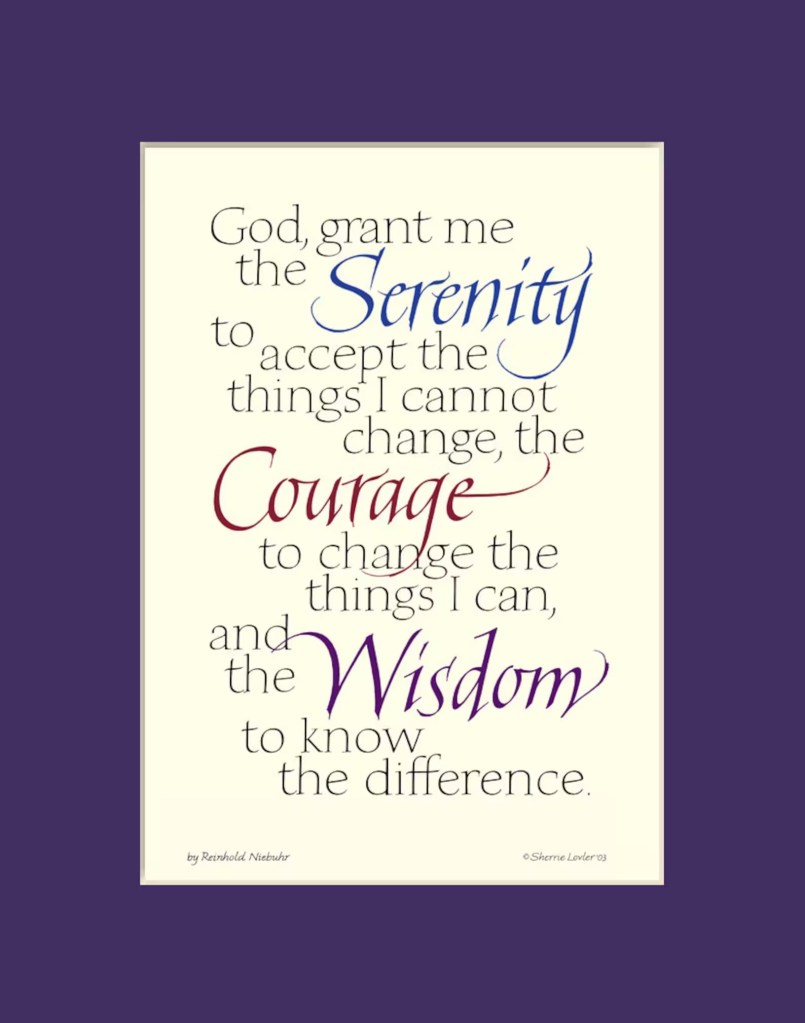
I don’t have the time or the desire to elaborate further on these ideas at the moment, because I have a group meditation to attend in 9 … 8 minutes. For now it will be enough to share the Serenity Prayer.
May I ask you to leave your notes below ~ as always, my intention for sharing these thoughts is to stimulate dialogue. If public dialogue is not your jam, get in touch directly here. If commenting on WordPress is a laborious chore because you don’t already have an account, please share this post with your comments on the socials, because it’s a dialogue we sorely need to help us transition from the doldrums of modern civilisation into whatever form is next.
- I say “flu(mmo)x” because the confusion comes from within me (who is flux), not from within the state of my room, which is also in flux, but not necessarily confusing. ↩︎

 Kokoro 心 Heart