
psychedelics in history

Our friend Cliff gave me the name of a book today, something he said a while back was blowing his mind: The Immortality Key, which sounds a bit naff at first (like a Dan Brown novel), before I read the subtitle The secret history of the religion with no name. This sounds right up my alley. And I’m fond of Graham Hancock, who wrote the Foreword and whose TED talk was a game-changer for me, pointing out the hypocrisy and injustice of governments prohibiting mind-expanding drugs while capitalising on all the drugs that numb us and bring us down.

I’ll share that video below because it seems to illustrate the theme of The Immortality Key.

The blurbs and praise I’ve read suggest that The Immortality Key goes much deeper than the modern prohibition of consciousness-altering substances, arguing that psychedelic experience was central to the practice and spirituality of ancient Western religions.

One reviewer described it as “a spiritual adventure page-turner”, and others have said the author spins humour and travelogue into the argument, which ranges among a laundry list of disciplines and subjects:

  • history
  • comparative religion
  • linguistics
  • pharmacology
  • chemistry
  • biology
  • democracy
  • the unity of mankind
  • the religious war on women

No doubt there’s a bit of ethnobotany in there and some mythology — sounds fucking great! So I’m going to check it out and will let you know what I find. I feel confident it’s going to find it’s way onto my Goodreads shelf of books that have revolutionised my worldview.
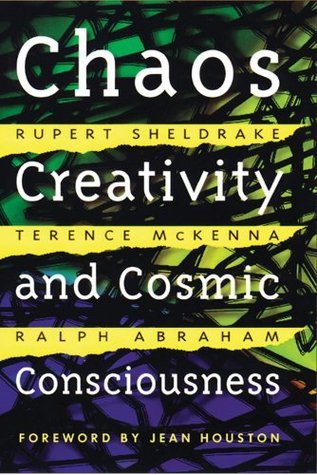
The last book I added to that shelf was a book of trialogues between Rupert Sheldrake, Terence McKenna and Ralph Abraham, Chaos, Creativity and Cosmic Consciousness, which I highly recommend as a wild exploration of many things, but in particular the connections between million-year-old psychedelic sacraments and the origins/evolution of consciousness.

I can vouch for this one, because I’ve actually read it instead of just hearing about it, so that’s an affiliate link above — if you buy the book through there I’ll get some money for a coffee.

If you’ve read either of these books or others like them, I’d love to read your thoughts in the comments below.
on self-esteem as a precursor for achievement …

… rather than achievement as a prerequisite for self-esteem

Photo by Pawel Czerwinski on Unsplash

I’ve been taking stock today — taking it slow and allowing myself to get back in the groove of being a bit more organised than I have been lately. I’ve been posting a lot more here recently, but a few other things like life-admin and chores have gone by the wayside a bit.

This is okay — I’ve been riding the enthusiasm I feel for this blog and the community we can build here. It’s been making me happy. I will find the balance between running this blog and running the rest of my life, as the pendulum swings to and fro.

When I’m taking stock I like to go through my various browsers, closing tabs I’ve had open for yonks. It helps me feel a bit more organised by cutting out some of the mental noise I feel at some kind of subconscious level when I know I’ve been opening tabs like they’re going out of fashion.

Something I stopped on today was this article about how some overachievers turn to drugs for escape because no achievement is ever sufficiently satisfying. It’s published by an addiction-recovery and mental-health clinic, and covers a lot of ground (in three short sections) about how societal expectations drive a lot of us to be always achieving, never satisfied to just exist and accept ourselves for our inherent worth.

I understand this compulsion intimately, though I’m not sure I had quite made the connection between the constant need for achievement and the temptation of drugs that promise a reprieve from this pressure.

I am pleased to be able to say, though, that since I’ve been working more full-time on Kokoro 心 Heart and the business around it, I can relate more to this statement from the article:

Our attempts to achieve and succeed should have their roots in a healthy, already-existent sense of self-esteem, rather than being motivated by its absence.

I can honestly say that I wake up each morning feeling committed to doing this work that fulfils my purpose. Not because I need to supplement a low self-esteem, but because doing this work feels as natural and necessary as breathing, or making nutritious food, or walking in the bush. It’s an act of self-care, this work, and feels like something I am just meant to do — no one else expects me to do it.

I value the work I am doing here, and I do it because I believe it has worth — I wouldn’t be able to do that without others’ expectations if I didn’t have a higher sense of self-esteem than I had previously recognised.

So that’s a nice thing to have realised, and was well worth taking stock for. I am grateful, and very fortunate.

Check out the article, and let me know what you think. I think it’s essential we question the narratives telling us we need to achieve more — always more, never enough.

What is your enough?

If societal expectations drive a lot of us to be always achieving, never satisfied to just exist and accept ourselves for our inherent worth, but also no achievement is ever sufficiently satisfying, what to do?

reaching out ~ what to do with a truant teen

Zane buggered off again today ~ skipped school and bailed on meeting us to drop his uniform to him. We found him, but boy has it brought up a lot of stuff!

My conditioning dictates that I should be angry, but I’m trying to be positive and bring a compassionate perspective.

This is all in the context of me trying to rediscover my place in the dynamics of the family, so I’m feeling very unsure about what my part should be in responding to this truancy again.

I’m a step-dad who has minimal-to-no relationship with Zane, and therefore limited agency for either discipline or influence. The only part I know is supporting Nikki, but she insisted I stay at the library while she drove around looking for him.

At least if I’m not there for the potential confrontation when Zane decides to show up and face the consequences of breaking our trust again, maybe I’ll have the chance to calm down a bit and play the part of compassionate supporter ~ I do want to understand why he’s making these decisions, but in which parallel universe is a 13-year-old boy going to share this with his step-dad?

In which parallel universe does a 13-year-old boy know himself why he behaves one way or another?

We need the skills of introspection and emotional intelligence to know the nuances of our internal motivations ~ skills that are not taught in our sausage-factory schools.

This gap in our education culture is a huge part of why I’m doing Kokoro 心 Heart: we need to learn how to manage our own psychospiritual wellbeing enough to stop perpetuating a culture that results in 13-year-old kids wagging class to smoke bongs down the creek. (That’s just one specific symptom of the cultural malaise I hope to address in the posts here and in the work I’m doing in the business around Kokoro 心 Heart.)

I spent my whole high-school career smoking bongs down the creek, and my decades-long drug and alcohol dependency left me in my late 20s with the emotional development of the teenager I was when I started using drugs, because I didn’t have the mentors to help me learn how to deal with my emotions any other way.

We are letting down our children and our future by allowing these gaps to remain in the upbringing of the emerging generations.

Nikki and I are doing all that we can to access services that will make up for the deficits in our own and Zane’s development.

If you’re going through or have been through this, let me know in the comments. We need all the guidance we can get, lest our son become like Trent from Punchy.

~ ~ ~

For more post updates, find me on Twitter, on WordPress at the follow link below, or sign up for my little mailing-list newsletter here. I’m also on LinkedIn and Unifyd.