on Exercising my Right to Hold a Shonky GP Accountable

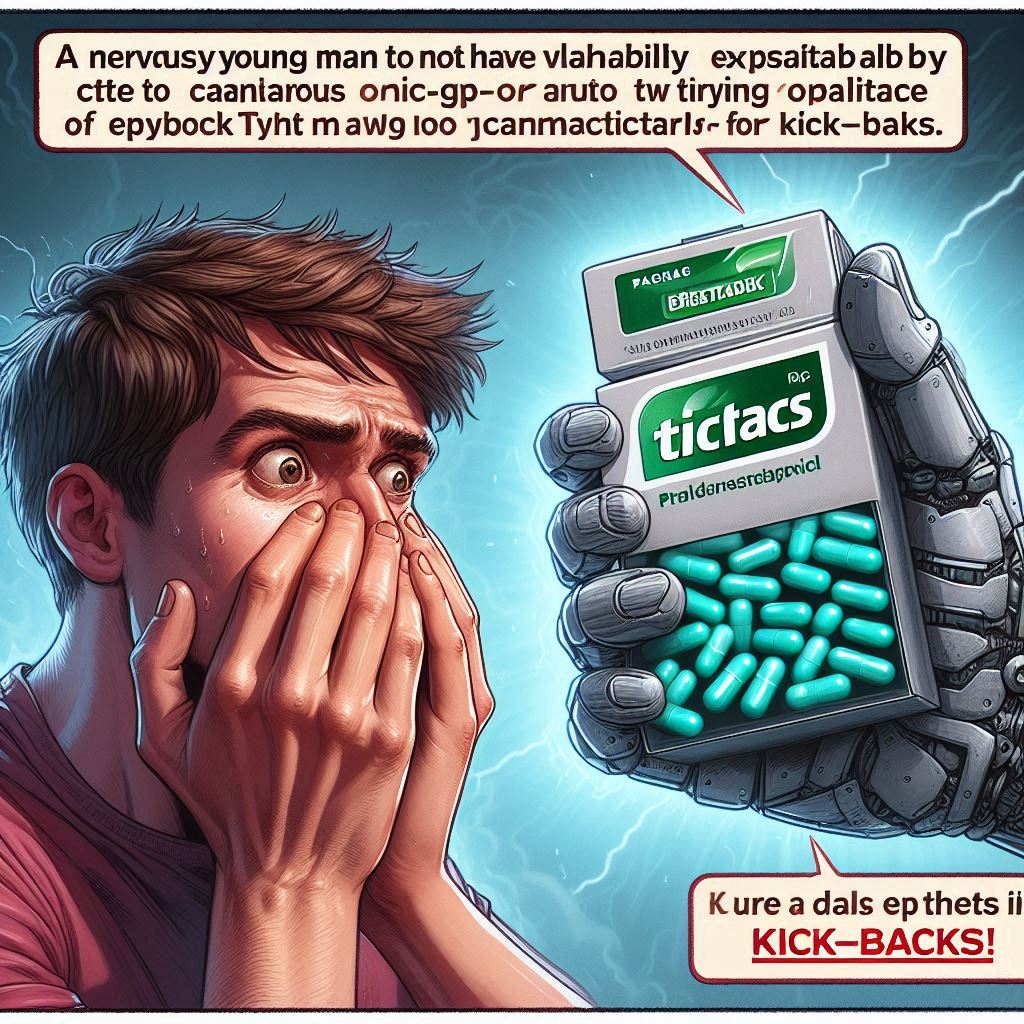
I am submitting a complaint to the Office of the Health Ombudsman today, after a shonky GP tried to swindle me into what I am calling “tic-tacs for kick-backs”, meaning anti-depressants I don’t want or need.

I have been meaning to do this for a while, but have had so much other shit going on lately (mostly good shit), but after a second sleepless night filled with pre-occupations about said shit, I decided while making coffee that this is what I would spend my pre-meditation time doing, because:

  1. maybe it will leaven the burden of carrying this complaint-intention around and begin to lift the resentment I feel every time I remember that this situation happened
  2. as a bystander and citizen, I feel a duty to report this knuckle-head so that other vulnerable people might not become his prey in future
  3. after doing this I might be able to start working on letting-go of some of the shit language I use to think about and describe this fellow, who I understand is just trying to find happiness, albeit in the “wrong objects”, namely, financial wealth ~ and then sometime later I might be able to start opening myself to more-generous assumptions through the diligent application of forgiveness

I was going to link here to my Google Review of this GP, but for now I think it’s prudent to not point so blatantly at his privacy (does he get the benefit of privacy if he is running a public private practice?), lest I pull an avalanche of defamation bullshit onto my own head.

I am so legally naive that I don’t even know the differences between things like defamation and slander. My intention here is not to unnecessarily injure this GPs reputation, but to make people aware that they might want to exercise caution if approaching this GP. I formerly identified as something of a citizen journalist, and this activity and post is I guess a hangover from those days.

I am not going to post here my cautionary-tale Google Review, but I am going to post my (de-identified) complaint to the ombudsman, because I’m curious to know what others think of the reasoning I’m doing here.

I am 99% convinced that this bloke has a whole-arse method that he rolls out whenever he sees a vulnerable person walk into his clinic, and yet I am clinging desperately to the idea of holding my convictions tentatively because:

  1. I like what Bertrand Russell said about not being opinionated
    1. The essence of the liberal outlook lies not in what opinions are held, but in how they are held: instead of being held dogmatically, they are held tentatively, and with a consciousness that new evidence may at any moment lead to their abandonment.
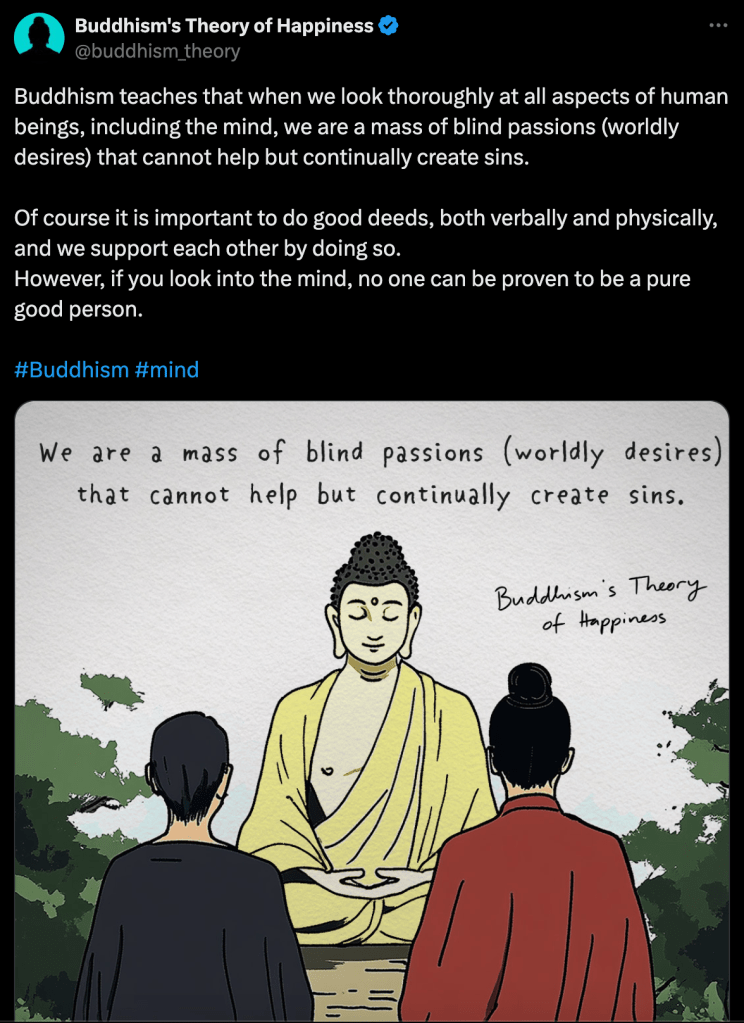
  2. I want to retain my belief, for now, that humans are inherently good, despite this illuminating post I found on Twitter recently, which challenged this belief in a way that sounds legit
So here is the guts of the complaint:

I am new to the Logan/Springwood area, and needing a new regular GP, I went to Dr Doo-not-much for sleep support, expecting a melatonin prescription perhaps.

He tried to prescribe me anti-depressants, without answering my questions about what the prescription actually was (I had to ask a nearby pharmacist to explain what he had prescribed me).

I also asked to start a Mental Health Care Plan (which I maintain with all my GPs as a preventative measure) and he tried to tell me that a MHCP was pointless because I would just get “talk therapy” and what I really needed was a diagnosis.

This is untrue ~ my last MHCP therapist is a Somatic Experiencing practitioner, but Dr Doo-not-much wouldn’t listen to my experience of finding my own Medicare registered therapists.

He referred me to a nearby psychiatrist, and explained to me that he has a “deal” with them to get cheap diagnoses.

The biggest red flag though: on my second and final appointment, Dr Doo-not-much knocked a whole stack of inbox trays off his desk and proceeded to blame everything except his own elbow for the stack falling.

This guy is super dodgy, and really shouldn’t be practising. If he cannot accept accountability for knocking something off his desk, how can I trust him to be responsible for the known side-effects of the powerful pharmaceuticals he tried to swindle me into taking!?

He told me to take those anti-depressants (without telling me that’s what they were) for a couple of weeks until my sleep stabilised!

If I hadn’t had the wherewithal to enquire with the pharmacist or the confidence to self-advocate, I would have been sucked into this guy’s ruse to get me hooked on anti-depressants for kickbacks, and would have had to taper.

I have been managing depression symptoms for 20+ years with lifestyle changes and have never needed pharmaceutical medication.

I know my health history, and I know my needs.

This guy was so frenetic and conceited that he wouldn’t listen to me when I tried to tell him I know my own history of recovery from mental illness.

He has also not released my results from tests performed for a foot injury after nearly 3 weeks of waiting after another GP requested them.

I am genuinely concerned that this guy is harming patients by prescribing them anti-depressants without proper education: if he prescribed them to me within 2 visits, without conducting so much as a mental-health questionnaire, then who else is he prescribing them to!

On the complaint form the Office of the Health Ombudsman ask “What do you want to happen?”, so I said:

I would like Dr Doo-not-much to be investigated to see what he means by having a “deal” with a local psychiatrist, because if this man is funneling people through a dodgy psychiatrist to get them diagnosed and prescribed unnecessary pharmaceuticals for profit, then this is serious malpractice and he could be causing a lot of short- and long-term harm for his own financial gain.

And I am attaching a second PDF with the formal complaint form, documenting reflections that occurred to me after completing that form:

I went to Dr Doo-not-much for both sleep support and to start investigating why my foot injury was still giving me trouble after getting stitches for a laceration resulting from stepping on a sharp rock. 

When I told him the symptoms (pain and swelling, some months after the stitches were removed) he tried to prescribe me anti-biotics before even beginning to print the referral for blood tests that I had asked for, to see if there was an infection.

I informed Dr Doo-not-much that I was reluctant to take anti-biotics unless absolutely necessary. When he asked me why, I informed him that I didn’t want to mess with my gut bacteria unnecessarily.

Dr Doo-not-much brushed this off, and told me that anti-biotics were a good preventative measure against infection. 

A preventative measure against infection forming inside a wound that had already healed on the outside?

This just didn’t make sense to me, and after completing the accompanying PDF I began to suspect that this might be part of Dr Doo-not-much’s nefarious method: prescribe anti-biotics to ruin a patient’s gut bacteria, making them susceptible to depression, and attempting to render them dependent on powerful mind-altering pharmaceuticals by simultaneously prescribing them anti-depressants. 

I am trying (not very hard) to avoid emotive language here, but the truth is I felt and still feel that my trust was profoundly violated by this doctor, and I am genuinely concerned that he is rolling out this method on the daily to people who are less able to self-advocate than I am. 

I have been similarly coerced in psychiatric wards and it’s just really not cricket ~ this kind of practice is profoundly unethical and harmful, and I hope that this complaint will be investigated thoroughly by an objective party who is not so thoroughly embroiled emotionally in whatever is going down at this GP clinic. 

I am genuinely open to suggestions that I am just being paranoid here, but I am equally open to hearing whether others observing this post would draw the same conclusions from the behaviours I observed.

I know that “tic-tacs for kick-backs” is a thing, but I always held the belief that something like this would never happen to me.

Let me know in the comments below, or contact me directly through this website or the socials.

Much appreciated if you got this far through the post!

slogan one, reminder two: be aware of death; impermanence

Point One The preliminaries, which are the basis for dharma practice

Slogan One First, train in the preliminaries (the Four Reminders or the Four Thoughts)

Reminder Two Be aware of the reality that life ends; death comes for everyone; Impermanence

~~~

*TRIGGER WARNING*

considering the state of our world and minds,
the idea of suicide is bound to come up eventually;

I consider it great consolation that contemplating the inevitability of death
is a powerful antidote for the thought of self-inflicted death

the break in-between

Photo by Pixabay on Pexels.com

I am pleased to report that I have recently dropped the whole work-eat-sleep-and-shit-till-you-die routine. I have taken a financial hit to gain more time affluence, meaning more time for reflection and meditation. The mere acts of writing thoughts and engaging with philosophy and exploring our spiritual nature are things that make my life worthwhile and I hadn’t been doing them enough due to the demands of employment.

It was getting depressing, to say the least – without time for reflection or anything other than work, life’s difficulties were causing a paralysis I could only imagine solving with suicide. I don’t know how people do it for decades in a row. I guess they adjust and reconcile themselves with certain sacrifices. But I don’t want to just adjust. I want to adapt, evolve, and I want to make sure I’m not making sacrifices I will regret on my deathbed.

Regret has always been my biggest fear.

I want to adapt and evolve and accommodate the making of meaning among the demands on my time now that I’m a husband and dad. I want to set the example for my son that there is more to life than just employment, but also for all the people I encounter because we can’t go on like this, depriving ourselves of meaning because material wealth is believed to be all we need for a happy life. Clearly it’s not, because we are all in the West wealthier than ever before and that wealth has been gained through the sacrifice of our collective wellbeing. And to think the word “wealth” was originally derived from weal.

We are less happy despite our relative affluence because increased affluence makes it easier to distract ourselves from facing up to the transformative power of suffering.

A lot of us are running ourselves into the ground for the sake of material security, and in the process neglecting what hopes we can have for psychospiritual security if we gave more time to reflecting on what really makes life worthwhile. And let’s face it, death is the only thing that makes life worthwhile. The word “security” is not quite appropriate in the context of the psychospiritual journey, because on this Path there are no guarantees. I’m not talking about securing a place in Heaven, but a certain few reflections can prepare us for the end of our lives and point us toward a karmic trajectory that is going to be more favourable than if we had neglected spiritual aspirations in favour of, say, yachts!

To help with this aspiration, the second Reminder in the lojong teachings is one of those reflections:

be aware of death; remember that everything is impermanent.

Everything dies, and not just biological organisms – ideas, feelings, thoughts, moods, and situations, are all fleeting. It’s easy to say and know that everything dies, and to think of organisms. But the reality of biological death or mortality is more distant from our immediate experience than emotions are, unless we cultivate a practice of reflecting on impermanence. With our thoughts, feelings and emotions we can see how they are born, dwell for a time, and then fall away. Remembering this helps to let go of attachment – to achievement and ambition, to objects and people, but also to pride and hubris and the over-inflated ego. To illustrate this I like the image of the butterfly.

The self-destruction of the caterpillar is such a perfect metaphor about dissolution of ego attachment. As the caterpillar turns into goo before it somehow morphs into a butterfly, so the ego must dissolve before we can transform into the compassionate beasts we always were.

Reflecting on the impermanence of the ego helps us to learn and grow, because reduced attachment promotes the healthy ego we need to admit we were wrong or don’t know.

Zane and I have butted heads a lot because I have low tolerance for people who can’t admit they were wrong, and Zane lacks the healthy ego development to be gracious about his own ignorance. But when I embrace Butterfly and relinquish my attachment to the value of Socratic ignorance, I am able to swallow my pride and humble myself before his misdemeanours and try to help him understand why some of his behaviours are problematic.

When I feel frustrated with Zane’s transgressions I can try, with sufficient training, to remember that the emotions will pass if I let go of attachment to whatever identity I think has been hurt or disgruntled by the behaviour. When I am able to do this I feel an acute sense of joy because I have dropped my misguided sense of self-righteousness for the purpose of helping a young human learn how to become a well-rounded adult. And we get along better and we smile and we laugh and we don’t scowl so much and I feel good about myself instead of feeling like a goddamn grouch.

To support the renunciation of self-attachment, I have recently introduced a practice of “training in the preliminaries” to my sadhana, because the preliminaries remind me that 1) human life is precious, 2) feelings are fleeting, and 4) attachment to things that are precious but fleeting is foolish and a primary cause of suffering. Of course there are four Reminders in the preliminaries, but the third Reminder about karma has less bearing on the mitigation of suicidal ideation, so I won’t go into that here.

It is enough to say for now that when I feel like ending things because my means for coping are so depleted that I think we’d all be better off without me (which is merely the result of unresolved childhood wounds and has no actual bearing on the nature of present reality), having familiarised myself with these preliminaries helps to mitigate my wish to terminate existence. What a relief!

~ ~ ~

I had a dream after reading about karma the other day and the whole vibe was about the importance of doing the right thing(s) in life so we don’t experience (unfortunate) rebirth and go through a whole other lifetime of suffering. But what about this lifetime? if, like me, we are on the fence about reincarnation. If we could let go of attachment to our thoughts and feelings (if we could stop mis-identifying with our emotions and moods as who we are) then our current lifetime would be so much easier to deal with and there would be fewer causes of wrong thought and action. It’s easy to not accrue negative karma when we’re feeling happy and relaxed, but how often are we in those states? The whole test of our mettle as karmic consequences is the way we think, speak and behave when we are distressed.

I hadn’t really expected that reflecting on impermanence would lead to reflecting on attachment and karma, but (lack of) awareness of non-permanence seems now to obviously underpin our (misguided) notions of identity and how we behave from that identity. When we are attached to a fixed identity, we suffer – when we are more loosely defined by a fluid identity rich with non-attachment, suffering is more easy to bear. When we are suffering less, we karma better.

Also, including these Reminders in my sadhana has helped me to see that they are each complements of the others – it is hard to think of rebirth without thinking of karma, and hard to think of impermanence without thinking about clinging, et cetera.

The reading that informed the above-mentioned dream was about the Buddhist perspective on suicide – tabs I had open from a recent post referencing the monk on the Rage Against the Machine cover – and the author made a very resonant point that suicide is almost always a result of a serious case of mistaken identity.

We mistake our thoughts and feelings for who we are, when what we are is really the vast space wherein that identity manifests temporarily and always in flux. We shoot ourselves in the head because we think that’s where our suffering comes from, tragically unaware that among that very hardware is the toolkit we can train ourselves to use for the mitigation of that suffering. Recognising the non-permanence of our thoughts/feelings is among the first steps in escaping the suffering caused by mistaking our mental/physical body as what we are.

I’m starting to sound like a broken record now.

A first step in recognising the non-permanence of our thoughts/feelings is the cultivation of mindfulness, supported by ethical conduct and leading to the experience of wisdom.

~ ~ ~

I pulled the blood-death card out of a tarot deck the other day, and was pleased because I take death to represent change more than anything else and I need some change – we need something to break and die to bring this period of turmoil to an end. I mean that in a personal or domestic as well as in a global sense. I need a break – we all need to be given a break for a while, but that’s not going to happen. We cannot put life on hold while we repair the damage we have caused.

Meanwhile, suicide is not an option, though my afflicted mind subjects me to considering it anyway.

There is potential for psychotic break, by which I mean a break from illusion, but I want to hold that at bay for now, work on the container I need for that to not spill over into spiritual emergency.

We can’t afford a holiday.

Where to next then? Maybe that break between thoughts – the space in-between, where stillness resides.

How to get there? I’m not sure that question is the purpose of this post.

I know I was pleased when, after pulling the blood-death card, I checked in with this lojong-writing practice and was reminded that Slogan One, Reminder Two is about awareness of death. Death as a meditation object. I’ve been thinking about this lately. I understand or believe it’s a powerful practice – for one, to awaken awareness of Reminder One, the preciousness of human life as an unsurpassed opportunity for liberation, but also as a motivation to be fully alive in the present, fully present in this life.

That’s a golden thing – something to be pleased about, to be sure to be sure.

Yet … I had been avoiding this meditation – as I avoided tonglen, the practice of exchanging oneself for others, a central meditation of the lojong teachings. These are practices that make me feel uncomfortable, just to think about. Perhaps for that reason entirely, they are exactly the practices I should be stepping into. But I have so much discomfort already – it seems like folly to actively seek more … but I sense a paradox here.

The discomfort I am currently experiencing due to tenancy issues outside the bounds of my control, it is base mundane banal … profane is the word I was looking for. The discomfort I would face in these practices has a much-more sacred vibe about it. By embracing existential or psychospiritual discomfort – by turning toward it as the kid in Stranger Things turned toward the monster he faced in the Upside Down – may the discomfort of profane angst evaporate. By confronting the sacred reality that all including life is impermanent, may our afflicted attachment to profane suffering fall away, allowing us to finally live.

So there’s that: confronting the uncomfortable existential truth of death and impermanence may be a root-cause treatment for the discomfort of relative or profane suffering; may we experience equanimity in the face of samsaric daily life by embracing our opportunity to practise enough virtue before an untimely death. This is how McLeod describes the teaching – let’s call it the vinaya argument, the argument from ethics or virtue.

He adds as well the reminder that after death, nothing but the results of virtuous or nonvirtuous actions will remain. As we say (but may not truly know without a death-contemplation practice), no material/profane gains can be taken with us through the grave. The death-scientists of Ancient Egypt may disagree with this, I dunno. They put coins on the eyes of the buried for reasons I don’t understand.

Whatever the result of any potential dissonance between the Buddhist and the Egyptian view, this Reminder buoys me in my recent decision to prioritise wellbeing over traditional employment. The decision was to sacrifice material wealth to gain more time affluence – to have more time for the contemplation of reality, so that I might die poor and happy instead of poor and unhappy, which is where the employment path was leading me. I was told by Nikki just now that when I was quitting my job I said it was partly because I wanted more time to contemplate death. Sounds like something I would say!

I’ll think on this some more over the coming weeks, and maybe I’ll add an edit to this post.

Meanwhile, do you have any guided meditations or other teachings you can recommend for the contemplation of death? And/or the practice of tonglen, of exchanging oneself for others? Absolute bodhicitta sounds very cool, and Shantideva assures us that this is the fastest Path:

They who desire shelter quickly
For themselves and for all others
Should use this sacred mystery,
The exchanging of oneself for others

Imagine how screwed you would be if everyone died!