concentration depends on a healthy ego

After a meditation recently where I was very easily distracted, unable to concentrate for long, I started wondering about the defilements and/or the Five Hindrances, and ethics (vinaya or virtue, in Buddhism). The Five Hindrances are a traditional categorisation of obstacles to concentration ~ ultimately, obstacles to self-mastery: 

desire
aversion
sloth and torpor
restlessness
doubt

Honestly, I think itchiness should be the Sixth Hindrance! 

While the Hindrances are obstacles to concentration, we practise virtue to protect and support our concentration. The timeless example is that it’s hard to have a clear mind in the afternoon when we’ve committed murder in the morning. And we practise concentration on the present to allow insight to penetrate illusion …

👆🏽 in this sense, concentration meditation is a transpersonal practice, and therefore everything that supports concentration is a therapeutic practice ~ this might seem like an arbitrary distinction (and isn’t duality precisely what we are trying to escape!?) but it’s a helpful dichotomy for me at the moment.

During that very-distracted meditation, I thought, The mental content doesn’t seem to be about any obvious breach of ethics, so why is it that I am especially disturbed today?

Maybe it’s just that I wasn’t aware of how my conduct compromises one of the less-obvious ethical precepts, such as ‘do not extol self over others’ or the one about not harbouring ill-will. 

Maybe a distracted mind is just something a student needs to accept ~ radical acceptance of that fourth Hindrance, restlessness.

It certainly seems that access to consistently strong concentration is dependent on factors outside my control, but also I’m not sure about that. 

There must be things we can do that support concentration.

I don’t know ~ I’m trying to understand what to do with distraction in meditation, with what has been called kapicitta since Buddha’s time. Monkey mind! It’s old school.

In the concentration basket of the Eightfold Path, with right mindfulness (samma sati) we notice our mind has wandered, and with right effort (samma vayama) we bring the mind back to right concentration (samma samadhi). Over and over again, and gradually we become more content among suffering. 

I had to look up ‘defilements’ again, and read about the kleshas ~ rooted in the Three Poisons of ignorance, attachment and aversion, the defilements or afflictions are the 108 mental states that disturb the mind and result in unwholesome actions.

So yeah, I was right in my wondering, even if I was supposed to be concentrating at the time and allowing thoughts to come, dwell and fall away 👈🏼 that is the practice, the whole practice and nothing but the practice. 

And yet, I was compelled to scrounge around for a pen and scribble on the nearest piece of paper (my precepts sheet), “I am enough”, because I felt I had arrived at some insight that would continue to bug me until I made a note and allowed myself to forget the idea while I continued concentrating.

As I currently understand it, the whole practice in Zen is to concentrate on an object of meditation that keeps us from indulging the monkey mind (kapicitta), and we concentrate some more until some kind of non-cognitive insight penetrates illusion. 

Yes but there are other things, such as ethics, which support the practice of concentration. Concentration is but one aspect of the Eightfold Path ~ surely the other aspects of the Path are complementary to concentration (samadhi). 

Let’s see if I can remember the others, and see if what I’m thinking about here fits among any of those: 

  1. right concentration 
  2. right mindfulness
  3. right effort
  4. right speech
  5. right action
  6. right livelihood
  7. right view
  8. right resolve

Maybe it falls within right view (samya dristi), but I’m guessing here ~ wondering whether our perception of self is an aspect of right view. If I have an unhealthy view of self, will that compromise concentration? I think so, yes.

Because it seemed a lot of the mental content (kleshas or afflictions) were about how I could be better: more loving, more organised, more efficient, more available, less distracted all the time, more able to concentrate, and I thought, We may need to complement our (transpersonal) concentration practice with the (therapeutic) practice of treating the health of our ego. 

If we cultivate healthy ego, our ego is not always going to be popping up and saying, “Do this!” or “Do that!” when we’re already damn-well trying to do exactly what we’re supposed to be doing, which is concentrating!

This is not a new insight for me ~ it’s been percolating for a while and keeps coming up in my reflections. Reflecting on it has been helpful if only because it colours in the details of my own practice. 

And these reflections may also illuminate beyond the lines of what I feel like calling “the original Buddhism” ~ I mean, we might need to elucidate other Hindrances or nuances of the kleshas to accommodate the mental state of humans in the twenty-first century, compared with the mental state of humans when the Buddha was alive and teaching. 

As I draft this today, I have been tinkering with the various documents where I am trying to track the development and expression of these ideas in a more coherent way that I can share with others, but for now this meandering post will have to do.

I love a good meandering post. 

I am distractedly curious and passionate about understanding and applying these ideas, and helping others to do so. As I move into the mental-health sector as a peer-support worker I hope to find opportunities to do so. 

Meanwhile, I have updated the Heartwards website where I am starting to publish ideas from a transpersonal perspective about mental-health peer work. And I have opened but not worked on a hypertext project I think of more often again lately, called Whatness. I would like to add something about the Hindrances there, because processing such ideas enough to be able to express them without reference to some other source means I have integrated them enough to apply them on the fly. 

Meanwhile, if you’re reflecting on things that support concentration in meditation, I’d love to hear about in the comments. 

Legend 🤙🏼

concentration depends on a healthy ego

Ah, clarity!
Photo by Francesco Ungaro on Pexels.com

After a meditation this morning where I was very easily distracted, unable to concentrate for long, I am wondering about the defilements and/or the Five Hindrances, and ethics (vinaya or virtue, in Buddhism). And the importance of a healthy ego in our practice.

We practise virtue to protect and support our concentration (the old example being that it’s hard to have a clear mind in the afternoon when we’ve committed murder in the morning), and we practise concentration to allow insight to penetrate illusion …

👆🏽 in this sense, concentration meditation is a transpersonal practice, and therefore everything that supports concentration is a therapeutic practice ~ this might seem like an arbitrary distinction (and isn’t duality precisely what we are trying to escape!?) but it’s a helpful dichotomy for me at the moment

… I thought, The mental content doesn’t seem to be about any obvious breach of ethics, so why is it that I am especially disturbed today?

Maybe it’s just that I wasn’t aware of how my conduct compromises one of the less-obvious precepts, such as ‘do not extol self over others’ or the one about not harbouring ill-will ~ one of the reasons I don’t meet Zane’s needs as a father is that I am still working on how to relinquish resentment. 

Maybe a distracted mind is just something a student needs to accept ~ radical acceptance.

It certainly seems that access to consistently strong concentration is dependent on factors outside my control, but also I’m not sure about that. 

There must be things we can do that support concentration.

I don’t know ~ I’m trying to find my way around understanding what to do with distraction in meditation, with what has been called kapicitta since Buddha’s time. Monkey mind! It’s old school.

Maybe the content was among the Hindrances (I desire to be more loving or a better dad). 

I had to look up ‘defilements’ again, and read about the kleshas ~ rooted in the Three Poisons of ignorance, attachment and aversion, the defilements or afflictions are the 108 mental states that disturb the mind and result in unwholesome actions.

So yeah, I was right in my wondering, even if I was supposed to be concentrating at the time and allowing thoughts to come, dwell and fall away. That is the practice, the whole practice and nothing but the practice. 

And yet, I was compelled to scrounge around for a pen and scribble on the nearest piece of paper (my precepts sheet), “I am enough”, because I felt I had arrived at some insight that was bugging me and would continue to bug me until I made a note and allowed myself to let go of the idea while I continued trying to concentrate.

As I currently understand it, the whole practice in Zen is to concentrate on an anchor that keeps us from indulging the monkey mind, and we concentrate some more until some kind of non-cognitive insight penetrates illusion. 

Yes but there are other things, such as ethics, which support the practice of concentration. Concentration is but one aspect of the Eightfold Path ~ surely the other aspects of the Path are complementary to concentration (samadhi). 

Let’s see if I can remember the others, and see if what I’m thinking about here fits among any of those: 

  1. right concentration 
  2. right mindfulness
  3. right effort
  4. right speech
  5. right action
  6. right livelihood
  7. right view
  8. right resolve

Maybe it falls within right view (samya dristi), but I’m guessing here ~ wondering whether our perception of self is an aspect of right view. If I have an unhealthy view of self, will that compromise concentration? I think so, yes.

Because it seemed a lot of the mental content (kleshas or afflictions) were about how I could be better: more loving, more organised, more efficient, more available, less distracted all the time, more able to concentrate, and I thought, We may need to complement our (transpersonal) concentration practice with the (therapeutic) practice of treating the health of our ego. 

If we cultivate healthy ego, our ego is not always going to be popping up and saying, “Do this!” or “Do that!” when we’re already damn-well trying to do exactly what we’re supposed to be doing, which is concentrating!

This is not a new insight for me ~ it’s been percolating for a while and keeps coming up in my reflections. Reflecting on it here has been helpful if only because it colours in the textures of my own practice. And these reflections may also illuminate beyond the lines of what I feel like calling “the original Buddhism” ~ I mean, we might need to elucidate other Hindrances or nuances of the kleshas to accommodate the mental state of humans in the 21st century compared with the mental state of humans when the Buddha was alive and teaching. 

As I draft this today I have been tinkering with the various documents where I am trying to track the development and expression of these ideas in a more coherent way that I can share with others, but for now this meandering post will have to do.

I love a good meandering post. 

I am distractedly curious and passionate about understanding and applying these ideas, and helping others to do so. As I move into the mental-health sector as a peer-support worker I hope to find opportunities to do so. 

Meanwhile, I have updated the Heartwards website where I am offering coaching services from a transpersonal perspective to help others recover from trauma and addiction. And I have opened but not worked on a hypertext project I think of more often again lately, called Whatness. I would like to add something about the Hindrances there, because processing such ideas enough to be able to express them, without reference to some other source, means I have integrated them enough to apply them on the fly. 

Meanwhile, if you’re reflecting on things that support concentration in meditation, I’d love to hear about in the comments. 

Legend 🤙🏼

the wisdom of insanity

During my first experience of what I now understand was mystical psychosis, a friend at the time would like to say something like, “It’s called ‘insanity’ because you go in-to-sanity,” and I appreciated that because it was a kind of anchor, an affirmation that the experience I was having might be positive.

Since then I have had two similar experiences, each of increasing intensity and both tipping from what Stan Grof calls “spiritual emergence” into “spiritual emergency”. I wrote about the second episode in a post called “Psychosis or Spiritual Awakening”, and I have since learnt that I am far from the only one who believes in the potentially positive transformation that can occur if a person is appropriately supported through the expansion of consciousness that psychosis can sometimes be.

Enter the documentary Crazy Wise, whose short blurb (trailer below) reads: 

Crazy … or wise? The traditional wisdom of indigenous cultures often contradicts modern views about a mental health crisis. Is it a ‘calling’ to grow or just a ‘broken brain’? The documentary Crazy Wise explores what can be learned from people around the world who have turned their psychological crisis into a positive transformative experience.

As a survivor of our lagging mental-health system who has experienced profound insight through episodic psychosis, I very much value the message of this documentary. One distinction I like to make is that if, in modern Western psychology, psychosis is ‘a break from reality’ and, in ancient Eastern psychology, reality is an illusion, then psychosis is a break from illusion. Apart from that, I will let the filmmakers do the rest of the talking:

During a quarter-century documenting indigenous cultures, human-rights photographer and filmmaker Phil Borges often saw these cultures identify “psychotic” symptoms as an indicator of shamanic potential. He was intrigued by how differently psychosis is defined and treated in the West.

Through interviews with renowned mental health professionals including Gabor Mate, MD, Robert Whitaker, and Roshi Joan Halifax, PhD, Phil explores the growing severity of the mental health crisis in America dominated by biomedical psychiatry. He discovers a growing movement of professionals and psychiatric survivors who demand alternative treatments that focus on recovery, nurturing social connections, and finding meaning.

Crazy Wise follows two young Americans diagnosed with “mental illness.” Adam, 27, suffers devastating side effects from medications before embracing meditation in hopes of recovery. Ekhaya, 32, survives childhood molestation and several suicide attempts before spiritual training to become a traditional South African healer gives her suffering meaning and brings a deeper purpose to her life.

Crazy Wise doesn’t aim to over-romanticize indigenous wisdom, or completely condemn Western treatment. Not every indigenous person who has a crisis becomes a shaman. And many individuals benefit from Western medications.

However, indigenous peoples’ acceptance of non-ordinary states of consciousness, along with rituals and metaphors that form deep connections to nature, to each other, and to ancestors, is something we can learn from.

Crazy Wise adds a voice to the growing conversation that believes a psychological crisis can be an opportunity for growth and potentially transformational, not a disease with no cure.

It really is a fantastic film, very moving and inspirational. There is a new paradigm of integrative psychological awareness emerging, and these documentaries are helping to spread the word.

If you experience or have experienced acute psychological distress, have a look at this documentary and please know there is an alternative to what the medical-system narrative might believe is the only truth about your “symptoms”.

Reach out to me if you need support, or check out the Spiritual Emergence Network (SEN) of Australia, who have peer-support workers operating in Brisbane at least, and other parts of Australia. There is also a US-based SEN, and hopefully these links will get you started if you’re investigating this for yourself or someone you know from other parts of the globe.

enough time

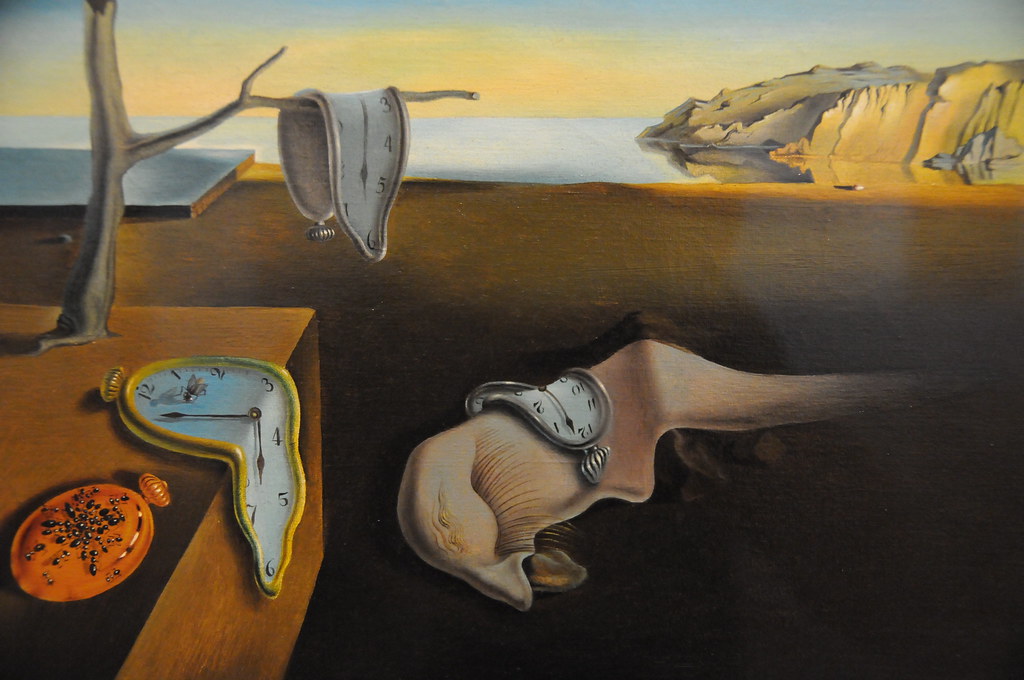
“The Persistence of Memory” by Salvidor Dali

My affirmation today is, again, I am enough. I am enjoying this theme and I think it’s worth reflecting on regularly. It can be expanded to include this is enough, and it makes me think now about gratitude. A quote we had on the wall for a while:

Gratitude turns what we have into enough.

That which is, is enough.

I got up early enough. There is enough time to do whatever needs to be done. I do enough of what I want. The weather is warm enough (this is easy today because the weather is perfect). I have enough energy to be productive enough today. I am enough without being productive.

The last few days have been “hijacked” by life, resulting in me not being able to do what I wanted to do, which was work on kHeart projects. Life has been this way a lot lately – enough to show me that there is something for me to be seeing.

What does that mean? What am I supposed to be seeing?

I am supposed to be seeing and looking at the reality that life doesn’t always go as we planned – in fact, it never does. We know the saying, “Life is what happens while you were busy making plans.” The future is never as we imagined it would be.

In the space between the present and the future, there is a line between getting our way and getting out of the way, between getting what we want and going with the flow.

I am beginning to see that the idea of attachment and non-attachment applies to time and events as much as it applies to material possessions.

I understand non-attachment in the material realm and am generally okay with not getting or having possessions. I am learning now that I have something to learn about accepting and adapting to situations where I don’t get what I want in terms of controlling the way I spend my time.

For most of my life I have been a loner, and I don’t mean that in a self-disparaging way: my upbringing lead to me being comfortable with being alone, and I was mostly happy with that. Sometimes I was lonely, but I adapted and came to enjoy having lots of time alone. I am mostly an introvert as well, so I need time alone to recharge. The “lone wolf” is a descriptor that applies better than “loner”: I have friends that I see now and then, but mostly I’m pretty self-contained.

I am seeing a narrative emerge here – a story I tell myself about myself – and I’m seeing that a guided journaling practice might help others to see where narratives are running the way they think about themselves.

I see it as a narrative because I see how I am telling you how I was or am. If it can be told, it is a narrative, and if it can be told one way it can be told another. It makes me think of the Taoist idea: if it can be named, it is not the Tao.

Meaning that if I can tell you about it, it is not the truth – if I can tell you about myself, I am not telling you about my true nature. Everything we tell about ourselves – every narrative we create to explain ourselves – is a fiction, a construct. It is not the truth, but a choice between various and myriad lies or fictions, illusions.

I’m getting obscure again, but this is ephemeral territory, the metaphysical and the esoteric. The exoteric is an example.

My son Zane has told me things about himself, like “I’m not the sort of person who … [insert character trait here] … likes to talk about his feelings … likes learning … likes slow movies.” When Zane has done this I have recognised that these are very much choices he is making about identity, not expressions of his true nature. These claims have been made over the last five years, between the ages of 9 and 14, a time of development when children begin realising they have an identity they need to understand. They are seeing that they are not just expressions of their parents, but individual entities and there seems to be an urgency to claim their own identity. When he has made these claims I have tried to say variations of “maybe that will change one day”, because I want for him to not become locked-in to one identity-choice or another. Imagine a person believing their whole life that they are not the sort of person who likes to talk about their feelings. (Like human beings can be sorted into this or that category like so many biscuits behind a barcode!) That would be a prison on the island of the illusion of independence – no man being an island and all that.

Something I don’t have to imagine is a person believing their whole life that they are happier when they are alone. I don’t have to imagine this because it is a belief I have been narrating to myself my whole life – because a bunch of people let me down early in life, and I decided I would be better of without them and they would be better off without me. Trouble is, “they” was a specific group of people back then, whereas now “they” applies to the whole amorphous group of people known as everyone other than me.

As an adult I choose to share my aloneness with a few select others who show that they care about me and are able to let me care about them, but because I was mistreated by a select few as a child – my brother, father and some kids at school – I must have told myself at some point that I am the sort of person who doesn’t need friends to be happy, that I am the sort of person who is happy to be alone.

After a slew of toxic relationships in my young adulthood (before I met Nikki) I had resigned myself to believing that I would be happier to be single my whole life than to continue from one toxic relationship to another. I had resigned myself to dying alone, using justifications such as “we are each alone at death anyway”.

I’m rambling a bit, but that’s okay because this has become an exercise in questioning the narratives that dictate my beliefs about my nature, true or otherwise.

I have been thinking, these last few days when I haven’t been able to get what I want, that I need to figure out how to get more solitude in my life(style).

That word “more” is a clue and a key. If we are saying we need more of this or that (more money, a job that is more fulfilling, more time, more time alone, more time alone doing this or that … it’s an endless list of more and more qualifications of what we want from what is) then we are not living from the awareness of enoughness.

Understanding this in relation to time is the challenge I am currently facing, which I choose to accept.

When I am frustrated that I am not getting the time I want, I see that attachment is at work and I remember that this is enough. That which is, is enough.

That is my affirmation today, should I choose to accept it.

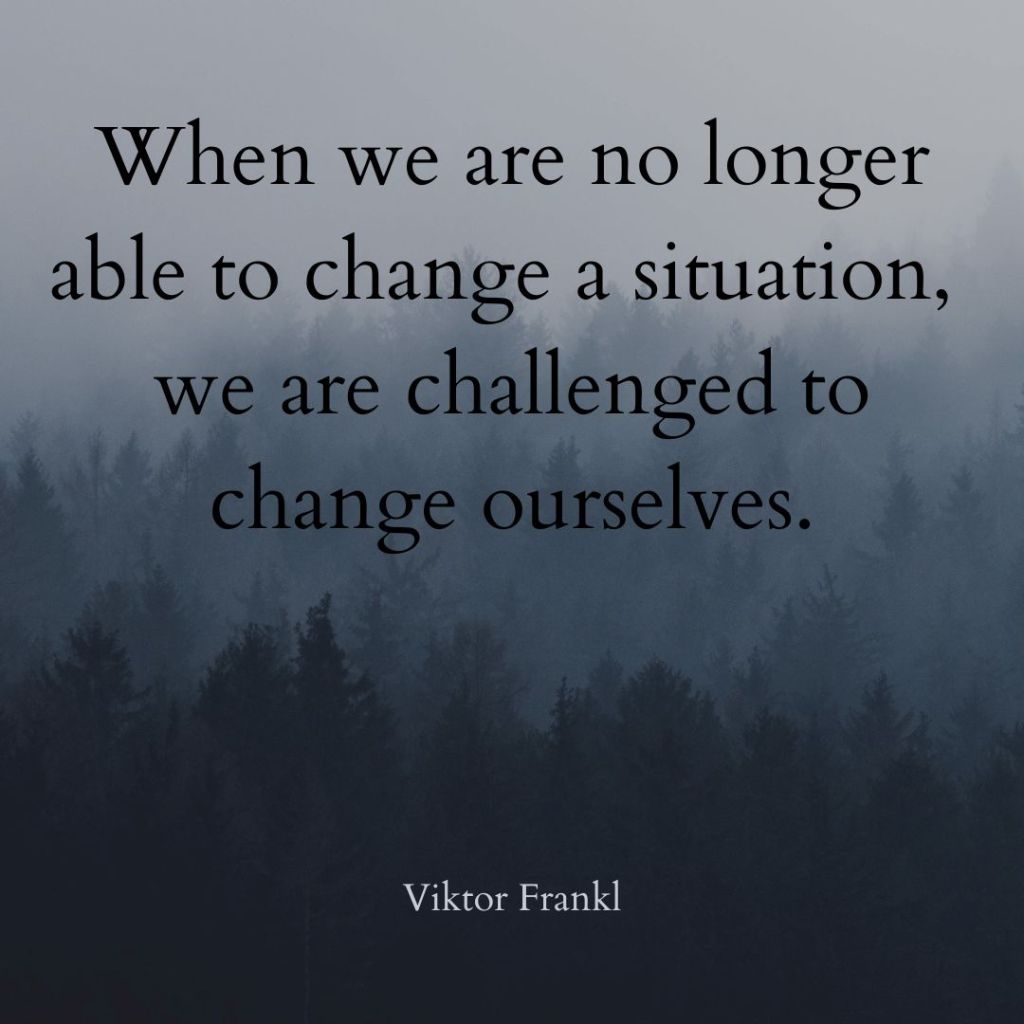
Frustration is a red flag that attachment is operating. I can try to make that which is different, or I can choose to adapt and feel grateful and allow whatever is to be. I can choose to get out of the way and allow my resistance to that which is to dissipate. And in this way I can allow a new narrative to write itself: I am equally happy when my time is spent alone or with people; if I cannot change the external conditions/situation dictating that I must spend more time with others than I am used to or would like, then I must accept only that which I can change, which is how I feel about the situation/condition. Remember Frankl:

When we are no longer able to change a situation,
we are challenged to change ourselves.

the weather behind the curtain

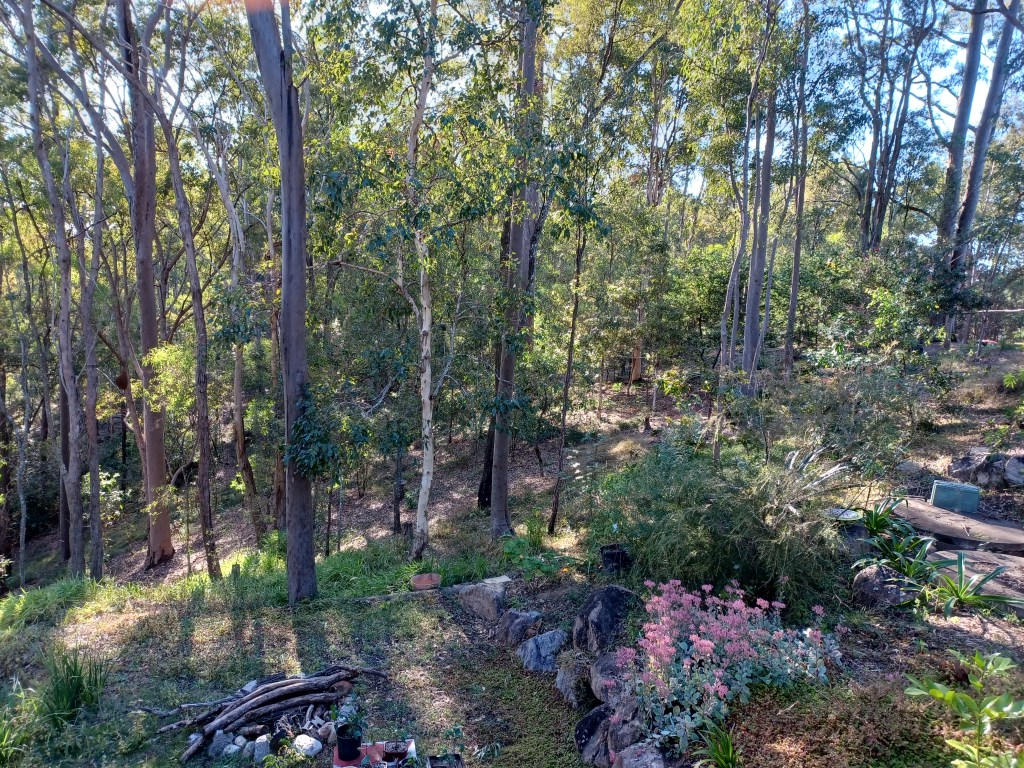
I feel inspired this morning. I woke earlier than usual and, seeing the beautiful weather behind the curtain, I decided to sit myself up and be awake. That’s a nice metaphor about what we’re doing here: seeing the beautiful weather behind the curtain, where the beautiful weather is our already-enlightened nature, and the curtain is the network of conceptual obscurations that prevent us from living out of that place each moment. It’s like waking up and remembering I live here:

the bushland suburb of Bunya in Southeast Queensland (not to be confused with the Bunya Mountains, which is real out-bush)

I feel inspired to do my purpose, which is to observe and report the world anew, to investigate the nature of reality, to write my own narrative and help others to do the same. I’m drafting a post about what I even mean by changing the narrative and psychospiritual wellness — coming soon. But meanwhile, I can say this much:

without really knowing it, in our subconscious we tell ourselves stories about the way the world was, is and will be. If we are not vigilant about the content of these stories, they can be limiting and even harmful. We can get stuck in the past, and from there all we can expect is that our future will reflect that past. If you’ve had a good past, then bully for you — but most of us haven’t, and we want to see a brighter future.

Continue reading “the weather behind the curtain”