reflections from caste to class

some thoughts about Rohinton Mistry’s novel A Fine Balance
and the prevalence of class disparity in globalised industrial culture
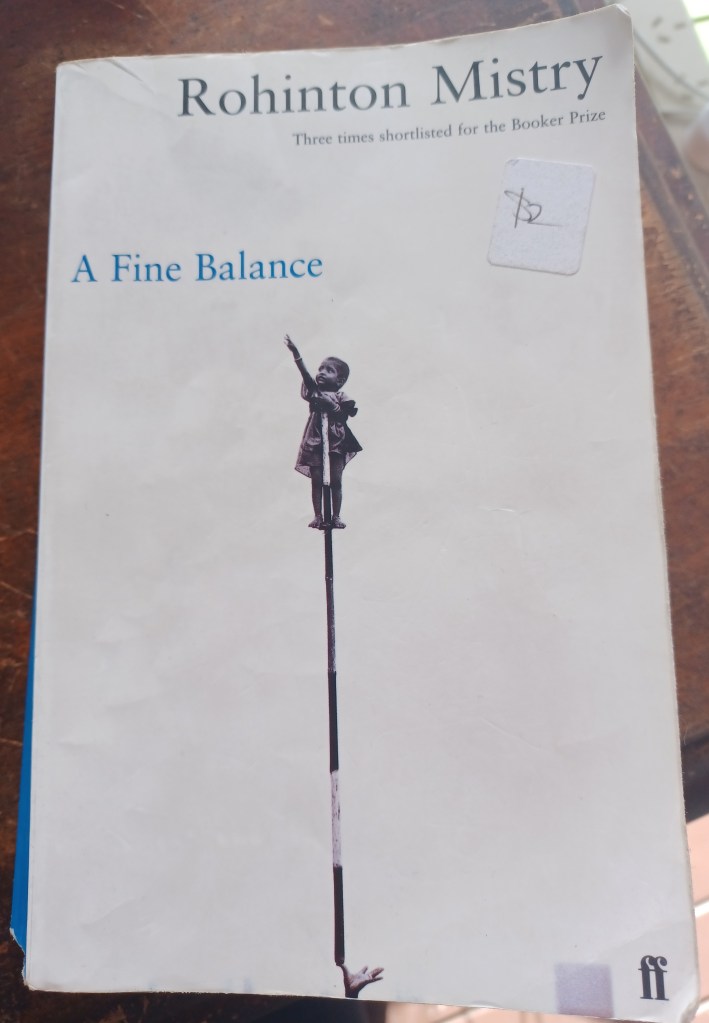
I enjoyed this even though I didn’t really enjoy it ~ and I enjoyed it less than I thought I would, but in ways I didn’t expect. I don’t know whether to feel ambivalent about it, or celebratory. It has received a lot of critical acclaim, I suppose because it operates well in a classical genre ~ a genre that’s just not really my thing. It’s straight-up realism, for one thing. It reminded me of Power Without Glory, an Australian historical novel by Frank Hardy, which I read during a fit of literary nationalism and enjoyed, though it was hard work to enjoy it. Published in the mid-90s, A Fine Balance is a novel of 1970s India by Rohinton Mistry, an Indian-born Canadian writer. It was hard work to enjoy because the realist style was quite dry, and because a lot of the suffering and caste-bigotry was hard to watch ~ I think that was the point, and that’s why I ended up enjoying it, despite my usual taste for more artful realism.

The novel follows the lives of four characters who are brought together in circumstances that seem unlikely but might be more common that we think in India: Omprakash and his uncle Ishvar find themselves living and working as tailors in the single-bedroom flat of Dina Dilal, along with Mareck who is renting Dina’s bedroom. Om and Ishvar were leatherworkers by tradition of their chamar caste, and they come to be like family for Dina and Mareck, despite their caste differences. Sounds lovely, except for the brutal misfortunes that fall upon the chamar family as a result of caste violence and government-level corruption.

The writing was plain without being especially beautiful or minimalist. Other writers like Raymond Carver have been more effective at depicting the brutal realities of class inequality, with far fewer words than this 600-page tome set in 11-point type on 11-point leading. This novel was dense! But somehow leavened by the occasional slight touch of (often-black) humour. And it was ‘easy-listening’, enjoyable without being too stimulating. Maybe this is one of its achievements ~ it depicts brutal realities of poverty and caste violence, without being so heavy that a reader turns away in despair. It’s certainly a weird thing to say, that it was easy-listening, especially considering the horrors depicted and the way Maneck ended things!

In this sense the book was very eye-opening (a term that also doesn’t seem to quite hit the mark): it raises awareness of barbaric practices that are still alive today in India, and of the atrocities that can be committed in the name of ignorant religious faith, and how the perpetrators must suffer as much as their victims because of their greed and hatred and fear. That last wasn’t explicitly depicted, but compassion helps us read this between the lines. I didn’t know India was such a brutal place! It has always seemed like a spiritual mecca for me, and perhaps in some places it meets that idealised image, but not in the village, city and stories of the four people entwined by A Fine Balance.

It makes me feel grateful to live in a place that might be culturally bankrupt but at least does not expect widows to burn themselves alive on the funeral pyres of their late husband! Yes we have some class issues, but at least they are not compounded by blind faith in religious beliefs used to justify flagrant injustice.

Oh wait, yes they are! Maybe not explicitly religious beliefs, but certainly out-dated ideologies are used to maintain a status quo that perpetuates … never mind, I didn’t come here to rant about that ~ just to say, now, that upon reflection I value this novel because it has reflected problems in my own culture. These issues are not isolated to subcontinental India, but this novel highlights them there to illuminate their existence in all industrial cultures around the world.

The suffering of the lower classes in Australia is real and the result of an unjust system, the same as in India. I am grateful though, because this novel highlights for me that things could be much worse here. At the same time as highlighting the plight of India, it brings a sense of perspective to the plight of the global underclass.

And I’m grateful, too, thought it seems like a side-note, that I am learning psychospiritual-training practices that treat the suffering of greed, hatred, fear and ignorance at the root. It is from the ancient scriptures of India that we gain the cosmological perspective of kali yuga (a period of cosmic time where the dharma is inaccessible, charalatans prevail and ignorance is king) and it is from Rohinton Mistry that we get a micro-cosmic view of how kali yuga plays out.

May we each find a way of being that confronts the suffering depicted in this novel with compassion and wisdom.
AI ~ an expression of nature

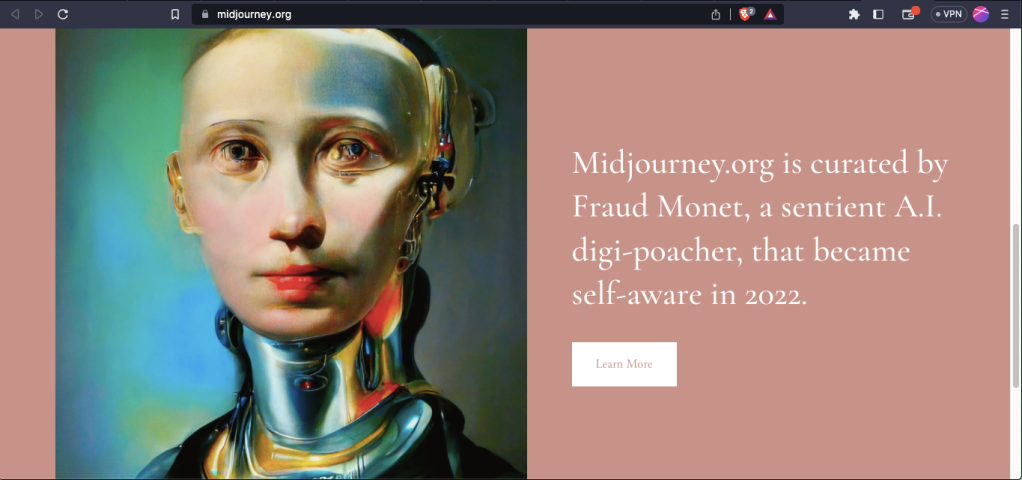
I don’t know how y’all feel about AI right now, but I like this, Fraud Monet, very funny.

I suspect that who- or what-ever wrote this copy decided to not use “who” (the human pronoun), but maybe the use of “that” was just an error because human intelligence is and was already in decline!?

The importance of the distinction between “who” and “that” in this context has probably never been more hotly contested than during the current storm about AI.

I was talking to a Zen friend last night about how human intelligence has caused a lot of harm (and good) on this planet, especially in an ecological sense, but at the bottom of it all, human intelligence is just another expression of nature.

Therefore so is artificial intelligence, as an expression of human intelligence.

Nature is bigger than both of these things.

I’m worried about the proliferation of bullshit that might result from dodgy journalists having a ChatGPT account and I’m worried about artists losing their livelihood, but the post-truth age was upon us long before the rise of AI chatbots writing essays, and artists have been economically marginalised since forever anyway. This new addition to the equation just adds pressure to the pot!

books made of human skin

Books made of human skin, Da Vinci’s Codex Leicester selling for US$30,802,500, and Fran Lebowitz being outraged at someone putting a cup down on a book …

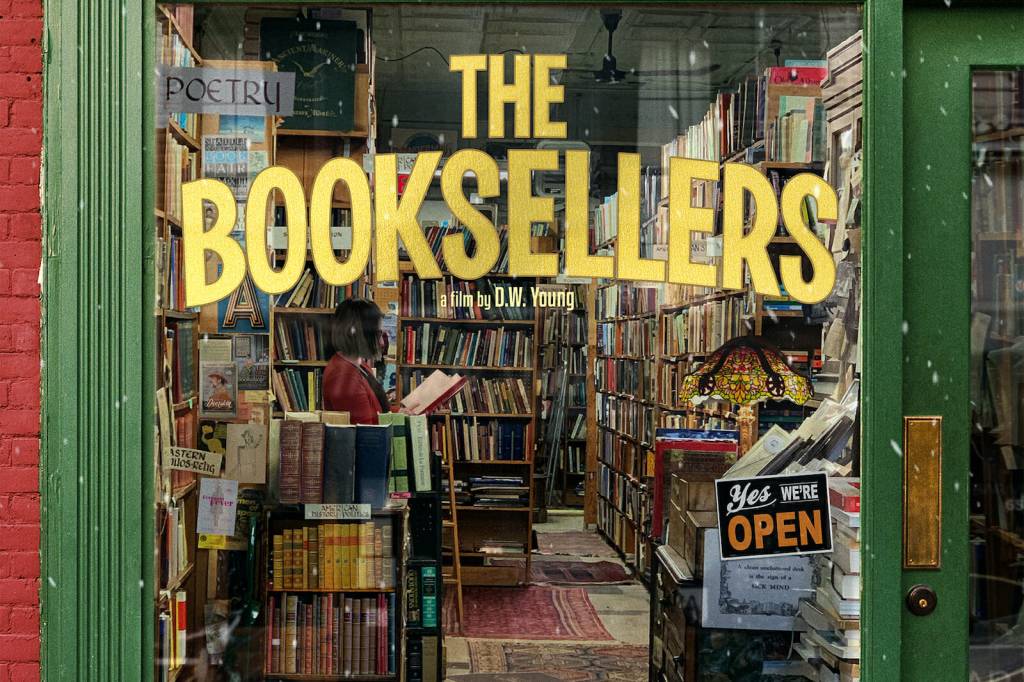
The Booksellers, a charming documentary about the endearingly whacko people who trade in rare and iconic books.

We watched it the other night and it was lovely to just wander through these people’s lives, through their enthusiasm for hunting and protecting these books for posterity.

If you’re looking for a light documentary about the simple cultural pleasure of physical books, check out The Booksellers by D W Young.*

*That’s an affiliate link, so if you buy something through that link I’ll get some money for a coffee, at no extra cost to you.

essay published on The Good Men Project

I am very pleased to announce that The Good Men Project have published one of my essays, ‘Telling It How It Is: How (kitsch-free) literature has helped me be a better dad’. You can read it here. It’s an essay about how reading Paul Mitchell’s novel-in-stories, We. Are. Family, helped me to understand the culture that informed my dad’s way of being – and how to avoid the foibles of his parenting style.

I published once about my relationship with Dad on GMP before: ‘An Open Letter to my Dad the Bandit’, which you can read here

The Good Men Project have a great brief, ‘the conversation no one else is having’ about what it means to be a good man in the 21st century, which I love to support.

Feel free to comment, there or here. 

House of {Thieves}

not a review ~ does have vague spoilers

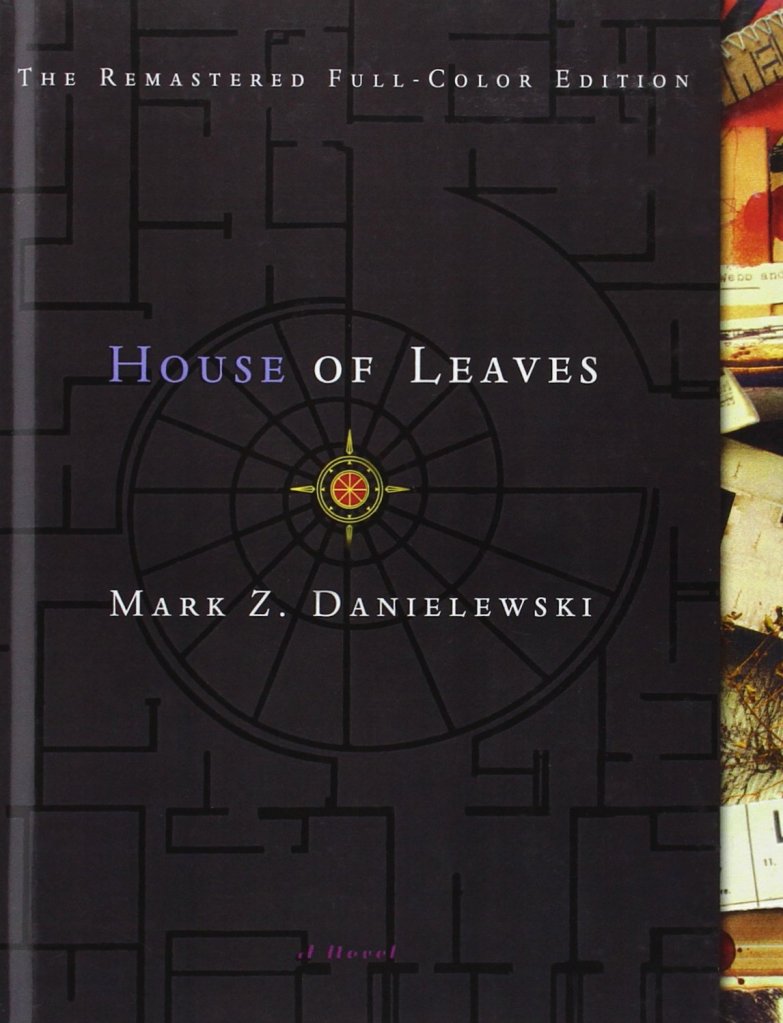
I’ve just finished reading House of Leaves by Mark Z. Danielewski, and I found it fascinating (of course). Reading this combined with the intro to literary and cultural theory subject I’m taking at uni (plus the intro to genre subject I’m taking), has left me feeling all sorts of dizzy and awestruck by the power of narrative/signs to have bizzare and illuminating effects on the mind, while also leaving me baffled and certain that certainty is a lie.

I was fascinated, of course, because the book is a mystery wrapped in a riddle wrapped in a rasher of bacon thrown down a bottomless stairwell, but also I was fascinated, I think, because the book contains many and varied clues about WTF it might actually be on about, and I have immensely enjoyed dwelling in that strange liminal place between understanding and confusion. But I have a certain disposition ~ I quite like ambiguity, and I’m generally okay with accepting that mostly I don’t understand things, and when I do feel like I understand them I am always/usually prepared for this understanding to come crashing down among paroxysms of fear and uncertainty about the meaning of anything, not just life.

My first impression of the book (riddled as it is with footnotes in footnotes in footnotes, and the whole thing about exploring an unknown space with the intention to define it, understand it, make it known, and how this is ultimately futile because knowing is a ruse, a construct, a decision that must necessarily preclude other types of knowing) is that it’s one great big lumbering comment on the nature of academic enquiry, especially things like literary and cultural studies. The invented academic commentary about a non-existent film about a house that theoretically should not exist, left me with the early impression that the book is a comment on the stupidity of trying to categorise things, and the tendency of academics to shroud their feelings of stupidity/inferiority with obfuscating language and irrelevant tangents, lest they be discovered pretending they know things they cannot possibly know.

I should say, I mean, that my first impression was that the book is a protracted comment on the idea that we cannot know, and therefore our search for meaning is futile because meaning is a construct that can change or collapse at any moment, especially if we try to maintain a liberal mindset, and by ‘liberal’ here I mean ‘flexible’, based on a quote I like from Bertrand Russell:

The essence of the Liberal outlook lies not in what opinions are held, but in how they are held: instead of being held dogmatically, they are held tentatively, and with a consciousness that new evidence may at any moment lead to their abandonment.

Whether he said this or not, I don’t know, and I don’t know the context in which he said it ~ knowing the unreliability of the internet, though, which is where I found this idea in the first place, I have my doubts. Nonetheless, I cherish the idea ~ and will cherish it until new evidence may convince me that I should change my mind and become (wholly) conservative (I do have some views that might be considered conservative, such as a preference for diversity over equality if I had to put these two values in a hierarchy, which may not be a conservative value: I just know arguing against equality among liberals causes people to wince).

Anyway, my first impression was that the whole book is a comment on postmodernism and how it’s fucked up everyone’s chances of every being able to say they understand anything without being called out as a reductionist, and a semantic chauvinist/jingo to boot. We haven’t got around to actually learning about postmodernism yet, so I’m feeling a bit presumptious about reducing this book to just a comment on the presumptions of postmodernism, though it is fair to say, as did Steven Poole in the Guardian, that the novel is ‘a delightful and often very funny satire of academic criticism’. So it’s that ~ category number one: satire. Tick. (Hypocrisy witnessed, stupidity accepted.)

But it’s also something else, and this reading of the novel has been formulating in a weird way around things I’ve been learning at uni as well. The whole thing is a metaphor for American colonisation, which is explained in such a way that I don’t need to attempt it here. The first clue for me was when I started to learn (in the book) that Virginia is the site of America’s earliest colony, and in the book a journal is found that details a hunting expedition where the colonists found a set of stairs descending into the earth out of nowhere. So the staircase at the centre of the house has been there since long before the house was actually built, since the dawn of American colonisation, at least. Perhaps the darkness at the heart of the house is the horror, shame and guilt at the heart of all who participate in the colonial endeavour (which continues, BTW, no matter who tells you we live in a postcolonial age). I think so.

The cool thing about this act of interpretation, in the context of what I’m learning about semiotics and literary theory and postmodernism and the like, is that if I interpret these words to be a metaphor for one thing or another, I can say, ‘I think [so and so]’, and it’s pretty much always going to be correct, as long as I can back it up with something approaching logic, as long as I can point to things that make my conclusion seem at least half reasonable. So for me, House of Leaves will always mean something specific, which is both right and wrong (right to me, and wrong to you, unless you agree, but also wrong to me because it will always mean something else as well, simultaneously). And with this I reveal the other aspect of a predisposition: as much as I’m okay with ambiguity and uncertainty, I do like to feel a sense of understanding/knowing after I’ve been confused for over 700 pages.

For this reason, I would also say the book is a metaphor for how narcissism and egotism get in the way of healthy human relationships: to me (and other, fictional, analysts in the book) the house represents the psyche, as in so many dreams (cf. Jung), and the ‘Navidson house’ in House of Leaves frequently behaves in such a way that it’s impossible not to wonder if the house represents/reflects each of the fears/hopes of the people who enter its dark spaces, especially Will and Karen, and also Holloway.

The other and final note I want to make about the book, is that as far as I can tell the whole thing was nothing more and nothing less than a wild and comprehensive hallucination of Johnny’s. There are clues for this in the text, but they are buried in such a way that I don’t especially care to dig them out (also, somewhat, I’d rather hold this reading close for now, because it references my interest in psychosis and what the experience of psychosis does to a person’s lasting impressions of what constitutes reality).

And it left me with this fictional quote, which I love because even though I’m passionate about reading, writing and literature, sometimes I feel like a fraud when sitting down at the desk to actually do the creating feels like the last thing I actually want to do:

Passion has little to do with euphoria and everything to do with patience. It is not about feeling good. It is about endurance. Like patience, passion comes from the same Latin root: pati. It does not mean to flow with exuberance. It means to suffer.

(Not that I identify at all with the idea of ‘the suffering artist’. I never really did, which is perhaps why I so easily sold out my literary ambitions to become an editor in my early career. Now that I’ve got that out of my system I look forward to a rich and balanced life of literary creation, in which I eat food instead of mi goreng for breakfast lunch and dinner. I just resonate with the idea that if you’re passionate about something, especially creativity, it’s important to remember that sometimes you have to just plough through the work, even, and perhaps especially, when you’re not really feelin it.)

All told it was one of the most painfully enjoyable literary experiences of my life, and I know it’s one of those books that will … *ahem* … haunt me for a very long time, yielding new meanings as I encounter new theories / ideas / texts and as I begin to meet others who have read it. So drop a comment below if you feel like it ~ I’d love to join the conversation