I’ve been invited to present a short talk at the Theosophical Society in Brisbane this year, and I’m going to be talking on the subject of ‘psychosis or spiritual emergency’. I have some experience of this, and I think it’s important to raise awareness that what presents as psychosis may not always be pathological.
If you have any stories or resources you would like to share so I can make the talk as comprehensive as possible, please get in touch. You can comment below, send me a direct message through any of these channels or use this contact form.
In particular, it’s going to be important that I present some information about how to identify the differences between psychosis and spiritual emergency, and also some information about how to regulate our experience if we think we’re escalating into either of these states.
So yeah, if you’re familiar with or interested in this subject I would love to hear from you. Especially if you feel strongly about anything that should or shouldn’t be included in a talk like this ~ it’s a sensitive subject, so I want to be as judicious as possible.
During my first experience of what I now understand was mystical psychosis, a friend at the time would like to say something like, “It’s called ‘insanity’ because you go in-to-sanity,” and I appreciated that because it was a kind of anchor, an affirmation that the experience I was having might be positive.
Since then I have had two similar experiences, each of increasing intensity and both tipping from what Stan Grof calls “spiritual emergence” into “spiritual emergency”. I wrote about the second episode in a post called “Psychosis or Spiritual Awakening”, and I have since learnt that I am far from the only one who believes in the potentially positive transformation that can occur if a person is appropriately supported through the expansion of consciousness that psychosis can sometimes be.
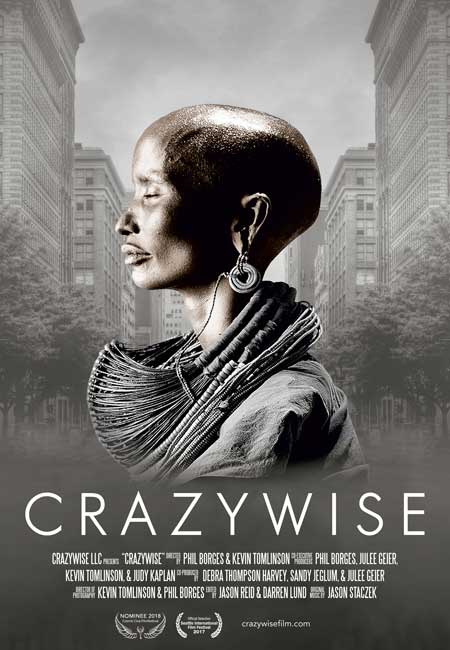
Enter the documentary Crazy Wise, whose short blurb (trailer below) reads:
Crazy … or wise? The traditional wisdom of indigenous cultures often contradicts modern views about a mental health crisis. Is it a ‘calling’ to grow or just a ‘broken brain’? The documentary Crazy Wise explores what can be learned from people around the world who have turned their psychological crisis into a positive transformative experience.
As a survivor of our lagging mental-health system who has experienced profound insight through episodic psychosis, I very much value the message of this documentary. One distinction I like to make is that if, in modern Western psychology, psychosis is ‘a break from reality’ and, in ancient Eastern psychology, reality is an illusion, then psychosis is a break from illusion. Apart from that, I will let the filmmakers do the rest of the talking:
During a quarter-century documenting indigenous cultures, human-rights photographer and filmmaker Phil Borges often saw these cultures identify “psychotic” symptoms as an indicator of shamanic potential. He was intrigued by how differently psychosis is defined and treated in the West.
Through interviews with renowned mental health professionals including Gabor Mate, MD, Robert Whitaker, and Roshi Joan Halifax, PhD, Phil explores the growing severity of the mental health crisis in America dominated by biomedical psychiatry. He discovers a growing movement of professionals and psychiatric survivors who demand alternative treatments that focus on recovery, nurturing social connections, and finding meaning.
Crazy Wise follows two young Americans diagnosed with “mental illness.” Adam, 27, suffers devastating side effects from medications before embracing meditation in hopes of recovery. Ekhaya, 32, survives childhood molestation and several suicide attempts before spiritual training to become a traditional South African healer gives her suffering meaning and brings a deeper purpose to her life.
Crazy Wise doesn’t aim to over-romanticize indigenous wisdom, or completely condemn Western treatment. Not every indigenous person who has a crisis becomes a shaman. And many individuals benefit from Western medications.
However, indigenous peoples’ acceptance of non-ordinary states of consciousness, along with rituals and metaphors that form deep connections to nature, to each other, and to ancestors, is something we can learn from.
Crazy Wise adds a voice to the growing conversation that believes a psychological crisis can be an opportunity for growth and potentially transformational, not a disease with no cure.
It really is a fantastic film, very moving and inspirational. There is a new paradigm of integrative psychological awareness emerging, and these documentaries are helping to spread the word.
If you experience or have experienced acute psychological distress, have a look at this documentary and please know there is an alternative to what the medical-system narrative might believe is the only truth about your “symptoms”.
Reach out to me if you need support, or check out the Spiritual Emergence Network (SEN) of Australia, who have peer-support workers operating in Brisbane at least, and other parts of Australia. There is also a US-based SEN, and hopefully these links will get you started if you’re investigating this for yourself or someone you know from other parts of the globe.
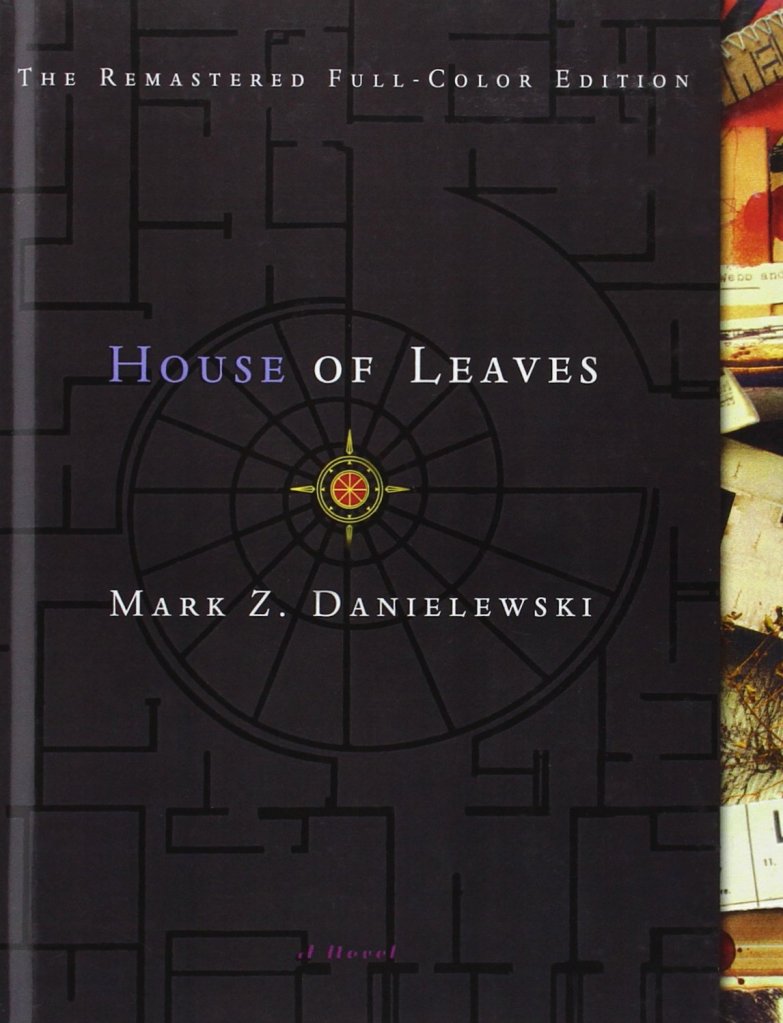
I’ve just finished reading House of Leaves by Mark Z. Danielewski, and I found it fascinating (of course). Reading this combined with the intro to literary and cultural theory subject I’m taking at uni (plus the intro to genre subject I’m taking), has left me feeling all sorts of dizzy and awestruck by the power of narrative/signs to have bizzare and illuminating effects on the mind, while also leaving me baffled and certain that certainty is a lie.
I was fascinated, of course, because the book is a mystery wrapped in a riddle wrapped in a rasher of bacon thrown down a bottomless stairwell, but also I was fascinated, I think, because the book contains many and varied clues about WTF it might actually be on about, and I have immensely enjoyed dwelling in that strange liminal place between understanding and confusion. But I have a certain disposition ~ I quite like ambiguity, and I’m generally okay with accepting that mostly I don’t understand things, and when I do feel like I understand them I am always/usually prepared for this understanding to come crashing down among paroxysms of fear and uncertainty about the meaning of anything, not just life.
My first impression of the book (riddled as it is with footnotes in footnotes in footnotes, and the whole thing about exploring an unknown space with the intention to define it, understand it, make it known, and how this is ultimately futile because knowing is a ruse, a construct, a decision that must necessarily preclude other types of knowing) is that it’s one great big lumbering comment on the nature of academic enquiry, especially things like literary and cultural studies. The invented academic commentary about a non-existent film about a house that theoretically should not exist, left me with the early impression that the book is a comment on the stupidity of trying to categorise things, and the tendency of academics to shroud their feelings of stupidity/inferiority with obfuscating language and irrelevant tangents, lest they be discovered pretending they know things they cannot possibly know.
I should say, I mean, that my first impression was that the book is a protracted comment on the idea that we cannot know, and therefore our search for meaning is futile because meaning is a construct that can change or collapse at any moment, especially if we try to maintain a liberal mindset, and by ‘liberal’ here I mean ‘flexible’, based on a quote I like from Bertrand Russell:
The essence of the Liberal outlook lies not in what opinions are held, but in how they are held: instead of being held dogmatically, they are held tentatively, and with a consciousness that new evidence may at any moment lead to their abandonment.
Whether he said this or not, I don’t know, and I don’t know the context in which he said it ~ knowing the unreliability of the internet, though, which is where I found this idea in the first place, I have my doubts. Nonetheless, I cherish the idea ~ and will cherish it until new evidence may convince me that I should change my mind and become (wholly) conservative (I do have some views that might be considered conservative, such as a preference for diversity over equality if I had to put these two values in a hierarchy, which may not be a conservative value: I just know arguing against equality among liberals causes people to wince).
Anyway, my first impression was that the whole book is a comment on postmodernism and how it’s fucked up everyone’s chances of every being able to say they understand anything without being called out as a reductionist, and a semantic chauvinist/jingo to boot. We haven’t got around to actually learning about postmodernism yet, so I’m feeling a bit presumptious about reducing this book to just a comment on the presumptions of postmodernism, though it is fair to say, as did Steven Poole in the Guardian, that the novel is ‘a delightful and often very funny satire of academic criticism’. So it’s that ~ category number one: satire. Tick. (Hypocrisy witnessed, stupidity accepted.)
But it’s also something else, and this reading of the novel has been formulating in a weird way around things I’ve been learning at uni as well. The whole thing is a metaphor for American colonisation, which is explained in such a way that I don’t need to attempt it here. The first clue for me was when I started to learn (in the book) that Virginia is the site of America’s earliest colony, and in the book a journal is found that details a hunting expedition where the colonists found a set of stairs descending into the earth out of nowhere. So the staircase at the centre of the house has been there since long before the house was actually built, since the dawn of American colonisation, at least. Perhaps the darkness at the heart of the house is the horror, shame and guilt at the heart of all who participate in the colonial endeavour (which continues, BTW, no matter who tells you we live in a postcolonial age). I think so.
The cool thing about this act of interpretation, in the context of what I’m learning about semiotics and literary theory and postmodernism and the like, is that if I interpret these words to be a metaphor for one thing or another, I can say, ‘I think [so and so]’, and it’s pretty much always going to be correct, as long as I can back it up with something approaching logic, as long as I can point to things that make my conclusion seem at least half reasonable. So for me, House of Leaves will always mean something specific, which is both right and wrong (right to me, and wrong to you, unless you agree, but also wrong to me because it will always mean something else as well, simultaneously). And with this I reveal the other aspect of a predisposition: as much as I’m okay with ambiguity and uncertainty, I do like to feel a sense of understanding/knowing after I’ve been confused for over 700 pages.
For this reason, I would also say the book is a metaphor for how narcissism and egotism get in the way of healthy human relationships: to me (and other, fictional, analysts in the book) the house represents the psyche, as in so many dreams (cf. Jung), and the ‘Navidson house’ in House of Leaves frequently behaves in such a way that it’s impossible not to wonder if the house represents/reflects each of the fears/hopes of the people who enter its dark spaces, especially Will and Karen, and also Holloway.
The other and final note I want to make about the book, is that as far as I can tell the whole thing was nothing more and nothing less than a wild and comprehensive hallucination of Johnny’s. There are clues for this in the text, but they are buried in such a way that I don’t especially care to dig them out (also, somewhat, I’d rather hold this reading close for now, because it references my interest in psychosis and what the experience of psychosis does to a person’s lasting impressions of what constitutes reality).
And it left me with this fictional quote, which I love because even though I’m passionate about reading, writing and literature, sometimes I feel like a fraud when sitting down at the desk to actually do the creating feels like the last thing I actually want to do:
Passion has little to do with euphoria and everything to do with patience. It is not about feeling good. It is about endurance. Like patience, passion comes from the same Latin root: pati. It does not mean to flow with exuberance. It means to suffer.
(Not that I identify at all with the idea of ‘the suffering artist’. I never really did, which is perhaps why I so easily sold out my literary ambitions to become an editor in my early career. Now that I’ve got that out of my system I look forward to a rich and balanced life of literary creation, in which I eat food instead of mi goreng for breakfast lunch and dinner. I just resonate with the idea that if you’re passionate about something, especially creativity, it’s important to remember that sometimes you have to just plough through the work, even, and perhaps especially, when you’re not really feelin it.)
All told it was one of the most painfully enjoyable literary experiences of my life, and I know it’s one of those books that will … *ahem* … haunt me for a very long time, yielding new meanings as I encounter new theories / ideas / texts and as I begin to meet others who have read it. So drop a comment below if you feel like it ~ I’d love to join the conversation

 Kokoro 心 Heart