forgiveness dispels victim mentality

a journal entry about how forgiveness is
loosening my attachment to a victim mentality

I have been doing a near-daily forgiveness training in my sadhana lately, and as I near the end of a 30-day rotation I was pleased to realise that a forgiveness practice can release us from the victim mentality. I had read about this in my research about this elusive heart quality, but I hadn’t yet really felt it. Now I have!

After nearly 30 days of this practice, having exhausted the people I could think of who I needed to forgive, I found myself moving on to the culture as a whole.

Now that’s a nebulous beast, the whole culture, and because I didn’t have one person or institution I could hang on to as the sole thing requiring forgiveness, the one distinct entity I felt resentful about, I found that I started moving into states of … let’s call it “resentment Teflon”!

In this state I recall once thinking of myself as a duck in the waters of resentment.

Point is, the resentment had nowhere to stick.

When I realised I could let go of all the resentment I hold for our culture and society being generally deficient (especially, for example, for being spiritually bankrupt) I found that a whole new sense of empowerment and personal responsibility + agency filled the void where resentment had been.

I was no longer the victim of a culture that didn’t meet my spiritual needs and was now an agent who could serve the spiritual needs of that culture.

This phrase comes to mind from a guy I met through men’s work: it’s not our fault, but it’s our responsibility.

This usually applies to the victims of trauma, abuse, neglect, meaning it’s not our fault we were traumatised, but it’s our responsibility to do the healing. No one else is going to do it. I feel the same now about the lack in our culture. I no longer feel let down by our culture because it doesn’t immediately meet my spiritual needs, and instead feel agency to meet my own, and empowered to help others meet theirs.

It’s not like there was ever a Golden Age of Spirituality. Maybe there were (and still are) traditional societies whose culture is based on spirituality. But these are not the cultures or times I live in. And generally speaking these pursuits were always marginalised, initiated and led and maintained by the few who decided it was their duty and honour, their way of serving humanity.

I had no idea this would emerge out of a sustained practice of cultivating forgiveness, but I’m grateful it has.
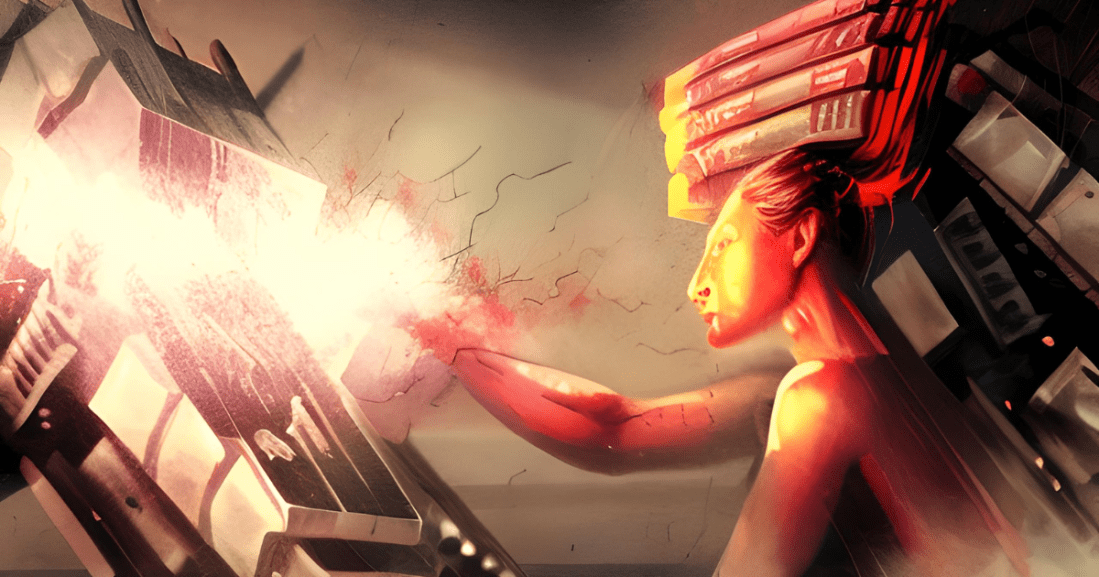
the importance of attention

attention economy war for our soul newsprint digital matrix network good versus evil battle phone screen smashing computer desktop

It dawned on me recently that the attention economy is in a war for our soul!

Dramatic, I know! And I’m not even exactly joking. But what does this mean? What is the attention economy? And how is it warring for our soul!?

I have started answering some of these questions in a resource I am developing for Heartwards, which can be found here.

Something I want to address in this post here though, is the outrageous claim that the attention economy is in a war for our soul.

As I have been deepening my Zen practice lately ~ in particular at a recent three-day sesshin ~ I have started to notice or strongly suspect that our capacity to concentrate on the present is directly correlated with our awareness of our true nature, which is that we are already enlightened (in Buddhism this is the concept of buddha-nature).

In the Sanbo Zen lineage I am training with, our practice is to concentrate on the mantra mu, and I have started to see this very short word as something like an interface (or a portal!) between my relative self and the absolute Self.

This means that every time I am distracted from concentrating on mu, I am pulled away from the portal that would take me to insight about my true nature.

Knowing that some would refer to the absolute Self as the soul, I have decided to start deliberately using hyperbole in claiming that the attention economy is in a war for our soul.

And repetition! I learnt from reading Schopenhauer that repetition is a useful literary device.

Correct me if I’m wrong.

Of course, it’s not just mu that is the portal ~ mu is just a placeholder, and the portal is nothing more and nothing less than the present.

If our attention is constantly being pulled away from the present by advertising, click-bait, fragmented conversation and our every fleeting desire and curiosity (all of which are the jet fuel of the attention economy), then yes, the attention economy is in a war for our soul, because it is through concentrating on the present that we know our soul ~ it is through strong attention on reality as it is that we experience the contentedness, peace and quietness of mind that feels like heaven on earth.

When my concentration/attention is strong ~ not just in meditation, but especially in the comings and goings of daily life ~ I enter a flow-state that feels so peaceful and chill, like everything is exactly as it should be, warts and all. I feel more able to accept reality as it is, without wishing to change it because I have been distracted by some desire.

Does this make sense?

Honestly, it feels like one of those insights that are so simple they’re hard to describe because the moment the words start coming out of my mouth I think, Der, of course!

And then I start repeating myself because it’s so simple that I think, It can’t be that simple ~ let’s make a bit more complicated!

What do you think?

How does the quality of your attention impact your wellbeing?

dear Bodhi 心, we can’t pour from an empty cup

I wrote myself a love letter to practise an emotional first-aid exercise I learnt from Elizabeth Gilbert on Insight Timer.

Dear Bodhi,

I love you and I’m here for you. You’re going through a hard time right now and finding it difficult to cope. That’s okay – you’re doing a better job than you think. You’re always learning, and you try to be honest with yourself. That’s a great quality. You are aware of your feelings and are able to recognise when you have reacted because you feel triggered. This awareness is the first step to being able to regulate yourself during episodes of difficult emotions.

The training in Cultivating Emotional Balance is coming up soon and it’s really great that you’re wanting to pursue this training and be responsible for your thoughts, feelings, emotions and behaviours, especially reactive behaviours.

The space between stimulus and response is accessible and you can expand the interface by practising awareness through training such as CEB. You will learn a lot during the training and it feels like it will be a fulcrum period around which your life and being will be changed forever. You want to learn this training so that maybe you can deliver it as well – I think that’s a great idea and I think you can do it.

It’s okay and good even, that you’ve taken the time you need for yourself today. It is not selfish to meet your needs, especially because it makes it easier to be present for others’ needs when your cup is full.

We can’t pour from an empty cup.

By taking this time you’ve gained the space to see that you need some emotional first-aid and that’s something to be proud of. You have the psychological skills and techniques you need to help yourself when you’re in pain. I’ve attached them along with this letter, for your convenience.

You are deeply committed to understanding suffering and its true causes so you can be well and guide others on this path. What a beautiful thing to be doing! You’re a caring soul and you’ll help many because you feel deep compassion for yourself and others. Your lived experience of suffering is a rich resource and motivation from which you can learn a lot, about the true nature of reality and how to be happy.

You’re a good fella and you’re doing your best.

Keep up the good work 🙂

Love,

Bodhi 心

PS The toolbox of psychological skills and techniques I mentioned.