This is the EP version of this idea that if we don’t have connection with self (which is the definition and consequence of trauma), there is a tendency to seek that connection with other, either other people or other stuff, things external to the self, and wind up sucking the other dry.
Insights are emerging out of some tension that has been plaguing the family for the last week or so1, and a very valuable lesson:
when we don’t have connection with self (which is the definition and consequence of trauma) there is a tendency to seek that connection with other, either other people or other stuff, things external to the self;
knowing our needs is a function of connection with self, meaning that we meet our psychological needs by connecting with self and to connect with self we need to be meeting our needs;
when we give to, serve, or try to help others (without connection with self), we often end up doing the opposite of giving, which is sucking, taking, draining …
We end up sucking from others when we are trying to give, or when we think we love them, because instead of giving we are taking, sucking, a natural metaphysical consequence of there being a void or vacuum where our connection with self once was ~ we become a psychological blackhole, syphoning from others what we can only truly get from connection with self.
The formal term for this is “being an existential suckhole”.
I don’t mean to sound so obtuse ~ I’m just trying to work this out.
We reconnect with self by recovering from or releasing trauma, and through contemplative transpersonal practices (because by ‘self’ I actually mean ‘the part of us that transcends personal identification’).
How do we release trauma and integrate the parts of ourselves that we exiled during events we found traumatising? I cannot articulate that right now but it’s a central aspect of the Heartwards modularity.
I’m sure there’s literature around this and it sounds very much like something Buddha would say (I’m thinking of the “wrong objects” here) and I am interested in seeing that documentation but for right now the insight feels real enough to not need validation.
I drafted a lot more for this post and have hacked it back to the above so I can get something up here for the day. More to come.
The idea of “cultural safety” came up in class today, and it came to mind that even as an ostensible majority (white, male, educated, Western, relatively affluent) I often don’t feel culturally safe in a lot of social and professional settings because of my divergent, alternative and marginal(ised) spiritual values and beliefs.
It feels like a weird thing to say, that I feel marginalised or like a minority, considering that in many ways (white, male, educated, Western, relatively affluent) I am a majority. But what even is a majority these days anyway? When I fill in forms lately I’ve been listing my cultural background as “marginalised alternative”.
fauxpi prophecy of the rainbow warriors
I say fauxpi because apparently the prophecy of the rainbow warrior was appropriated by “hippies” from a Christian tract and attributed to the Hopi people.
Seeing a fauxpi prophecy about how the warriors of the rainbow would emerge to transform a ravaged earth, I was reminded that a much-bigger scale exists outside my puny concerns.
I’m not terribly interested in whether the alleged prophecy is “fakelore” or not, because it’s enough to be reminded that traditional societies had a much bigger vision of where we fit among the scheme of things.
I saw the prophecy after I’d been talking to Nikki at length about how I’m not doing well enough as a stepfather, and during all that talk I had remembered at least that I’m not the cause of or the solution for all of my stepson’s problems. A much-bigger scale exists outside my puny concerns, and in some way it’s borderline hubristic to think that my influence could make or break his future. There are many factors, outside me and/or my control that are causing Zane’s so-called problems.
Proverbs … because I kept hand-writing “prophecy” as proverbs, which fits better anyway, I think … And proverbs like the faux-Hopi one suggest a cosmology that reminds me it’s quite arrogant to think I could be the difference between Zane doing well or not.
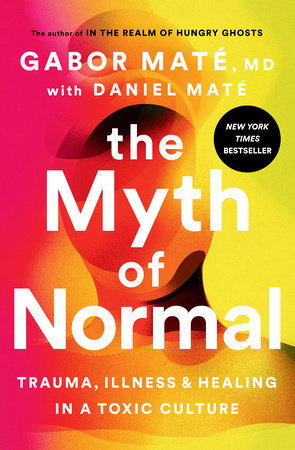
There’s a much-bigger cultural momentum at the heart of these problems, as Gabor Maté identifies in The Myth of Normal, and the challenge of the rainbow warrior is to make change at a cultural level, not just at the family level.
I believe that is already happening. We are seeing more-awakened humans emerging to restore the ravaged Earth.
The prophecy might be spurious, but that doesn’t matter to me. The present is what matters, and I see change happening in the present ~ in myself, and in others around me. The hippie movement is alive and well and it’s wearing all sorts of clothes other than bell-bottomed jeans.
Seeing the prophecy recently has emboldened me to take seriously the calling to continue joining and co-creating the community movement to restore ways of being that are harmonious and sustainable.
I don’t know other words to describe it, but the feeling is strong: heal the internal wounds and help others do so to bring about a healthy world and culture; be healthy and happy and lead by example by, e.g., getting off sugar, learning tummo, healing my back pain and experiencing then integrating kensho, and/then help others to realise these ways of being,
as a service to the planet and our shared existence.
This comes off the back of angsting about Zane and reflecting that I can’t help him much but I can help people who are willing to be helped, people who are reaching out, and helping many this way to help the culture has more value than helping one teenager-I-can’t-help just because we happened to become family. The best I can do is continue working on myself so that I am able to be there when he’s ready.
Meanwhile I find it consoling that there is a much-bigger process of evolution I am a part of that transcends the wellness of a single stepson, stepdad and mother. By healing myself and helping to heal others, I serve a much broader cause.
identifying as trans(personal)
Related to the rainbow-warrior subculture and the experience of being “marginalised alternative”, I am starting to realise that I desire belonging among a suitable subculture, tired as I am of just drifting around on the edges of society, trying to be content with not quite fitting anywhere.
A student at TAFE shared their experience of coming out as trans in the Australian culture and how certain attitudes made this confronting for them. Not unusual ~ it’s well-known that coming out is confronting in a culture that has traditionally been quite homo- and trans-phobic.
It just makes me think of and realise that I feel a similar discomfort and don’t have a banner to fly under such as the rainbow flag of the queer community, though I’ve recently identified with the Mad Pride movement. That’s not quite what I’m looking for either because this unites folk under a banner of spiritual emergency (and even of being proudly pathologised) rather than spiritual emergence.
Where is the subculture for people who value the gradual benefits of prioritising transpersonal practices over, say, the gradual benefits of acquiring material wealth?
In that sense I am trans, in the sense I identify as more than just my personal self or ego. The “trans” label is already taken, so I’m not sure where to go from here. I don’t really need a label exactly, except that it might help me find more of my tribe. I think it’s not dissimilar from someone who realies they are neither male nor female and realises they can identify as non-binary. I feel something similar, except I would call it “non-dualist”. Non-dualary?
the destruction of small ideas
The Destruction of Small Ideas by 65daysofstatic
A classmate was talking about virtue signalling and how the teacher shouldn’t be politicising the classroom by subtly (and not so subtly) advocating that we all vote YES in the Voice referendum. I get it, there should be a separation between politics and education, the same as between church, state and the press, and I value that this classmate brings a self-identified “conservative” perspective because I value having my biases challenged.
Somehow though, we got on the topic of … wait, how did we get there … that’s right, this classmate had been triggered (their word) when other classmates that morning had said Australia is a racist country. This classmate believes Australia is much-less racist than it was, and I agreed ~ I said though, among your everyday people there is much less racism and yet, institutional and systemic racism persists:
First Nations people are marginalised, more incarcerated, have less access to opportunity because of systemic racism, that is undeniable.
Institutions and government departments take generations to catch up with the popular view.
He asked me, “What institutions and departments need to catch up?” and I sensed at this point that I was no longer in a conversation or reasoned debate, and was now embroiled in highly emotional polemic.
I said, “I don’t know,” which seemed to signal an opening to that I deserved to be torn down for my ignorance.
They said, “If they’re marginalised it’s because of alcohol.”
Starting to back away, I said, “What do you mean?”
They told me that when the conservative government took away cash from communities and they couldn’t buy alcohol, things improved. When the Labor government came in and revoked that because they are “do-gooders”, things went to shit again.
I asked, “Do you think we should deprive them of their right to choose and their right to dignity of risk by denying them cash?”
“If they were able to make informed choices we wouldn’t need to do that.”
“Wouldn’t it be better then, to provide education instead of revoking their freedoms?”
At which point, they said, “Yeah but hey, would you let a 4 year old play in the street?”
I said, “Okay, I’m going to call it because I need to go to the toilet and have lunch anyway, and these kinds of views make me deeply uncomfortable.”
By this point I’ve been feeling triggered myself for a while because blaming First Nations marginalisation on alcoholism was staggering enough, so I don’t remember exactly the defense they uttered, but as I walked away, I said, “I’m going to leave you with it to think about whether that’s appropriate.”
I find it unfathomable that a twenty-first century adult could so flippantly infantalise a whole demographic of humans. I find it unfathomable that seventeenth-century adults were able to do this without feeling appalled. But this person, when I told them I was struggling to know what to do about my stepson’s drug addiction, told me I should storm into his room and dump all of his shit onto the footpath if I didn’t want drugs in the house.
I don’t know if I’m some kind of virtue-signalling pinko-lefty bleeding-heart liberal, but I prefer to identify as a budding transpersonal psychotherapist. I had already seen some belligerence and bigotry in their way of presenting their views, so I’m not surprised it has come to this. I’m just glad it wasn’t my sarcasm that caused the problem, as I had been worried about.
the Buddhist path of recovery from addiction
Related to the faux-Hopi prophecy about an awakened people emerging to heal the ravaged earth, I was talking to my Zen teacher Arno recently in the car on the way home from the zendo, and a resolution formed (a sankalpa, you could call it): Why not just go for it and develop an addiction-recovery program that is unashamedly based on Buddhism. I confirmed with Arno that the attachment in Buddhism is like addiction, to illusion. I said, “Once we drop that addiction to illusion, aren’t we free?” and Arno agreed.
It’s a natural progression from there that a Buddhist path to recovery from addiction makes a lot of sense as a Heartwards offering.
He said it’s tricky though because the Buddha taught a transpersonal methodology and teaching Buddhism as an addiction-therapy program kind of detracts from that, or sells it short. But Buddhism is both therapeutic and transpersonal: as a person makes progress along the transpersonal path (letting go of their attachment/addiction to an illusory self) they are naturally going to experience therapeutic benefits. And the “therapeutic” practices like self-compassion support/complement the transpersonal progress/development.
As one practices letting go of their addiction to an illusory self, the “lesser” addictions will naturally fall away as well.
The hinaddictions to drugs and sex and whatnot, if the “greater” addiction to the illusory self, is the mahaddiction.
Such a program would be like Cultivating Emotional Balance (CEB), based on Buddhism and other ancient traditional contemplative practices, secularised and supported by neuro(science). Noah Levine is doing something similar already with Refuge Recovery, so there are models around already.
I got around to uploading the bones of what I’ve started calling “a modularity”, describing the framework that is developing around me for helping others recover from small-t trauma and experience sustainable genuine happiness.
If you’re interested in transcending the inherently limited personal/human ego and experiencing a much-expanded perspective of our true place in and relationship to reality, check it out.
I am very pleased to announce that I have been awarded a scholarship to complete a Cert IV in Mental Health (Peer Work)!
Round of applause! 👏🏽👏🏽👏🏽
Thank you! *bows*
I am at TAFE now, checking out the campus and enjoying the very quiet Level 3 of the library
I found the scholarship program a couple of months ago when I was talking to a friend about wanting to help others heal and grow and transform from mental illness. Because “a healthy world arises out of healthy minds”. My own and my family’s mental health has been patchy lately, so I’m proud of myself for making and finding and stealing the time to complete the application, network with some of the people administering the program, and land myself a scholarship!
From the course description, the Cert IV will
allow you to support people in their journey of recovery from mental illness, working in mental health services roles that support consumer peers or carer peers. Workers are employed in the mental health sector in government, public, private or community managed services.
For obvious reasons, I’m not mad-keen on the jargon in general, and in particular, the idea of referring to people as ‘consumers’. A lot of our mental-health concerns are the direct result of our consumerist society. But I’m excited about participating in the community to find ways of referring to these experiences in ways that are constructive and healthy. And I’m excited about getting involved in the lives of people who are actively working to recover through their mental-health challenges.
A lot of us are living with mental illness in a silent way, understanding that our challenges are a reflection of problems embedded in our culture, and we want to find ways of being that are more aligned with wholesome and holistic values. That’s where I would like to come in, helping others to recognise that each of our actions are what make up culture, and therefore it’s worthwhile making the effort to be the change we want to see in the world.
The scholarship was awarded by the Queensland Alliance for Mental Health (QAMH) and they have one of the shorter acronyms I have noted already in the sector. It’s going to be strange working in something called a ‘sector’, using sector jargon and trying to navigate the unwieldy institutions I have encountered already. But I’m hoping I can find a nice and chilled place to work where people understand that the symptoms of mental-illness nuances of humanity cannot be squared into a box, neatly labelled and promptly disregarded as abnormal or pathological because their presentation doesn’t match the checklist of the biopsychosocial model.
I am very much interested in representing the spiritual dimension of the holistic approach to mental-health treatment, especially since I experienced my own acute spiritual crisis in 2017. In fact, since that experience (despite a few tangents) I have been trying to find ways to help in this area, and I feel like it is now starting to come together.
When I look back even further, I remember that in my late 20s when I was moving away from my publishing career, a big part of the motivation for that shift was the desire to help make change in our society and culture in a way that was more direct than publishing alternative ideas. I loved working in publishing and I still cherish the value of literature to help move society in a more wholesome direction. However, at the time (and still now) I felt that the urgency of the need for change was such that I couldn’t rely on the ideas percolating through into action fast enough.
I had also discovered Buddhism in my mid-20s and what I saw there was already motivating me to find a way I could work in the world that leveraged and served the deep metaphysical curiosity that was goaded by my research and practice in Buddhism.
I am in my late 30s now, and a lot of the time in between has been spent travelling and/or haphazardly searching for a way of being that is alternative to the mainstream offering. On that journey I have experienced periods of debilitating depression, various manifestations of addiction and a deep sense of alienation from my self and the truth, and I believe that similar unmet curiosities are leading others into similar conditions, which is why I would like to help.
The mental-health conditions resulting from these blocked metaphysical curiosities are an opportunity to explore new territories of existence and consciousness, and it’s coming to the time when it’s no longer appropriate to just slap on a pathology label and throw away the key.
It’s time to start mixing metaphors!
It’s time to start unlocking the root causes of these conditions and to help others see how the crisis is the solution.
That’s a permaculture idea, the problem is the solution, and it applies well here to life and health, as many permaculture ideas do. I believe the epidemic of mental illness that we are experiencing as a global community is the result of a collective spiritual crisis. Since God is dead and his throne has been filled by bankers and CEOs, the rest of us are left wondering WTF is going on.
I’m reluctant to get too new-agey here, but as we move into the Age of Aquarius, one of the things changing is that we no longer need priests and gurus and other middlemen to mediate our phone calls to God. We no longer need to suffer alienation from the source of creation ~ we can take our spiritual practice and alchemical transformation into our own hands. We don’t need the approval of a church or the authority of any external source.
🤣 maybe we just need more holistic peer workers enabling individuals to step into their agency and map the path of recovery from alienation on their own terms
Here’s to that, and to new beginnings!
Becoming a peer worker means I will have the formal training and qualification to work in roles supporting those in our community who are experiencing difficulties maintaining their mental health. These are non-clinical roles, where the value is in the peer worker’s lived experience of recovery from mental illness.
I do have plans to study psychology in the future and perhaps move in to clinical and research roles, but for now it’s looking like I’ll be studying 3 days a week at TAFE Qld South Bank for the next 12 months or so.
The Cert IV requires students to complete 80 hours of work placement, and due to the skills shortage in this area it is common for work placements to become paid employment after the Cert IV is completed.
So it’s going to be an interesting part of the journey to helping others through transpersonal crises, which is my longterm goal.
As you can probably tell, I’m pretty excited about this. If you’re curious about peer work or have some experiences to share, please drop a comment below or otherwise get in touch, I would love to hear from you.
I’ve been thinking about my niche here at Kokoro 心 Heart, because I hear affiliate marketing requires targeting a specific audience.
I feel kind of off about marketing and sales, but that may just be the starving-artist Aussie-battler austerity mindset in me. The ideas here are intended to benefit readers, and the products I recommend here have yet more of those ideas. I’m no Tyler Durden but I’m suspicious about promoting or encouraging wanton consumerism. If anyone feels they bought something through here because I tricked them into believing their desire was a (false) need, I can at least tell myself I was transparent.
And anyway, feeling compelled to focus on writing within a certain consistent frame is going to help me … well, focus. It will create pressure to stay on point like the essay question of a uni assignment.
By focusing on the theme of psychospiritual wellbeing I will be forced to refine my thinking about this subject, and parse more of my experience through the lens of holistic transpersonal wellness.
So I’m excited about that, because when I think about the priorities informing my purpose here on Earth, the one thing that consistently comes to mind is wholeness, psychospiritual wellbeing, transpersonal awareness, the realisation of our transcendental and interconnected nature — all words for the same pursuit. I’m reluctant to use the word “enlightenment” because it’s loaded with too much connotational baggage, but understanding the true nature of reality is something I aspire to and I believe this perceptual clarity is a prerequisite for the main goal here on Earth, psychospiritual wholeness.
And I believe the psychospiritual wholeness of each individual is a prerequisite for a sustainable and harmonious future on this planet. It’s root causes of suffering I’m talking about here: we cannot be truly well (as individuals or as a global community) while our minds are mired in ignorance. That’s a Buddhist perspective I suppose, but I’m curious to know how other spiritual traditions approach the same idea.
Let me know in the comments if that’s your thing. I understand the Gnostic Christians have a thing or two to say about this.
Meanwhile yeah, my niche.
I added a static home page to describe this yesterday, and managed to wrangle the backend of WordPress to run the blog posts through a menu in the header. That was immensely satisfying, figuring out a technical aspect of publishing here. The landing page has what I would call a blurb:
At Kokoro 心 Heart I am contributing to the vision that every individual have access to the resources, knowledge, means and support to nurture their psychospiritual wellbeing and treat the root causes of suffering.
I am doing this by publishing posts about books, music, life and culture through a lens that investigates what we can learn from these about our transpersonal nature and our complex psychology.
As I do my own inner work through meditation and other spiritual modalities, I hope to develop resources and training down the track. And I’m exploring the prospects of establishing a social enterprise called Causal Connections, facilitating access to holistic psychotherapies for low-income earners.
I believe the path to a sustainable and harmonious future on this planet is paved by creating a culture of individuals who are internally sustainable and harmonious. Because individuals create culture as much, if not more, than they are influenced by culture.
We are culture, and the future is determined by the state of our present.
For now I’ll be writing about books, music, life and culture to see what I can illuminate in these about psychospiritual wellbeing. At least the first two of these will lend themselves to products I can recommend.
I panicked a bit when I remembered the importance of having a niche, because psychospiritual wellbeing is a pretty broad subject and it’s hard to think of products that sell wellness. Products that aren’t dodgy, anyway — there’s a plethora of snake-oil sales people out there trying to exploit our vulnerability to sell us answers they don’t have.
Truth is, these answers can’t be sold — anything I’ll be recommending here is just a snippet of the multi-faceted path to answers. It’s you who’ll be doing the answering — anything here is just part of the spiritual-adventure travel-guide brochure you won’t find at Lonely Planet.
Every successful AF (affiliate marketing!) blog relies on products to recommend, but Kokoro 心 Heart is not just an AF blog — it’s a work of passion, and a place for me to publish ideas about questions I’m thinking about all the time anyway.
So welcome! I hope you enjoy what I’m doing here.
Leave some comments below if you’re also thinking about these ideas. I love comments, dialogue, conversation. I’m here to build community as well, because despite my frequent overwhelming desire for escape to a cave in the Himalayas, we cannot hope to realise the true nature of our being in isolation! Be the sangha you want to see in the world!
I love that dialogue is emerging around this: “psychosis” is not always inherently pathological. I know that from my own experience of what progressive psychologists (Grof et al) are calling “spiritual emergency”.






 Kokoro 心 Heart