forgiveness dispels victim mentality

a journal entry about how forgiveness is
loosening my attachment to a victim mentality

I have been doing a near-daily forgiveness training in my sadhana lately, and as I near the end of a 30-day rotation I was pleased to realise that a forgiveness practice can release us from the victim mentality. I had read about this in my research about this elusive heart quality, but I hadn’t yet really felt it. Now I have!

After nearly 30 days of this practice, having exhausted the people I could think of who I needed to forgive, I found myself moving on to the culture as a whole.

Now that’s a nebulous beast, the whole culture, and because I didn’t have one person or institution I could hang on to as the sole thing requiring forgiveness, the one distinct entity I felt resentful about, I found that I started moving into states of … let’s call it “resentment Teflon”!

In this state I recall once thinking of myself as a duck in the waters of resentment.

Point is, the resentment had nowhere to stick.

When I realised I could let go of all the resentment I hold for our culture and society being generally deficient (especially, for example, for being spiritually bankrupt) I found that a whole new sense of empowerment and personal responsibility + agency filled the void where resentment had been.

I was no longer the victim of a culture that didn’t meet my spiritual needs and was now an agent who could serve the spiritual needs of that culture.

This phrase comes to mind from a guy I met through men’s work: it’s not our fault, but it’s our responsibility.

This usually applies to the victims of trauma, abuse, neglect, meaning it’s not our fault we were traumatised, but it’s our responsibility to do the healing. No one else is going to do it. I feel the same now about the lack in our culture. I no longer feel let down by our culture because it doesn’t immediately meet my spiritual needs, and instead feel agency to meet my own, and empowered to help others meet theirs.

It’s not like there was ever a Golden Age of Spirituality. Maybe there were (and still are) traditional societies whose culture is based on spirituality. But these are not the cultures or times I live in. And generally speaking these pursuits were always marginalised, initiated and led and maintained by the few who decided it was their duty and honour, their way of serving humanity.

I had no idea this would emerge out of a sustained practice of cultivating forgiveness, but I’m grateful it has.
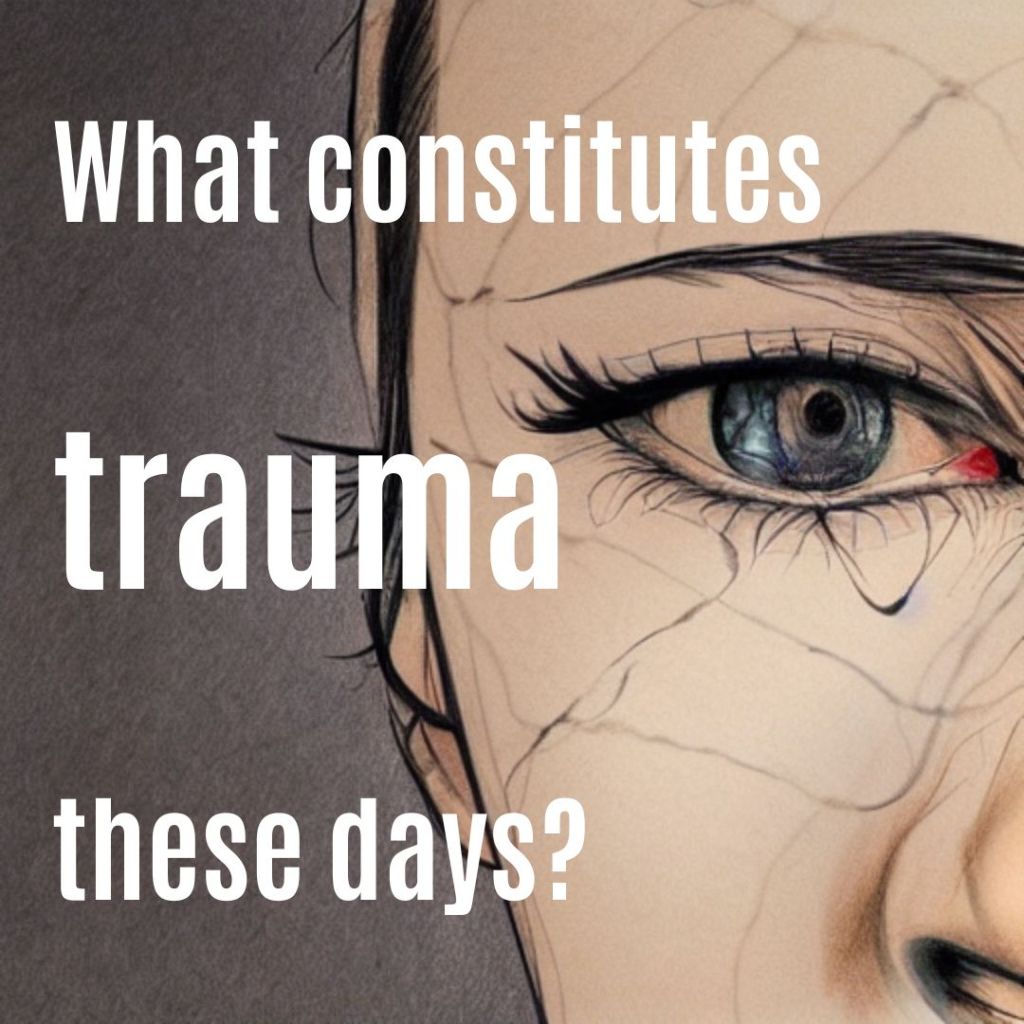
What is trauma?

I’m curious to know what you think of Peter A Levine’s theory of trauma.

I’ve been listening to Waking the Tiger: Healing Trauma and I appreciate most of all that trauma should be diagnosed and treated on the basis of symptoms rather than the events that caused the trauma. One person may be traumatised by events that are not necessarily considered traumatic by others.

What do you think?

I think it’s imperative we have a holistic, integral, new-paradigm understanding of trauma because the symptoms of trauma keep us dis-integrated and leave us more prone to dis-regulation and dysfunction.

To become awakened or fully potentialised, we need to first be whole and healthy on the mundane-psychological level, otherwise in our practice(s) we’re going to be always bombarded by those aspects of our unconscious that are always bubbling up from those parts we keep compartmentalised, trapped away in the skeleton closet.

That’s just my view though. I’m curious to know what you think.

Can we awaken or become whole without first healing our wounds?

reaching out ~ what to do with a truant teen

Zane buggered off again today ~ skipped school and bailed on meeting us to drop his uniform to him. We found him, but boy has it brought up a lot of stuff!

My conditioning dictates that I should be angry, but I’m trying to be positive and bring a compassionate perspective.

This is all in the context of me trying to rediscover my place in the dynamics of the family, so I’m feeling very unsure about what my part should be in responding to this truancy again.

I’m a step-dad who has minimal-to-no relationship with Zane, and therefore limited agency for either discipline or influence. The only part I know is supporting Nikki, but she insisted I stay at the library while she drove around looking for him.

At least if I’m not there for the potential confrontation when Zane decides to show up and face the consequences of breaking our trust again, maybe I’ll have the chance to calm down a bit and play the part of compassionate supporter ~ I do want to understand why he’s making these decisions, but in which parallel universe is a 13-year-old boy going to share this with his step-dad?

In which parallel universe does a 13-year-old boy know himself why he behaves one way or another?

We need the skills of introspection and emotional intelligence to know the nuances of our internal motivations ~ skills that are not taught in our sausage-factory schools.

This gap in our education culture is a huge part of why I’m doing Kokoro 心 Heart: we need to learn how to manage our own psychospiritual wellbeing enough to stop perpetuating a culture that results in 13-year-old kids wagging class to smoke bongs down the creek. (That’s just one specific symptom of the cultural malaise I hope to address in the posts here and in the work I’m doing in the business around Kokoro 心 Heart.)

I spent my whole high-school career smoking bongs down the creek, and my decades-long drug and alcohol dependency left me in my late 20s with the emotional development of the teenager I was when I started using drugs, because I didn’t have the mentors to help me learn how to deal with my emotions any other way.

We are letting down our children and our future by allowing these gaps to remain in the upbringing of the emerging generations.

Nikki and I are doing all that we can to access services that will make up for the deficits in our own and Zane’s development.

If you’re going through or have been through this, let me know in the comments. We need all the guidance we can get, lest our son become like Trent from Punchy.

~ ~ ~

For more post updates, find me on Twitter, on WordPress at the follow link below, or sign up for my little mailing-list newsletter here. I’m also on LinkedIn and Unifyd.