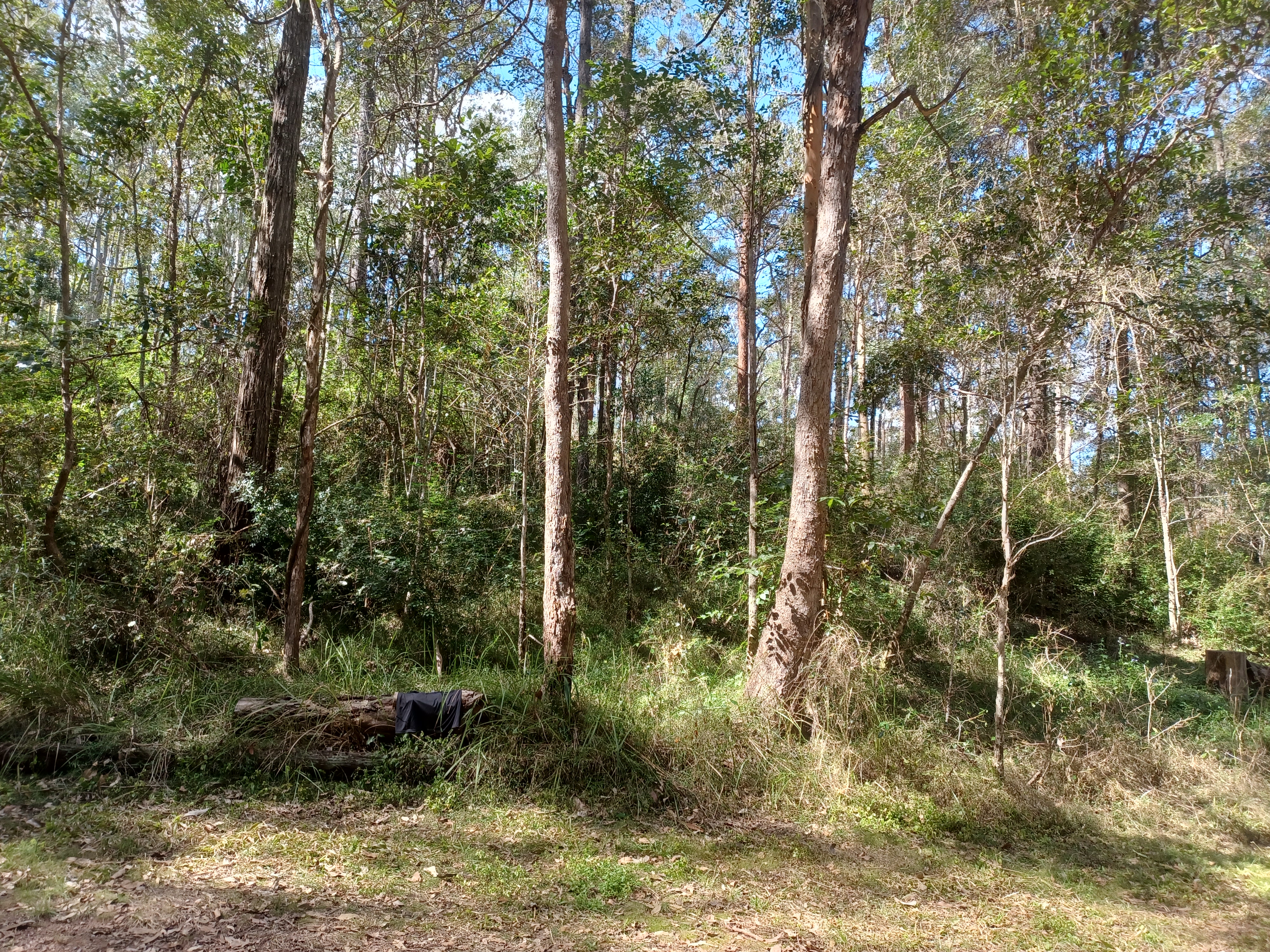
Down at the Gully today, doing some writing work and thinking about getting back on the pogram … I’ll explain that word in a minute.
It’s been too long that we’ve allowed the situation with our tenant to derail us. I’ve been in damage-control mode and now it’s time to get back into live grow and build mode.
We bumped into Irish Ryan yesterday and he reminded us that we can choose how we feel about the situation. Remember Frankl (paraphrased):
man’s final freedom is the freedom to choose how he feels.
I choose to feel like I can resume my daily life and go back to cultivating contentment and wellbeing and happiness. I choose to use my time in the house as though This Person being is not a problem. (Such is the extent that I have been overwhelmed by their ongoing presence, that I hand-wrote their whole being as the problem. It’s time to take my mind and heart back from the person I have been allowing to occupy it for too long.) The advice columnist Ann Landers said,
Hanging onto resentment is letting someone you despise live rent-free in your head.
I choose to reclaim the right to my mental and emotional space. This space is priceless, and my experience of it is a choice.
I’ve been meaning to start a document, something I can fold into a pocket somewhere, with the values and reminders I’d like to keep in the fore of my mind. This exercise helps me feel anchored to something, less dependent on retaining all my intentions in the brain. I’m getting on to this today and will share it here as some kind of practical resource when I’m able to get to that.
When I’m getting back on the horse like this, I talk about getting back on my pogram, which is a combination of program and pogrom, a program of personal re-education, of expelling that which holds me back and re-learning what makes me soar.
This idea of keeping a document on hand as a reminder has … reminded me that a key project of my pogram and the work at Kokoro 心 Heart is making the subconscious more conscious. By bringing my values and beliefs and positive “talk” to the fore of my conscious, I reclaim the ability and freedom to choose how I feel.
If 95% of our behaviour is motivated by the subconscious, then we need to become aware of the subconscious so we can be more intentional, less reactive, less likely to crumble when struck by unchartered adversity.
So that’s the theme set for the day and days to come. My battery is about to die, so I’m going to hit send on this missive.
I wrote recently about a problem we’re having with a housemate, and it’s become clear now that we are living with an abuser. It sounds drastic when I put it on paper like that, but it’s true. We have been repeatedly abused by a person who is deeply unwell. I’m writing here to get my head around it, and to see what insight I can glean for Kokoro about psychospiritual wellbeing. I wrote in the other post about how situations like these are symptoms of culture that is psychospiritually unwell, and in this post I’d like to reflect on what I’ve learned about the dubious role of justice and control.
I may never understand This Person’s behaviour. This case is like a photographic negative, starting with someone who is profoundly unwell to see what we can learn about wellness. I’ve done lots of journalling and talking around this, and I’m still confused, so my apologies if the following is not always coherent.
We were going to have our first full day at home since the Incident, but we chose that day to ask if she had found a new place, whereupon she finally admitted that she had decided to not move out. We had been waiting patiently, not wanting to poke the hornet nest, but the idea of her staying three months until the end of the lease was not acceptable. I asserted a boundary: we cannot continue to live with her unless she apologises and starts being accountable for the way she treated us.
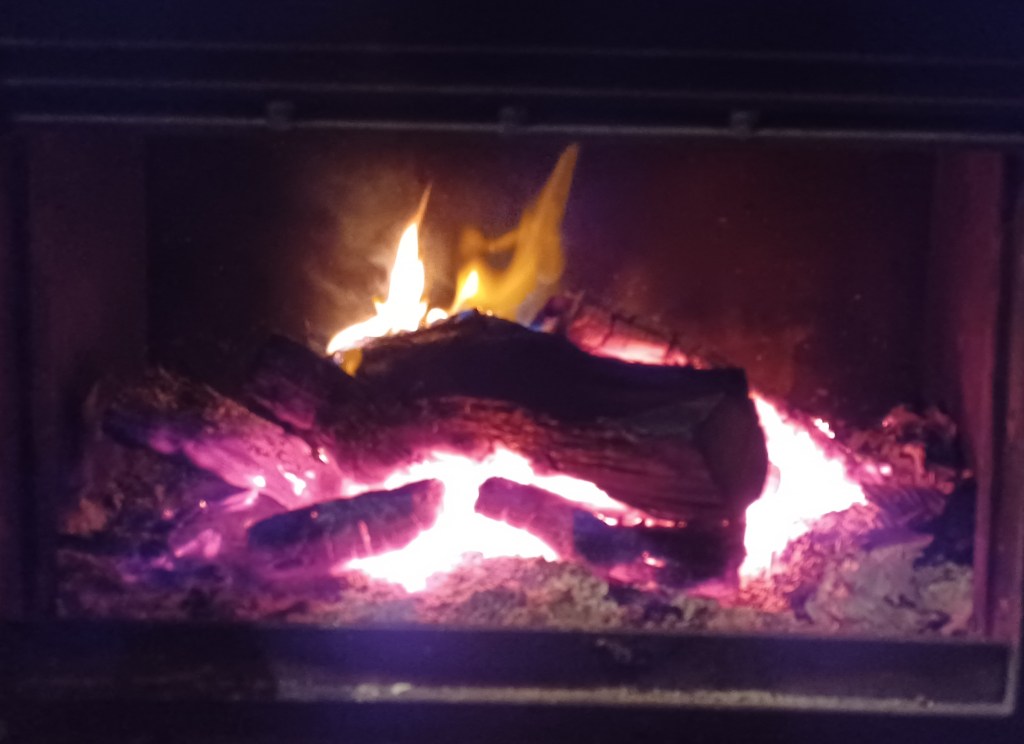
I set up to do some righting by this beauty tonight. There is something about working by fire that makes me feel immensely grateful. Something about the fire circle being the original story-telling place perhaps.
I haven’t been able to use this space as my own for a while, due to a situation with a tenant at home. So I’m especially grateful that we have access to this, somehow both a privilege and a rite.
I’m grateful for what I’m learning through this domestic situation about the issues we humans have with control, and that’s what I’m exploring in the journal at the fire tonight.
I am blessed to have met Little Mountain Community and his guided journalling practice. For me it’s like 1:1 blogging
My life has been an existential clusterfuck lately, and I think I’m finally getting the message that I may need to look at my/our/humans’ issues with control.
Trying to control anything in this existence is like trying to organise a mountain with a teaspoon and a jar of river sand.
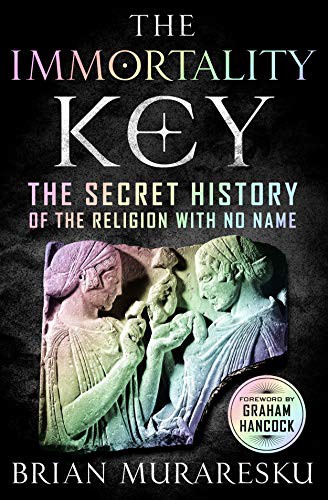
Our friend Cliff gave me the name of a book today, something he said a while back was blowing his mind: The Immortality Key, which sounds a bit naff at first (like a Dan Brown novel), before I read the subtitle The secret history of the religion with no name. This sounds right up my alley. And I’m fond of Graham Hancock, who wrote the Foreword and whose TED talk was a game-changer for me, pointing out the hypocrisy and injustice of governments prohibiting mind-expanding drugs while capitalising on all the drugs that numb us and bring us down.
I’ll share that video below because it seems to illustrate the theme of The Immortality Key.
The blurbs and praise I’ve read suggest that The Immortality Key goes much deeper than the modern prohibition of consciousness-altering substances, arguing that psychedelic experience was central to the practice and spirituality of ancient Western religions.
One reviewer described it as “a spiritual adventure page-turner”, and others have said the author spins humour and travelogue into the argument, which ranges among a laundry list of disciplines and subjects:
history
comparative religion
linguistics
pharmacology
chemistry
biology
democracy
the unity of mankind
the religious war on women
No doubt there’s a bit of ethnobotany in there and some mythology — sounds fucking great! So I’m going to check it out and will let you know what I find. I feel confident it’s going to find it’s way onto my Goodreads shelf of books that have revolutionised my worldview.
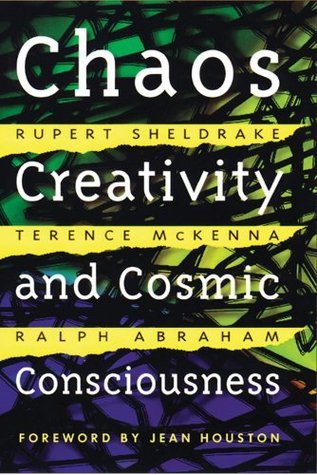
The last book I added to that shelf was a book of trialogues between Rupert Sheldrake, Terence McKenna and Ralph Abraham,Chaos, Creativity and Cosmic Consciousness, which I highly recommend as a wild exploration of many things, but in particular the connections between million-year-old psychedelic sacraments and the origins/evolution of consciousness.
I can vouch for this one, because I’ve actually read it instead of just hearing about it, so that’s an affiliate link above — if you buy the book through there I’ll get some money for a coffee.
If you’ve read either of these books or others like them, I’d love to read your thoughts in the comments below.
I’ve been thinking about my niche here at Kokoro 心 Heart, because I hear affiliate marketing requires targeting a specific audience.
I feel kind of off about marketing and sales, but that may just be the starving-artist Aussie-battler austerity mindset in me. The ideas here are intended to benefit readers, and the products I recommend here have yet more of those ideas. I’m no Tyler Durden but I’m suspicious about promoting or encouraging wanton consumerism. If anyone feels they bought something through here because I tricked them into believing their desire was a (false) need, I can at least tell myself I was transparent.
And anyway, feeling compelled to focus on writing within a certain consistent frame is going to help me … well, focus. It will create pressure to stay on point like the essay question of a uni assignment.
By focusing on the theme of psychospiritual wellbeing I will be forced to refine my thinking about this subject, and parse more of my experience through the lens of holistic transpersonal wellness.
So I’m excited about that, because when I think about the priorities informing my purpose here on Earth, the one thing that consistently comes to mind is wholeness, psychospiritual wellbeing, transpersonal awareness, the realisation of our transcendental and interconnected nature — all words for the same pursuit. I’m reluctant to use the word “enlightenment” because it’s loaded with too much connotational baggage, but understanding the true nature of reality is something I aspire to and I believe this perceptual clarity is a prerequisite for the main goal here on Earth, psychospiritual wholeness.
And I believe the psychospiritual wholeness of each individual is a prerequisite for a sustainable and harmonious future on this planet. It’s root causes of suffering I’m talking about here: we cannot be truly well (as individuals or as a global community) while our minds are mired in ignorance. That’s a Buddhist perspective I suppose, but I’m curious to know how other spiritual traditions approach the same idea.
Let me know in the comments if that’s your thing. I understand the Gnostic Christians have a thing or two to say about this.
Meanwhile yeah, my niche.
I added a static home page to describe this yesterday, and managed to wrangle the backend of WordPress to run the blog posts through a menu in the header. That was immensely satisfying, figuring out a technical aspect of publishing here. The landing page has what I would call a blurb:
At Kokoro 心 Heart I am contributing to the vision that every individual have access to the resources, knowledge, means and support to nurture their psychospiritual wellbeing and treat the root causes of suffering.
I am doing this by publishing posts about books, music, life and culture through a lens that investigates what we can learn from these about our transpersonal nature and our complex psychology.
As I do my own inner work through meditation and other spiritual modalities, I hope to develop resources and training down the track. And I’m exploring the prospects of establishing a social enterprise called Causal Connections, facilitating access to holistic psychotherapies for low-income earners.
I believe the path to a sustainable and harmonious future on this planet is paved by creating a culture of individuals who are internally sustainable and harmonious. Because individuals create culture as much, if not more, than they are influenced by culture.
We are culture, and the future is determined by the state of our present.
For now I’ll be writing about books, music, life and culture to see what I can illuminate in these about psychospiritual wellbeing. At least the first two of these will lend themselves to products I can recommend.
I panicked a bit when I remembered the importance of having a niche, because psychospiritual wellbeing is a pretty broad subject and it’s hard to think of products that sell wellness. Products that aren’t dodgy, anyway — there’s a plethora of snake-oil sales people out there trying to exploit our vulnerability to sell us answers they don’t have.
Truth is, these answers can’t be sold — anything I’ll be recommending here is just a snippet of the multi-faceted path to answers. It’s you who’ll be doing the answering — anything here is just part of the spiritual-adventure travel-guide brochure you won’t find at Lonely Planet.
Every successful AF (affiliate marketing!) blog relies on products to recommend, but Kokoro 心 Heart is not just an AF blog — it’s a work of passion, and a place for me to publish ideas about questions I’m thinking about all the time anyway.
So welcome! I hope you enjoy what I’m doing here.
Leave some comments below if you’re also thinking about these ideas. I love comments, dialogue, conversation. I’m here to build community as well, because despite my frequent overwhelming desire for escape to a cave in the Himalayas, we cannot hope to realise the true nature of our being in isolation! Be the sangha you want to see in the world!
I am enjoying the term “overculture” at the moment, in the sense I enjoy gaining new insight into ways we can describe and de-participate from the mechanics of our oppression.
I value the opposing force of “counter-culture” but am wary of dichotomies like antagonist–protagonist, especially in the sense of individuals or even small communities opposing the amorphous and anonymous force of culture, the us/them approach where we get angry because They are fucking everything up with Their greed … who is They in our counter-cultural tirades?
There is conflict inherent in the dominant connotations of counter-culture.
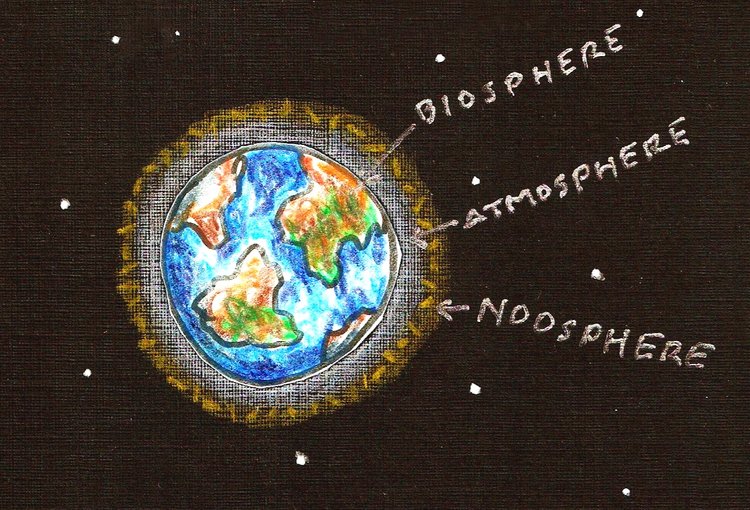
So I’m playing with the idea of nooculture, after Teilhard de Chardin’s idea of the noosphere.
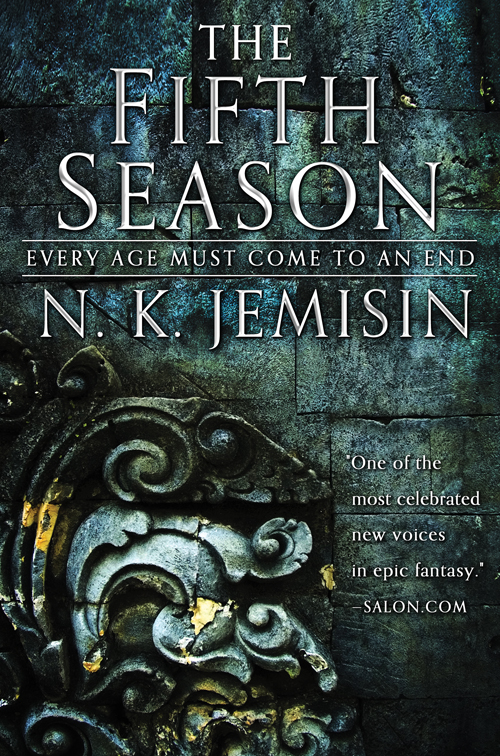
To say that I’m immensely enjoying The Fifth Season would not be quite enough to cover how I’m feeling about it. It is eminently readable despite the shifting perspectives (I love the second person) and the language and style feels unique and original, artful. I knew it was never going to be just a bit of genre trash.
Others have noted the skill and immensity of Jemisin’s worldbuilding, and I’m enjoying this too. She has a way of skillfully referring to world-specific information in context that means we may not know exactly what she’s talking about, but we know that we’ll soon find out. (Unlike William Gibson — I never figured out a word of what he was on about.) I’m being taken on a tour of the Stillness with a very competent guide, who happens to know what happens and yet seems invested in an outcome or a certain reading of events. Not an unreliable narrator exactly, but one who is savvy to the way stories can get twisted if they’re not careful.
One thing I sense strongly is that the orogenes are the hero’s here — a feared and hated powerful other that hold the fate of the world in their ability to wield energy for good or ill.
The Fulcrum would like to harness that power, and seem to be doing their best to leverage the public’s ill-opinion of the orogene to serve that purpose. By creating (or at least encouraging) fear of the other, the leadership have a divided people, which is much easier to manage for nefarious purposes than a united people. By creating a problem, the leadership can swan in and be seen to solve it.
I’m not exactly sure if that’s what we’re getting at with The Fifth Season (it’s probably just conspiracy-theory theory that’s colouring my reading here, though I’m sure there’s a genuine political theory around this problem-creation approach to creating malleable citizens) but there’s definitely something suss about the way the Stillness leadership are containing the orogenes at the Fulcrum.
The orogenes are feared and hated all over the Stillness, but they are needed because they are the only ones who can wield the power of Father Earth, who is felt to be a malevolent force in the Stillness.
So the themes are on point for the kind of literary genre fiction I love to read.
In the plot, Essun has picked up with the boy Hoa, who I assume is the one who emerged from the molten geode. She was a bit suss at first because she needs to find Jija and their daughter and doesn’t need a naked refugee kid tagging alone, but he seems to have a supernatural sense of where Nassun might be. The world around her on the road is falling into a dystopia of the displaced — towns and comms everywhere have been flattened by the shake. Hoa seems to be some kind of “sentient non-human”, even more other than the orogene.
Damaya has been broken into line after she tried challenging the authority of her Guardian Schaffa. And a comment of his has alluded to the idea that the underclass rural “midlatters” are educated only enough to enable their contribution to the economy through food production. This is a theme I appreciate, considering my understanding that our industrial education system does little more than churn out workers for our sausage factories. By explaining to Damaya, Schaffa has helped us understand the Yumenes policy that orogenes and their power must be contained and regulated by the Fulcrum, seemingly for the benefit of the state. It is Schaffa’s duty that Damaya “remain helpful, not harmful”.
Helpful to who?
This information comes on the back of the story about the ~deranged~ orogene Misalem, who tried to usurp the Emperor back in the day but was killed by the Emp’s bodyguard. The Guardians and the Fulcrum were created after this, I guess like the UN after the Wars. There is something about the whole Stillness needing protection from the angered Father Earth, but this part of the worldbuilding is being judiciously released. The protection premise for the coercive force of Yumenes policy appears to be shrouded in the mysts of myth — the incomplete record of stonelore is manipulated by those who have the power to gain ascendency for their interpretation of history. Sounds familiar, reminiscent of the ideology that the people are unable to manage themselves and therefore need government.
In the Syenite narrative we learn the seismic stability enabling Yumenes to stand for so long is the result of having contained and strategically deployed the power of the orogenes. The brutal inhumanity of this coercion is revealed — that orogene child in the wire chair at the node station
It was said by Feldspare that Syenite was being deployed to clear some coral out of a commercial harbour at Allia, but Alabaster seems to have other plans. The extent of his training, power and agency as a ten-ringer is such that he can just decide he needs to deal with the supervolcano more than the coral at Allia. He has his own beefs with Yumenes, which might be motivating a bit of spontaneous dissidence if he hasn’t already secretly gone rogue. He’s made contact, during his circuits, with heretics who seem to have their own agenda for the way reality is narrated in the Stillness. He wants to cover up what they find at the node station. And he wants to try “letting orogenes run things”. He definitely knows something about the broader schemes at play in the Stillness and is a character I’m watching closely. The scene where he quells the supervolcano is epic and engrossing.
This whole book is a page-turner! and the only thing stopping me from ripping through the lot of it in a few late-night sessions is my desire to parse the themes in these update posts.
After the supervolcano when they’re at the heinous node-maintainer station, I lost my way following the implications about how the orogene child either triggered or was caused to trigger the seismic activity that Alabaster had to quell. Something about a wealthy helplessness fetishist molesting (say that three times really fast!) the kid. I understand enough to know the orogene are plied into servicing the state and that the perversions of an over-inflated state are what cause the throes of imperial decline. The state in its hubris is catalysing its own collapse, and I love this.
I love the metaphor, and the awareness of what such metaphors catalyse in the subconscious of readers. IRL we know that the age of Western industrial capitalism cannot sustain itself indefinitely — that the greed engendered by its ideologies will eventually cause civilisation to eat itself unless a true civilisation emerges through the cracks in the same way so-called weeds emerge through the cracks of dystopian pavement. The orogene are the “weeds” in this case.
If there’s any question about what I mean by “weeds”, there might be a post about that somewhere. (There is, about “nativeness” in ecological restoration.) Short version of how that idea applies here: I love weeds, and there’s no place, in our globalised economy that was always a global ecology, for denouncing one plant over another because we humans believe we know better than Earth about where plants should or shouldn’t be.
That’s a good place to segue toward the end of this update. Father Earth knows better than the Fulcrum why the orogene have the power that they do, and the antagonist we most need to fear in my reading of the metaphor so far is our own ignorance of holistic planetary systems that we so blithely fuck with in our hubristic anthropocentric way. And Father Earth is angry!
Do we live on “a planet that wants nothing more than to destroy the life infesting its once-pristine surface”, or does it just seem that way because our meddling is causing the planet to react in the same way a human body would react to an organ gone cancerous? Or the way an orogene reacts instinctively when threatened! Either way, I appreciate the reminder in this book that “human beings are ephemeral things in the planetary scale”.
These are the kinds of themes that lead us to the shift in narrative we need around our culture if we’re to survive the collapse we’re going through as a civilisation.
~ ~ ~
If you enjoyed this post, please feel free to comment here or wherever you found the link, and share if you think others will be interested. I write here for love and sanity (and coffee money!), any engagement from readers such as your fine self is immensely encouraging.
For more post updates, find me on Twitter, on WordPress at the follow link below, or sign up for my little mailing-list newsletter here. I’m also on LinkedIn and Unifyd.
I wasn’t going to drop an affiliate link until I had finished it and could confidently vouch for it, but I’m going to take a punt: [The Fifth Season by N K Jemisin].


 Kokoro 心 Heart