Buddhism is the ultimate activism, and I’m not talking about the social justice movement Engaged Buddhism.
The argument is that materialism stems from not just greed, but also from seeking to soothe our suffering through consumption, through looking without ourselves for that thing that will ease our suffering, a thing that doesn’t exist outside ourself.
So while the Buddhist methodology teaches how to undermine greed in the world by treating our own desire, it also undermines our tendency to avoid pain by narcotising ourselves with whatnot.
When we are not treating our pain through consumption, we reduce demand in the capitalist system.
It might not seem like much because who is one person, what impact can their reduced consumption really have?
But we need to remember that we can’t directly influence anyone else’s mind, only our own. There is no person, no institution, government agency or corporation we can influence to change ~ applying pressure through direct action is admirable, but ultimately a pony show compared to the work of undermining the system from within, because we are the system.
Change ourselves, change the system.
And remember this quote from the Dalai Lama:
If you think you’re too small to make a difference, try sleeping with a mosquito!
I am very grateful to have had a call with my Peer Support Worker from Neami National today. I cancelled a number of appointments to clear my desk for three days of downtime during the TAFE holidays, but wanted to have this check-in, and I’m very glad I did.
She reminded me that recovery is not a thing we get to and then is over, finished, mission accomplished. It is a process, a journey, and it is important that I don’t become complacent when I am doing well. I need to remain vigilant, within reason ~ the cost-benefit scales are going to tip if I spend all the time I feel well just anticipating the next trigger and stumble.
She also helped me find some direction in navigating my path of trauma recovery, specifically. I am going to ask a Family Constellations practitioner if I can see them under Medicare on a Mental Health Care Plan. Circle of Security might also be an option, and Neami themselves ran a program of this ~ Nikki participated, and I understand there is a lot to be learned about how we can work with the attachment styles that resulted from attachment trauma, which is certainly a big factor in the constellation of things that trigger me.
When I am triggered, sometimes I get derailed from the wellness train for days at a time, and if things are going especially unwell, I can stay derailed for weeks, heavily dysregulated. It’s not okay. I can do my sadhana all I like and it does work, I am making slow but sure progress toward more-consistent wellbeing by applying myself to the modularity sadhana. But my sadhana is for the long-game and I need something more direct or immediate that’s going to help with the trauma so I don’t get so easily triggered.
After a wake-up call recently, wherein I spent a whole night feeling triggered and acutely suicidal, I am taking the process of trauma transformation seriously again ~ for one thing, I am seeing a friend who does Root Cause Therapy (RCT) at Creative Roots Breath Therapy. I never gave up the process altogether, though I have not done much Somatic Experiencing with Tracey lately. It’s definitely time to take deeper dive.
But yes, it was good to check in with my Peer Support Worker again. They provide a great (if little-known) service to the community, and if you’re curious about that, let me know. Or check out Neami here.
OxyContin is just the 👉🏽 pointing at the 🌙 of oxytocin
I’ve been suss for a while now about the connection between oxytocin (the love and bonding hormone) and OxyContin, the trade name for oxycodone, an extraordinarily potent narcotic and opiate prescribed for chronic pain such as terminal-cancer patients suffer.
Is it or is it not a bit suss that OxyContin (a powerful and highly profitable painkiller contributing to the prescription-opioid addiction epidemic) is a very-near anagram of oxytocin!? OxyConti … an nth of difference.
OxyCunti … I mean, could they be a bit more transparent with their marketing manipulation!?
Did they not think for a moment, “Hang on wait, people are going to clue on pretty quick that we’re literally pulling their subliminal heart strings and call us out for heinously exploitating pain for profit!”
Opiates can soothe emotional and psychological pain as well as physical pain because they replicate our endogenous opiates ~ endorphins, and oxytocin!
OxyContin replicates oxytocin 👈🏼 it’s something you can’t unsee 🤦🏼♂️
.
.
.
Please reach out if this resonates with you or if you’re concerned about yourself or a loved one’s relationship with addiction, because helping others transform this is where I’m heading with Heartwards and the peer work training I’m doing.
The idea of “cultural safety” came up in class today, and it came to mind that even as an ostensible majority (white, male, educated, Western, relatively affluent) I often don’t feel culturally safe in a lot of social and professional settings because of my divergent, alternative and marginal(ised) spiritual values and beliefs.
It feels like a weird thing to say, that I feel marginalised or like a minority, considering that in many ways (white, male, educated, Western, relatively affluent) I am a majority. But what even is a majority these days anyway? When I fill in forms lately I’ve been listing my cultural background as “marginalised alternative”.
fauxpi prophecy of the rainbow warriors
I say fauxpi because apparently the prophecy of the rainbow warrior was appropriated by “hippies” from a Christian tract and attributed to the Hopi people.
Seeing a fauxpi prophecy about how the warriors of the rainbow would emerge to transform a ravaged earth, I was reminded that a much-bigger scale exists outside my puny concerns.
I’m not terribly interested in whether the alleged prophecy is “fakelore” or not, because it’s enough to be reminded that traditional societies had a much bigger vision of where we fit among the scheme of things.
I saw the prophecy after I’d been talking to Nikki at length about how I’m not doing well enough as a stepfather, and during all that talk I had remembered at least that I’m not the cause of or the solution for all of my stepson’s problems. A much-bigger scale exists outside my puny concerns, and in some way it’s borderline hubristic to think that my influence could make or break his future. There are many factors, outside me and/or my control that are causing Zane’s so-called problems.
Proverbs … because I kept hand-writing “prophecy” as proverbs, which fits better anyway, I think … And proverbs like the faux-Hopi one suggest a cosmology that reminds me it’s quite arrogant to think I could be the difference between Zane doing well or not.
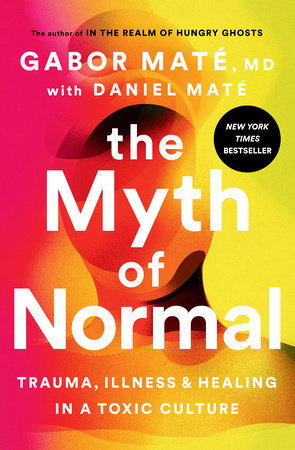
There’s a much-bigger cultural momentum at the heart of these problems, as Gabor Maté identifies in The Myth of Normal, and the challenge of the rainbow warrior is to make change at a cultural level, not just at the family level.
I believe that is already happening. We are seeing more-awakened humans emerging to restore the ravaged Earth.
The prophecy might be spurious, but that doesn’t matter to me. The present is what matters, and I see change happening in the present ~ in myself, and in others around me. The hippie movement is alive and well and it’s wearing all sorts of clothes other than bell-bottomed jeans.
Seeing the prophecy recently has emboldened me to take seriously the calling to continue joining and co-creating the community movement to restore ways of being that are harmonious and sustainable.
I don’t know other words to describe it, but the feeling is strong: heal the internal wounds and help others do so to bring about a healthy world and culture; be healthy and happy and lead by example by, e.g., getting off sugar, learning tummo, healing my back pain and experiencing then integrating kensho, and/then help others to realise these ways of being,
as a service to the planet and our shared existence.
This comes off the back of angsting about Zane and reflecting that I can’t help him much but I can help people who are willing to be helped, people who are reaching out, and helping many this way to help the culture has more value than helping one teenager-I-can’t-help just because we happened to become family. The best I can do is continue working on myself so that I am able to be there when he’s ready.
Meanwhile I find it consoling that there is a much-bigger process of evolution I am a part of that transcends the wellness of a single stepson, stepdad and mother. By healing myself and helping to heal others, I serve a much broader cause.
identifying as trans(personal)
Related to the rainbow-warrior subculture and the experience of being “marginalised alternative”, I am starting to realise that I desire belonging among a suitable subculture, tired as I am of just drifting around on the edges of society, trying to be content with not quite fitting anywhere.
A student at TAFE shared their experience of coming out as trans in the Australian culture and how certain attitudes made this confronting for them. Not unusual ~ it’s well-known that coming out is confronting in a culture that has traditionally been quite homo- and trans-phobic.
It just makes me think of and realise that I feel a similar discomfort and don’t have a banner to fly under such as the rainbow flag of the queer community, though I’ve recently identified with the Mad Pride movement. That’s not quite what I’m looking for either because this unites folk under a banner of spiritual emergency (and even of being proudly pathologised) rather than spiritual emergence.
Where is the subculture for people who value the gradual benefits of prioritising transpersonal practices over, say, the gradual benefits of acquiring material wealth?
In that sense I am trans, in the sense I identify as more than just my personal self or ego. The “trans” label is already taken, so I’m not sure where to go from here. I don’t really need a label exactly, except that it might help me find more of my tribe. I think it’s not dissimilar from someone who realies they are neither male nor female and realises they can identify as non-binary. I feel something similar, except I would call it “non-dualist”. Non-dualary?
the destruction of small ideas
The Destruction of Small Ideas by 65daysofstatic
A classmate was talking about virtue signalling and how the teacher shouldn’t be politicising the classroom by subtly (and not so subtly) advocating that we all vote YES in the Voice referendum. I get it, there should be a separation between politics and education, the same as between church, state and the press, and I value that this classmate brings a self-identified “conservative” perspective because I value having my biases challenged.
Somehow though, we got on the topic of … wait, how did we get there … that’s right, this classmate had been triggered (their word) when other classmates that morning had said Australia is a racist country. This classmate believes Australia is much-less racist than it was, and I agreed ~ I said though, among your everyday people there is much less racism and yet, institutional and systemic racism persists:
First Nations people are marginalised, more incarcerated, have less access to opportunity because of systemic racism, that is undeniable.
Institutions and government departments take generations to catch up with the popular view.
He asked me, “What institutions and departments need to catch up?” and I sensed at this point that I was no longer in a conversation or reasoned debate, and was now embroiled in highly emotional polemic.
I said, “I don’t know,” which seemed to signal an opening to that I deserved to be torn down for my ignorance.
They said, “If they’re marginalised it’s because of alcohol.”
Starting to back away, I said, “What do you mean?”
They told me that when the conservative government took away cash from communities and they couldn’t buy alcohol, things improved. When the Labor government came in and revoked that because they are “do-gooders”, things went to shit again.
I asked, “Do you think we should deprive them of their right to choose and their right to dignity of risk by denying them cash?”
“If they were able to make informed choices we wouldn’t need to do that.”
“Wouldn’t it be better then, to provide education instead of revoking their freedoms?”
At which point, they said, “Yeah but hey, would you let a 4 year old play in the street?”
I said, “Okay, I’m going to call it because I need to go to the toilet and have lunch anyway, and these kinds of views make me deeply uncomfortable.”
By this point I’ve been feeling triggered myself for a while because blaming First Nations marginalisation on alcoholism was staggering enough, so I don’t remember exactly the defense they uttered, but as I walked away, I said, “I’m going to leave you with it to think about whether that’s appropriate.”
I find it unfathomable that a twenty-first century adult could so flippantly infantalise a whole demographic of humans. I find it unfathomable that seventeenth-century adults were able to do this without feeling appalled. But this person, when I told them I was struggling to know what to do about my stepson’s drug addiction, told me I should storm into his room and dump all of his shit onto the footpath if I didn’t want drugs in the house.
I don’t know if I’m some kind of virtue-signalling pinko-lefty bleeding-heart liberal, but I prefer to identify as a budding transpersonal psychotherapist. I had already seen some belligerence and bigotry in their way of presenting their views, so I’m not surprised it has come to this. I’m just glad it wasn’t my sarcasm that caused the problem, as I had been worried about.
the Buddhist path of recovery from addiction
Related to the faux-Hopi prophecy about an awakened people emerging to heal the ravaged earth, I was talking to my Zen teacher Arno recently in the car on the way home from the zendo, and a resolution formed (a sankalpa, you could call it): Why not just go for it and develop an addiction-recovery program that is unashamedly based on Buddhism. I confirmed with Arno that the attachment in Buddhism is like addiction, to illusion. I said, “Once we drop that addiction to illusion, aren’t we free?” and Arno agreed.
It’s a natural progression from there that a Buddhist path to recovery from addiction makes a lot of sense as a Heartwards offering.
He said it’s tricky though because the Buddha taught a transpersonal methodology and teaching Buddhism as an addiction-therapy program kind of detracts from that, or sells it short. But Buddhism is both therapeutic and transpersonal: as a person makes progress along the transpersonal path (letting go of their attachment/addiction to an illusory self) they are naturally going to experience therapeutic benefits. And the “therapeutic” practices like self-compassion support/complement the transpersonal progress/development.
As one practices letting go of their addiction to an illusory self, the “lesser” addictions will naturally fall away as well.
The hinaddictions to drugs and sex and whatnot, if the “greater” addiction to the illusory self, is the mahaddiction.
Such a program would be like Cultivating Emotional Balance (CEB), based on Buddhism and other ancient traditional contemplative practices, secularised and supported by neuro(science). Noah Levine is doing something similar already with Refuge Recovery, so there are models around already.
I’m really proud of myself and very excited because I feel I can say I am in recovery from mental illness, which is no small deal.
Trigger warning though:
I have been debilitatingly depressed for months at a time in the last 10 years or so. I have experienced heart-breaking bouts of acute suicidal ideation and a deep sense of alienation from my self and my worth. (This is a trauma response I have learnt about and am able to see for what it is: no more and no less than fight-or-flight, my nervous system trying to protect me from acute and sometimes chronic emotional pain and suffering.) I have been through 2.5 episodes of spiritual emergenc(y) and about .5 episodes of full-blown acute episodic stress-induced psychosis. I have been dependent on drugs and alcohol and various behavioural addictions since my early teens. I am now 39! Apart from a bit of mild binge-eating or a dose of half-mindless entertainment, I am now nearly addiction free. (The final addiction to drop is our attachment to false ideas about reality.)
I no longer get floored by depression ~ I have learnt and am teaching myself how to respond to life in way that doesn’t result in debilitating overwhelm. I am able to see when my nervous system has been triggered and know that any thoughts (say, of worthlessness) are cognitive distortions. Most days I experience micro-mystical states of deep peace and contentedness that are dependent on no external source ~ due to the self-work I am doing, these moments of genuine happiness are the result of being in relationship with my true self and with reality as it is, compared with wishing reality were how I think it should be.
I am reporting this after an exchange with Zane tonight that previously would have totally derailled me. A minor (but vaguely problematic) exchange that remained minor because I saw what was happening: we were triggered = responding half-consciously from dysregulated nervous systems that believed we were in the past, not the now. I saw what was happening, and exited the situation instead of trying to make Zane see reason (read: instead of trying to make reality or Zane behave as I think they should). Earlier in the evening I had self-regulated after Zane had been pushy and rude. Then we had the exchange where we were triggered and I co-regulated with Nikki. And I have been at baseline ever since, whereas a year and a half ago I would have still been fuming.
In fact I now need to regulate joy because I am so excited about other positive things going on!
Previously I wouldn’t have been able to enjoy these positive things because once I was triggered it would sometimes take me days to come back to baseline. I would let triggering situations hijack my happiness and I would feel so trapped in suffering that suicide felt like the only option.
I didn’t know how to respond to or cope with life in a healthier way, but now I do and am learning more all the time.
So I’ve come a long way!
Nikki is doing really well too and we were able to report to our relationship counsellor today that we each feel we are genuinely healthy ~ at least, as healthy as we can expect. (I’ve since re-encountered Gabor Mate’s idea that a lot of our mental and physical symptoms today are the reasonable responses of our whole organism to the toxic culture we are growing in.) Sometimes we are distressed and suffering acutely, but this does not mean we are unwell. It means we are human. It seems really obvious now, but it’s been a huge paradigm shift to feel that.
The cool thing is … the really fucking cool thing: this sense of wellness among suffering has not resulted from some miracle or fluke; it is the result of some 15+ years of (self-) inquiry, application, research, therapy, meditation, a bit more inquiry, some giving up, a lot of starting again, despair, triumphs, bum steers and mistakes and lessons and gradually a very solid deepening of self- and other-love.
It’s been a fucken journey! It still is. I’m finding my way. Makes my heart swell inside to think of it and report this here.
And like all before me who travelled the Path, I carry a torch that lights not just my way but others’ as well, and apart from being excited about my own increasingly consistent wellbeing I am excited about beginning to support others more on the Path.
I’m starting to offer dana-based coaching, so if you’re curious about that, get in touch at that link. I am starting to offer this in in the most ad-hoc fashion, making it up as I go along ~ join me if you’re ready to explore the Path together.
My enrolment at TAFE Qld was finalised today so it’s now official. I am going to study Mental Health (Peer Work) and I feel ready ~ ready to use my lived experience of recovery to help others move toward recovery and health and wholeness as well.
Did you know the word “wealth” is derived from weal, meaning good health? I find that weally intewesting.
I bought Gabor Mate’s book The Myth of Normal to celebrate enrolment, because we got an advance payment from cLink and I bought myself a 5-subject lecture pad as well because hey, nerds like to live a little as well!
like all before me who travel the Path, I carry a torch that lights not just my way but others’ as well, and apart from being excited about my own increasingly consistent wellbeing I am excited about beginning to support others more on the Path.
I am starting to offer dana-based coaching so if you’re curious about that, get in touch at that link and we’ll arrange a time to catch up.
I’m taking a Mental Health Day today because I started to notice my window of tolerance was narrowing – I was becoming easily irritable, easily triggered and generally just unhappy and stressed. A lot of shit’s been going down lately, and we can’t seem to get a break lately, so I decided to take one. I’m starting a small business, and part of the reason for doing this was so I could keep my own hours – what’s the sense of starting that and then doing 40 hours weeks because my conditioning says so!?
I have a vision for our culture where taking such Mental Health Days is normal and encouraged, more important than the days we are being productive at work. What’s the point of being productive if we’re fucking hating ourselves for it!? This is something like GNH instead of GDP but I don’t want to unpack that now.
A lot of sadness was near the surface for me yesterday and I figured something must be going on or coming through and I want to stop and be present for that.
Also, I need to fill my cup.
As I mentioned the other day, we are living with complex trauma and expecting ourselves to be “on” all the time is a bit silly – we need downtime, time to rejuvenate. By “we” I mean “Nikki and I” but also pretty much everyone in our whole culture, considering everyone is living complex trauma due to the nature of our society, which is pretty fucked up when you think about it, but that’s how it is and we need to see that in the face.
I can’t remember what triggered the sadness orginally, but I know it had something to do with Zane. I had it affirmed by a Blue Knot counsellor that as parents we are often triggered easily during the time our children are the age we were when we were traumatised.
I know it is this because of the emotions that came up when Zane came out while I was drafting this and said good morning, asked how my sleep was. I told him not good and he apologised, knowing that the sleeplessness was partly due to our concern around catching him smoking bongs in his room last night. I was doing the same thing at his age, and the subsequent heavy pot habit left me with a lot of unprocessed emotional pain. I told him (in not quite these words) I just want him to look after his brain, and it’s upsetting to watch him go down the path of self-harm but I have to trust that he’ll learn for himself.
He looked remorseful and/but said thank you, and it’s a weird thing because maybe his unexpected gratitude made me sad because trust is all I needed at his age (instead of the weird manipulative controlly things Mum used to say), or maybe it’s because she did say things like “I trust you” and going through this now as a parent is just too close to home.
I want him to avoid the future pain I know is on the path of self-medication he’s on.
But I’m not so naive that I believe I can actually prevent this for him – and when I really think about it, I wouldn’t want to deny him the opportunity to learn from his own karma.
But that’s not even the guts of it.
The guts of it is, I think, I’m sad because I don’t know which of the above I’m sad about, if any – I’m sad because I don’t remember those years of my life at all and that means I’ve lost something, a big part of myself and my history and that continuity of self we depend on for having a safe sense of being.
Something like that.
There’s a break in the narrative I use to understand and connect with my self.
Seems I repressed a lot of my adolescence – or I went somewhere else during that time because the pain was too much.
I still do this, living in my head because being present in the body is too … unsatisfactory? Too much dukkha, not enough skill for coping with the suffering of samsara, much less the readily accessible capacity to transmute that suffering into joy.
That sort of alchemy is still a possibility though, which is nice to remember.
Yes, that’s why I’ve taken this Mental Health Day: to remember and spend some time with the “base metals” we transmute into “gold” through doing the work of accepting reality as it is.
That might not make a lot of sense off the bat – or it might … it might make perfect sense to you. Either way, here’s a button if you’re curious about it and would like to connect around this idea:
Meanwhile yes, back to what the Blue Knot counsellor was saying: there is trauma in there and a shadow of course and the sadness is a healthy indication that this trauma is presenting itself to be seen, acknowledged, recognised, embraced, loved.
One of the few things I am confident about is that by not resisting these things that come up from our wounds, the wounds express themselves (in the sense a wound expresses puss) and in doing so, the wound self-heals.
Humans are self-correcting, like everything on Gaia. We just need to allow the process without interrupting it, without distracting ourselves, without self-medicating or working ourselves into the ground or whatever we do to avoid the pain.
If we resist what’s coming up, then we just push it back down into the unconscious where it continues to fester and it will inevitably come up again, only worse and more vague and difficult to understand because each time we push it down it becomes more and more muddled with that big amorphous painbody inside us, like a huge blob of secondhand bluetac we’ve accumulated from every house where we ever hung a poster.
We can learn to be non-resistant by embracing what I am choosing to refer to as ahimsa, which is the classic Sanskrit word for “non-violence”.
Our resistance to reality (including … especially … the reality of the pain that wells up from our unconscious on the daily) is a form of violence.
Metaphysical violence if you will. Psychological self-violence. Through the force of habituated will, we push away what we don’t like about reality.
We can train ourselves to not do this, and if you’d like to learn this with me, get in touch for a
Because that’s a huge part of what I’m doing at Heartwards as a trainer and coach in psychological fitness and integrative wellness: I am training myself in ahimsa, so that I suffer less and can help others to suffer less.
Thereby unleashing happy, healthy and empowered individuals who are resourced enough to do their good service in the world. Because resistance drains a lot of energy, and literally gets us nowhere.
Suffering = Reality x resistance
Happiness = Reality x acceptance
And I envision a culture where we are all able to do this. Where it is respected to take Mental Health Days so we can check in with where our resistance is at because, for example, Gross National Happiness is more valued than Gross Domestic Product in this new culture.
Because what’s the point of being productive all the time if we’re hating ourselves while we’re at it!?
*TRIGGER WARNING* This post discusses childhood abuse, neglect and abandonment. If you feel distressed at anytime, try reaching out to one of the support lines listed here.
I rang Blue Knot yesterday because I found them when I searched online to find a hotline for people whose loved ones live with CPTSD. Nikki’s not been doing so well lately and it’s beginning to take its toll on me. This is something that is hard for me to say and has been hard for me to accept: it’s taking its toll on me; my wife is living with complex trauma, and mostly we manage but sometimes I run out of the capacity to cope with the challenges that come with loving and living with someone who has experienced complex trauma. Our son Zane is also living with complex trauma from being in the womb when Nikki was being abused by his biological father.
On top of that, as I was reminded by the counsellor at Blue Knot, I have my own complex trauma to live with.
I called them to get support as someone whose loved ones have complex trauma in their background, and was reminded that I need support for the complex trauma in my own background.
There is a new-paradigm understanding of trauma emerging – thanks to the likes of Peter Levine and Gabor Mate – and in this view we understand that developmental and relational trauma can result from early-life experiences that were normalised in the suburban 80s when I was being raised:
abandonment, emotional neglect and/or emotional incest, being abused and belittled by your siblings, bullied at school, bashed by thugs as a teenager … these are all experiences in my background, and this list doesn’t even account for the birth trauma itself and the trauma of industrial postnatal care for babies.
Blue Knot reminded me that all of this is real. The symptoms I described on the call were confirmed as trauma related, and I recall ticking many items on the symptoms checklist when I read Levine’s Waking the Tiger. It was affirmed on the call that as parents, we are often triggered when our children go through the age we were when we were traumatised, which is definitely happening as Zane goes into the early teenage years.
It surprises me that I know I live with complex trauma myself, yet it took me feeling my wits’ end in supporting someone else through trauma recovery to remember or have the fact of my own trauma validated. (I think there might be a spectrum distinction between “complex trauma” and CPTSD and I certainly don’t feel like my lived experience of trauma amounts to a disorder, but I certainly exhibit many of the traits.)
That’s how it goes I guess. The call with Blue Knot reminded me that the trauma I’m living with is very innocuous and hard to detect because the causal events are so normalised in our culture. On top of that, there are no physical scars I can show to prove my trauma is real, and no single causal event that resulted in traumatisation … that’s one of the things about complex trauma: there’s no single event we can pin down as the cause. I wasn’t abused in the sense that is typically understood to result in trauma – a lot of us weren’t, but still we are traumatised. Says something about our culture.
For these reasons, this kind of trauma often flies under the radar, causing a low hum of very subtle misery that is difficult to detect. The lack of self-love and -worth that results from such trauma has also been normalised, like it’s the only way of being we’ve ever really known anyway.
A similar phenomenon is operating when we compare workaholism to heroin addiction: the latter is very obviously a harmful maladaptive coping mechanism that warrants treatment and is probably a symptom of trauma; the former is a harmful maladaptive coping mechanism that warrants treatment and is probably a symptom of trauma, but fails to be recognised as such because work addiction is normalised, even celebrated, yet it can rob someone of their life the same as heroin addiction can.
So a thing that I pledge as a central purpose of Heartwards is to help shed light on this emerging new-paradigm view of trauma, and to help individuals recognise and treat the symptoms of complex trauma they notice in themselves.
If we keep just fumbling along with our pain buried in the unconscious like hands into pockets in the depths of winter, we are going to just continue running ourselves and the planet into the ground as we seek to numb the pain or fill the void by sucking the world dry in our pleasure-seeking avoidance.
The counsellor on the Blue Knot call said something about the unconscious: how we repress our pain and shame and try to hide from it.
We cannot run from it forever. I believe that if we do not embrace and heal it in this lifetime, we will just come back for another round, again and again until we learn.
Even in this lifetime, if we retain the trauma in our body because we don’t learn how to release it, we can think we are successfully avoiding it until it recurs again through a phenomenon described by Levine as “re-enactment”.
I don’t properly understand what re-enactment is or how it works, but I’m going to ask when I call Blue Knot back.
They are a team-based counselling hotline, which means I won’t get the same counsellor each time but apparently they keep good case notes to make up for this, and it means I’ll get diverse perspectives. Their catchphrase is “empowering recovery from complex trauma”.
The person I spoke to was really great, and I recommend getting in touch if you’re living with complex trauma or someone who is. Even if you’re not sure but you have a vague suspicion that something was a bit off in your early development or upbringing, I reckon it’s worth a call. You might find explanations for symptoms that have been bothering you for ages but were just kind of resigned to living with. The number I called was 1300 657 380.
The main thing I got from the call today was that we can’t support our loved ones through recovery from complex trauma when we do not have enough internal resources left in our reserves. The analogy the counsellor used was from a teacup: we cannot share tea from an empty cup. This backs up my oxygen-mask analogy: we can’t help others if we’re dead.
I have only recently been able to start refilling my teacup after a very challenging 18 months or so, especially in the last 6 months while we were living with the abuser who triggered Nikki’s trauma, which I wrote about in other posts. We resolved that we would not leave anyone alone with the perpetrator, in case she caught someone alone and took the opportunity to manipulate or concoct a story while there were no witnesses around.
The main advice from the call today was that the best way for me to support Nikki is by first taking care of myself.
This is not indulgent or selfish, anymore than putting on the oxygen mask is selfish before we start helping others in a plane crash.
We cannot help others when we’re dead – or when our own nervous system is so frazzled that every minor tension creates a flee response.
As I continue doing the work of healing my child self, I will become more able to be available for Nikki and others when needed.
If I neglect the work of healing my own trauma, I will continue fucking out when others need me most,
and worse – I will continue attracting myself to situations where the original trauma response is seeking to exhaust itself. (I think that’s the gist of re-enactment.)
Not “fucking out” … that’s the wrong language, when falling to my knees in despair is really what’s happening each time my own and others’ trauma feels overwhelming.
If I neglect the work of healing my own trauma, I will stagnate among the low hum of misery that expresses itself like puss from the unconscious, and my purpose to help others flourish will languish unrealised.
Yours too maybe.
If any of this resonates with you, get in touch or have a look around at Kokoro 心 Heart, where I’m working to promote a healthy world arising out of healthy minds.
This page of resources might also interest you meanwhile.
I’ve been taking stock today — taking it slow and allowing myself to get back in the groove of being a bit more organised than I have been lately. I’ve been posting a lot more here recently, but a few other things like life-admin and chores have gone by the wayside a bit.
This is okay — I’ve been riding the enthusiasm I feel for this blog and the community we can build here. It’s been making me happy. I will find the balance between running this blog and running the rest of my life, as the pendulum swings to and fro.
When I’m taking stock I like to go through my various browsers, closing tabs I’ve had open for yonks. It helps me feel a bit more organised by cutting out some of the mental noise I feel at some kind of subconscious level when I know I’ve been opening tabs like they’re going out of fashion.
Something I stopped on today was this article about how some overachievers turn to drugs for escape because no achievement is ever sufficiently satisfying. It’s published by an addiction-recovery and mental-health clinic, and covers a lot of ground (in three short sections) about how societal expectations drive a lot of us to be always achieving, never satisfied to just exist and accept ourselves for our inherent worth.
I understand this compulsion intimately, though I’m not sure I had quite made the connection between the constant need for achievement and the temptation of drugs that promise a reprieve from this pressure.
I am pleased to be able to say, though, that since I’ve been working more full-time on Kokoro 心 Heart and the business around it, I can relate more to this statement from the article:
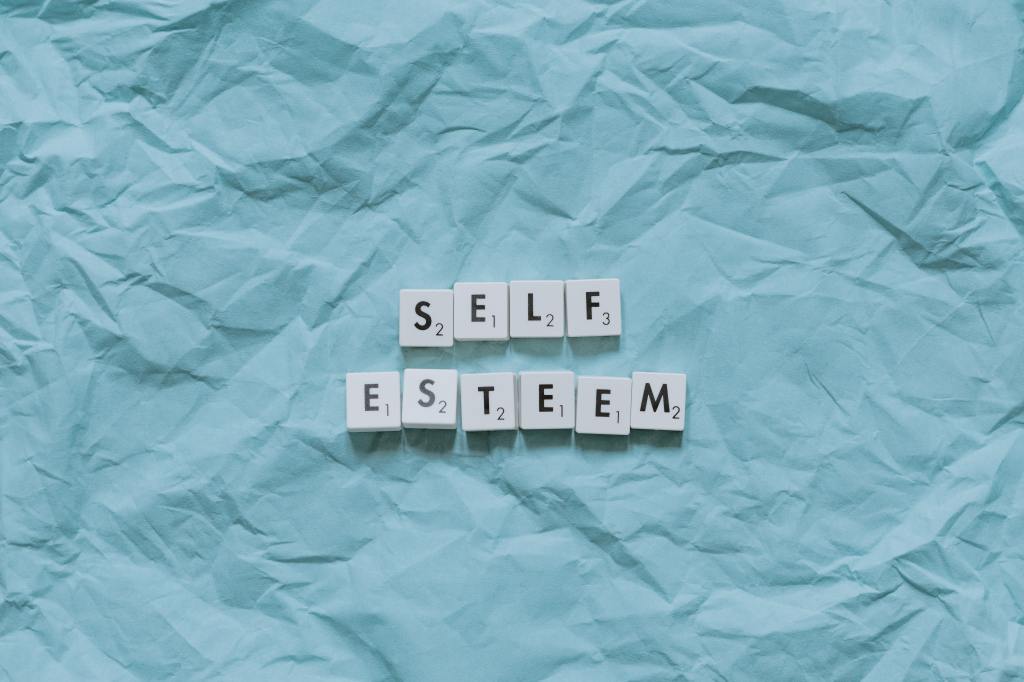
Our attempts to achieve and succeed should have their roots in a healthy, already-existent sense of self-esteem, rather than being motivated by its absence.
I can honestly say that I wake up each morning feeling committed to doing this work that fulfils my purpose. Not because I need to supplement a low self-esteem, but because doing this work feels as natural and necessary as breathing, or making nutritious food, or walking in the bush. It’s an act of self-care, this work, and feels like something I am just meant to do — no one else expects me to do it.
I value the work I am doing here, and I do it because I believe it has worth — I wouldn’t be able to do that without others’ expectations if I didn’t have a higher sense of self-esteem than I had previously recognised.
So that’s a nice thing to have realised, and was well worth taking stock for. I am grateful, and very fortunate.
Check out the article, and let me know what you think. I think it’s essential we question the narratives telling us we need to achieve more — always more, never enough.
What is your enough?
If societal expectations drive a lot of us to be always achieving, never satisfied to just exist and accept ourselves for our inherent worth, but also no achievement is ever sufficiently satisfying, what to do?





 Kokoro 心 Heart