With my room in a flu(mmo)x of books, towers of dishevelled documents, magazines, unhung decorations and an underwear drawer down to its last pair of trunks … I would have said previously that things are in disarray, but now I see that things are in a formative state ~ and that things, all things always, are in a formative state, as in always forming and reforming, never settling into one state or another, and as I type this I feel the relief that comes with beginning to know this at a deeper and deeper experiential level.1
I am still settling in at home, and I feel I have the time to be patient because there is a relatively secure future here. (I say “relative” because who knows what might happen.) Also I trust myself and the universe and I feel the universe trusts me because it senses that I am sensing that I am it.
I am of the universe in the same way a wave is of the ocean, not separate.
I deepen into becoming an instrument of this divine oceanic reality, and I am equipped to accommodate anything that happens, whether I like what happens or not.
I realised recently that I am not the boss of reality and I have been saying this jokingly to friends, but I mean it. [5.55]
Reality is the boss, and there is very little I can do to influence the untold number of events that unfold on its watch. But I watch what I can, and what I can influence is how I respond to events. By training myself to respond constructively to everything I observe, I form new mental, emotional and behavioural habits that are more and more wholesome every day.
In habits I trust.
I am piecing together some ideas that interest me very much about the (w)holistic importance of being responsible for my (and only my) mental, emotional and behavioural habits.
These ideas are grounded in the #dharma, sustained by near-constant mindfulness and #meditation in all action, and increasingly backed by #neuroscience, which makes me feel all boisterous and joyful because these ideas (when and only when applied) lead inexorably to the experience of something called sukkha (in Buddhism, and probably many other things in the world’s many spiritual traditions), which means “genuine happiness”.
Not fleeting happiness, not pleasure conflated with happiness.
Genuine, abiding contentment with all that is, without the overlay of judgement saying, “This is good, now I am happy,” or “This is bad, now I am unhappy.”
These (w)holistic ideas about personal responsibility have profound implications for collective wellbeing and long-term sustainability (a healthy world arises out of healthy minds) but their application does start with the individual. If the individual is lucky (as I am) to meet with what we all deserve, they will have the support of a community that understands these implications at least on some level,
and this collective support is what turns individual awareness and responsibility into a bonafide superpower. #sangha
These ideas have some very cool names … Indra’s Net (thanks Marc) … the morphogenetic field or morphic resonance (thanks Rupert Not Murdoch) … the holographic universe (thanks Einstein, Michael Talbot, et. al.), the #dharma … and are exemplified by the saying, “A rising tide lifts all boats” (thanks Pierce ~ may we discover together that JFK did indeed lift this from the Bible, and that maybe the Flood is actually a metaphor about a time in Biblical history when a flood of awakening wiped out swathes of ignorance in the psyche of humankind, because we know … or at least, strongly suspect … these episodes of collective awakening come in waves through history and can never really be talked about directly, so: metaphor to the rescue).
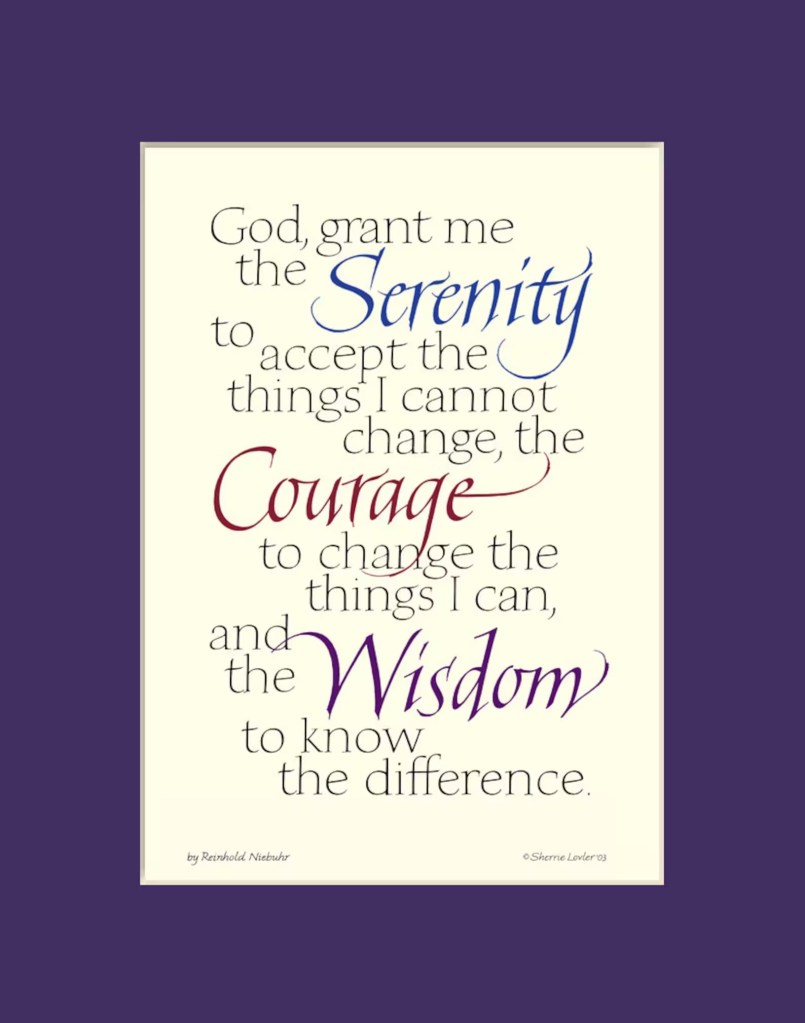
I don’t have the time or the desire to elaborate further on these ideas at the moment, because I have a group meditation to attend in 9 … 8 minutes. For now it will be enough to share the Serenity Prayer.
May I ask you to leave your notes below ~ as always, my intention for sharing these thoughts is to stimulate dialogue. If public dialogue is not your jam, get in touch directly here. If commenting on WordPress is a laborious chore because you don’t already have an account, please share this post with your comments on the socials, because it’s a dialogue we sorely need to help us transition from the doldrums of modern civilisation into whatever form is next.
I say “flu(mmo)x” because the confusion comes from within me (who is flux), not from within the state of my room, which is also in flux, but not necessarily confusing. ↩︎
bit of an update for anyone who’s curious because they know things have been a bit misshapen for me recently
I held something very heavy for a visitor at work the other day, and it was only later when I was writing the case note at home (we had gone overtime on that shift before I realised I had completely spaced on writing the note at work) that I realised how heavy it had been, but also I realised that maybe it hadn’t seemed heavy at the time because, I realised, I must have a natural ability to hold this space for others without much in the way of formal training.
I’ve said ‘realised’ a lot because that night after work was rich with insight.
I realised I am naturally good at this work, and that was pleasing to say the least ~ to know that I have a natural talent for helping people and for supporting them in distress just lights up my heart. Which leads to and supports the next thing 👇🏻
I had been reflecting that night after work, on a new opportunity I am exploring to live, volunteer and potentially ordain as a Zen monk at a Buddhist meditation centre in Springwood in the next few months years, and remembering that I have this vision to become a Buddhist Psychotherapist, coach, dharma teacher and author of new psychology. This has been a vision for a few years now, but I lose sight of it now and then, when life is especially stressful and demanding that my attention go more toward spot fires and admin than to long-term plans of the future and potential.
Which brings me to the other point of reflection that night – one I haven’t shared on the socials yet – which is that Nikki and I are separating. I haven’t been able to sense hope or even have sight of a future in the last two months because I have been couch-surfing and house-sitting through the separation. I have also not been able to maintain the practices and routines that keep my present in shape for the future I desire and deserve, one of genuine happiness in service to humanity and the planet. That’s why I say in the precise that things have been a bit misshapen lately. However, house-sitting for a month at my mum’s place, I have had the time and space to reflect and get back in touch with what feels like my sacred purpose here on this beautiful planet.
The curious mixture of emotions resulting from these reflections was a cocktail of high elation and deep sadness ( … interesting that these should be so dichotomised … 🤔 ) which reminded me that sometimes I have trouble regulating joy. The tinge of regret among the sadness and the hurt of recalling the moment when the separation was initiated … these were nuances that made this rich experience all the more stimulating.
I was going to draft this post then, but needed to be up for something in the morning and am proud of myself for being able to regulate enough to rest because I am understanding more and more these days that the realisation of the above-mentioned vision depends, of course, on my own wellbeing and self-care.
I say ‘of course’ because of course it’s obvious once you’ve realised this, but it’s only recently that I’ve begun to understand this, which seems weird now that I know it 🤔 😂 I wanted to post about that here soon, but the gist of it is the recent insight for me that my recovery of wellness from dependence on substances and other addictions depends on building a wholesome and self-compassionate lifestyle that naturally erodes that dependence and becomes the foundation for genuine wellbeing.
I always thought I needed to drop my addictions at once and then I would be able to build a wholesome lifestyle, but my whole approach around this has shifted. I now see that a lifestyle characterised by wholesome roundedness includes and naturally leads to the sort of healthy coping skills we need to manage stress without dependence on substances and behaviours that trigger substances in the brain.
This approach inspires a lot of hope in me, because it feels like the right way to go about this – compared to my former approach of dropping all my dependencies at once to ‘go clean’, hoping that I will magically develop the coping and stress-management skills I need to be okay with life’s demands without the support of drugs and maladaptive behaviours, like the ol’ coffee to wake up and weed to get sleep routine or the need to be drunk at a party to socialise. Which hasn’t actually been a problem for me since my early 30s.
None of my dependencies have been a real problem for a while, actually. I’ve been saying and feeling like I’ve been in genuine recovery for a few years now, including the periods of setback that even now I can see (while I’m in them) are just a part of the journey. This confidence comes from having gradually improved my lifestyle to support not just sobriety but a thriving growth and an ever-deepening connection to my spiritual (or true) self.
That improvement has been greatly supported by Nikki over the years, and part of the sadness I feel about our separation is that we won’t be supporting each other as closely in that as before. I am also happy and grateful though, that we are still supporting each other during this time of transition, because it means the love was real even if we are no longer compatible for the romantic and intimate closeness we had for the last seven years or so.
Like I said, the emotions around this are mixed because that sadness co-exists with joy from knowing I am getting myself into a position where I can deepen my connection with and understanding of these Buddhist practices and ideas and become better able to support others in the journey from distress and suffering to ease and genuine happiness, thereby helping to bring about a more-harmonious and sustainable world for all. Note the subtitle of this blog: a health world arises out of healthy minds. I deeply believe this and can even say I know it on an intuitive level, and not just because Buddha said “mind is the forerunner of all states”.
Of course there is a unity between body and mind, and I have been feeling enthusiastic lately about learning primal and animal movement as part of my holistic health regime, but that’s for another post and another time.
I have spoken to my current Zen teacher Arno about this plan to ordain, and he supports it. If the plan comes through, I will be taking ordination with a different teacher – the abbot at Bodhi Chan Meditation Centre where Pathway Zen sit for our sesshins twice a year, in Springwood. The Sanbo Zen lineage I have been sitting with does not have a monastic tradition or pathway, believing the valid point that awakening must be pursued in the “marketplace” as a “householder”, compared to a monastic, who has taken “the path of homelessness”.
I value this idea alongside such ideas from Zen that “a day without work is a day without food”, inspiring the work-practice of samu. I am under no illusion that ordaining in the West will necessarily mean I don’t work at all and depend entirely on the lay community for my sustenance and accommodation. I do not expect this kind of support, though it may be the case that such lay–monastic community relationships exist even in humble Brisvedas. I expect that I will continue working part-time in the mental-health space, and of course I will always have general life affairs to manage.
I am not going away to the Himalayas to sit in a cave facing the wall for nine years. I will very much still be living in the “marketplace”, the only difference being that I will have taken some vows, be observing a set of monastic precepts, and training as a monk among those “worldly” obligations.
All that said, there is a possibility I will not be able or expected to work (in some traditions the monks are not even allowed to handle money).
I met Arno for coffee the other day after one of his talks at QUT, and got onto the question of whether I will be able to work if I ordain. I said I thought I could because I knew a Zen monk down south who worked part-time in disability support. Arno said no, if you ordain you will be dedicating yourself solely to the task of liberation.
And I find it interesting that I don’t baulk when I hear this ~ it doesn’t seem like some outlandish thing, to think I could do that. On the contrary, when I hear this I hear a call to ordain that I have been hearing for 10+ years and think it’s time to answer the phone!
Every individual has the potential to realise enlightenment in this lifetime (in this very moment!) and I am dedicating myself to realising that potential because I genuinely believe it’s the best way I can empower myself to genuinely help others and contribute to the wise, compassionate, sustainable and harmonious future we deserve.
So yeah, that’s a lot, and my first real post on the socials for a while. There’s been a lot to deal with lately that has kept me focused on IRL stuff, but I’m hoping that during the house sit and into the future I’ll have more time and consistency to write and share more.
Buddhism is the ultimate activism, and I’m not talking about the social justice movement Engaged Buddhism.
The argument is that materialism stems from not just greed, but also from seeking to soothe our suffering through consumption, through looking without ourselves for that thing that will ease our suffering, a thing that doesn’t exist outside ourself.
So while the Buddhist methodology teaches how to undermine greed in the world by treating our own desire, it also undermines our tendency to avoid pain by narcotising ourselves with whatnot.
When we are not treating our pain through consumption, we reduce demand in the capitalist system.
It might not seem like much because who is one person, what impact can their reduced consumption really have?
But we need to remember that we can’t directly influence anyone else’s mind, only our own. There is no person, no institution, government agency or corporation we can influence to change ~ applying pressure through direct action is admirable, but ultimately a pony show compared to the work of undermining the system from within, because we are the system.
Change ourselves, change the system.
And remember this quote from the Dalai Lama:
If you think you’re too small to make a difference, try sleeping with a mosquito!
I am adrift again after 7-odd years, remembering Robert Pirsig’s idea of drifting ~ I have choices in this river of change and I choose to go with the flow as I bump from shore to shore. I choose to go full-vagrant, wandering-sannyasin style … neither grasping for comfort nor shunning despair and fear. There’s a freedom in that, I trust. I’ve got this. I was a part-time-reluctant vagrant for 10 years in my 20s and 30s. I gained a lot of skills in those years and I am resourcing from those now. I choose to accept because resisting change is a guaranteed way to suffer and I choose non-suffering. Aho
~
I am staying with a friend on the southside of Brisbane, a new place for me, and stepping onto the path of homelessness again. I am hosting a cleansing ceremony with some of the men from the circles around here, and organising ways to strengthen and deepen my commitment to the path. The Zen group I sit with are taking refuge this year (we will get a little vest 😍) and I am seeking the counsel of a teacher at another group in Brisbane that ordains. I said to the men:
Brethren, I am ritualising a cleanse I have imagined many times while my marriage was getting wobblier and wobblier: I am going to shave my dreads and beard, and I’d love for you to hold my hand while I do so because who knows what sort of catastrophic emotional release it might catalyse
Two of my marriage vows were to never cut my dreads or beard. Now that the marriage is over, the hair needs to go.
Will you join me to celebrate? The marriage was magic and transformative in many beautiful ways. The sadness needs to be honoured as well.
Think of it like a birthday, a celebration of life, death, decay and growth. Maybe we’ll get on the turps and blow some herb if you’re partial to that. Bring a share plate and a chin-beanie cos it’s going to be fucken weird having no insulation!
Oh, the ordination part! In the last 15 years or so I have sporadically indulged the fantasy of running away to the Himalayas. I tried this in Thailand but ended up getting drunk for 18 months and writing before I finally got my arse to a monastery for 5 gruelling days. Since then I have deferred the urge to ordain for no less than 2 women, joined a sex cult on the Isle of Lesbians for 3 months and walked three quarters of the Lycian Way as pilgrimage.
My commitment to the spiritual path is real and alive and valid and urgent. I want to celebrate that and step into it, no more shirking!
A dharma sister has referred me to a Zen group that ordains monks here in Brisbane. I’m pursuing that, starting with going to sit with them. They were the first Zen group I sat with before the covid struck, so there’s a return of a circle there.
It’s honestly not as radical as it sounds!
At the shaving ceremony I’ll give a short talk about Buddhism and some of my motivations to ordain, then we shall break the fifth precept and get moderately intoxicated. Should be a laugh
Busting the myth of psychopathology using … semantics! (The pen is a mighty tool.) And reflections on understanding what mental-health recovery means for me.
An insight that is percolating in me at the moment …
… after confirming with my therapist and the work of Gabor Maté that my condition is relatively normal and healthy (‘understandable’ is Maté’s term1) and our family dysfunction within the range of healthy …
… and while studying and practising peer work …
… is that “recovery” (from mental-health conditions or substance misuse or whatever) does not necessarily mean the absence of symptoms.
👆🏼That right there is a powerful insight for me!
The insight started with some unexpected reflection on my attachment style (disorganised) and the recognition that I don’t need assurance that my attachment with Nikki (or any significant other) is secure. In that mood I can safely practise the health-giving practice of authenticity.
a digression about boundaries
It is about authenticity: not needing that assurance that our survival depends on attachment.
A disorganised attachment style is a symptom, and “recovery” doesn’t necessarily mean living symptom free but means living in harmony (in good relationship) with the manifestation of the best response we know for these unnatural circumstances2.
An instance that illustrates this is the tussle between anxious and avoidant attachment styles (that tussle being called the disorganised attachment style): by knowing my symptoms as they manifest in certain traits and tendencies and reactive patterns, I can live with them and not worry that their occurrence means I have some problem. And without living in fear that if I’m triggered these maladaptive habits will over-run me before I can regulate. Which generally prevents me from engaging with certain important relationships because I’m anxious that I’ll fuck it up and further exacerbates symptoms.
They (the patterns) were how I adapted and they don’t need to dominate my interpretation and/or be maladaptive. I can see them for what they are, the same as when I know the types of cognitive distortions that tend to emerge when I am triggered.
I can see them as trauma responses and let them go, thereby exhausting the negative karma that caused them, reducing suffering and pointing me toward wholeness.
These models (such as attachment styles) help develop emotional and psychological granularity and vocabulary, enabling us to imagine and articulate a more nuanced inner landscape, helping us to navigate the experience of living with and thriving from/through the mental-health conditions that are an understandable response to the culture and world we live in today.
I like that phrase as it comes out now, and that’s where the insight really landed for me: mental-health conditions is good terminology because it clearly connotes illness but literally just means (denotes) the condition of health.
It puts our mental condition on a health spectrum, meaning it’s just varying degrees of health we’re talking about – eliminating and preculding the very concept of psychopathology.
I have a mental-health condition – I am in a condition of mental health.
It doesn’t sound like much, but it means something to me right now.
the Buddhist connection
Reflecting on this again after another shift at work, I really do like this phrase mental-health condition, and the acceptance that I live with symptoms, because mental-health symptoms are a natural consequence of the human condition, the human condition being characterised by suffering, delusion.
The Buddhist view puts mental health in an interesting context and on a spectrum (of illness), saying the human condition itself is a form (the ultimate form!) of mental illness. This sits nicely for me because it says all human experience is a spectrum of illness and the phrase ‘mental-health condition’ offsets this with its opposite: that all human experience is on a spectrum of health.
The one precludes all psychopathology altogether, the other precludes the hope for health (bleak!) by precluding health altogether! And as a paradox they collapse duality and leave me with an acceptant contentment that the symptoms I live with are understandable, manageable and meaningful, I can live a happy and constructive and meaningful life in their presence.
I do not need these symptoms to be absent for me to feel healthy.
That’s recovery for me.
For me (with attachment/relational trauma) much of the work of staying healthy among these symptoms involves understanding my attachment style.
So there you have it! A solution to all the world’s mental illness in one short blog post 🤣
I’d love to know what you think — drop me a comment or write me a DM.
footnotes
meaning, ‘a natural consequence of our toxic culture’ as well as ‘able to be comprehended’ ↩︎
those circumstances being our toxic culture (Maté, 2020) ↩︎
We enjoyed another beautiful dharma circle on Saturday, our second. I am so grateful for Mónica and Natalie who arranged the whole thing using the running order / model we are beginning to co-create for a decentralised, non-hierarchical spiritual-practice group that operates in community. So exciting!
I’ve been so stretched this month and could not have pulled this together on my own. Mónica’s guided journey was deeply restorative for me and it was great to see some circlers from last month, plus a new circler Lo, welcome. And thank you Nat for holding the circle.
I feel very inspired about October and would like to cohost with someone at Brisbane Theosophical Society in Spring Hill (if we can arrange access in time). Does anyone want to share some thoughts and/or guide a journey with me for us? I can hold the container while someone takes the whole session, or share a mixture of short practices together.
There is a beautiful collaborative vibe around the place and I’m very happy to be a part of this.
If you are interested and happen to be in Brisbane, get in touch to chat about the circle and see if you’d like to get involved.
Brisvedas Dharma Circle
A disparate and spiritually secular sangha meeting locally around Brisbane to discuss the dharma and practice meditation together.
Not just a Buddhist group, but a group of anyone who seeks the truth through experiential means and is interested in being guided by an understanding of the ancient spiritual literatures.
We are hoping that anyone from any spiritual tradition will feel welcome to participate, events are co-facilitated by anyone who feels comfortable doing so.
After a meditation recently where I was very easily distracted, unable to concentrate for long, I started wondering about the defilements and/or the Five Hindrances, and ethics (vinaya or virtue, in Buddhism). The Five Hindrances are a traditional categorisation of obstacles to concentration ~ ultimately, obstacles to self-mastery:
desire aversion sloth and torpor restlessness doubt
Honestly, I think itchiness should be the Sixth Hindrance!
While the Hindrances are obstacles to concentration, we practise virtue to protect and support our concentration. The timeless example is that it’s hard to have a clear mind in the afternoon when we’ve committed murder in the morning. And we practise concentration on the present to allow insight to penetrate illusion …
👆🏽 in this sense, concentration meditation is a transpersonal practice, and therefore everything that supports concentration is a therapeutic practice ~ this might seem like an arbitrary distinction (and isn’t duality precisely what we are trying to escape!?) but it’s a helpful dichotomy for me at the moment.
During that very-distracted meditation, I thought, The mental content doesn’t seem to be about any obvious breach of ethics, so why is it that I am especially disturbed today?
Maybe it’s just that I wasn’t aware of how my conduct compromises one of the less-obvious ethical precepts, such as ‘do not extol self over others’ or the one about not harbouring ill-will.
Maybe a distracted mind is just something a student needs to accept ~ radical acceptance of that fourth Hindrance, restlessness.
It certainly seems that access to consistently strong concentration is dependent on factors outside my control, but also I’m not sure about that.
There must be things we can do that support concentration.
I don’t know ~ I’m trying to understand what to do with distraction in meditation, with what has been called kapicitta since Buddha’s time. Monkey mind! It’s old school.
In the concentration basket of the Eightfold Path, with right mindfulness (samma sati) we notice our mind has wandered, and with right effort (samma vayama) we bring the mind back to right concentration (samma samadhi). Over and over again, and gradually we become more content among suffering.
I had to look up ‘defilements’ again, and read about the kleshas ~ rooted in the Three Poisons of ignorance, attachment and aversion, the defilements or afflictions are the 108 mental states that disturb the mind and result in unwholesome actions.
So yeah, I was right in my wondering, even if I was supposed to be concentrating at the time and allowing thoughts to come, dwell and fall away 👈🏼 that is the practice, the whole practice and nothing but the practice.
And yet, I was compelled to scrounge around for a pen and scribble on the nearest piece of paper (my precepts sheet), “I am enough”, because I felt I had arrived at some insight that would continue to bug me until I made a note and allowed myself to forget the idea while I continued concentrating.
As I currently understand it, the whole practice in Zen is to concentrate on an object of meditation that keeps us from indulging the monkey mind (kapicitta), and we concentrate some more until some kind of non-cognitive insight penetrates illusion.
Yes but there are other things, such as ethics, which support the practice of concentration. Concentration is but one aspect of the Eightfold Path ~ surely the other aspects of the Path are complementary to concentration (samadhi).
Let’s see if I can remember the others, and see if what I’m thinking about here fits among any of those:
right concentration
right mindfulness
right effort
right speech
right action
right livelihood
right view
right resolve
Maybe it falls within right view (samya dristi), but I’m guessing here ~ wondering whether our perception of self is an aspect of right view. If I have an unhealthy view of self, will that compromise concentration? I think so, yes.
Because it seemed a lot of the mental content (kleshas or afflictions) were about how I could be better: more loving, more organised, more efficient, more available, less distracted all the time, more able to concentrate, and I thought, We may need to complement our (transpersonal) concentration practice with the (therapeutic) practice of treating the health of our ego.
If we cultivate healthy ego, our ego is not always going to be popping up and saying, “Do this!” or “Do that!” when we’re already damn-well trying to do exactly what we’re supposed to be doing, which is concentrating!
This is not a new insight for me ~ it’s been percolating for a while and keeps coming up in my reflections. Reflecting on it has been helpful if only because it colours in the details of my own practice.
And these reflections may also illuminate beyond the lines of what I feel like calling “the original Buddhism” ~ I mean, we might need to elucidate other Hindrances or nuances of the kleshas to accommodate the mental state of humans in the twenty-first century, compared with the mental state of humans when the Buddha was alive and teaching.
As I draft this today, I have been tinkering with the various documents where I am trying to track the development and expression of these ideas in a more coherent way that I can share with others, but for now this meandering post will have to do.
I love a good meandering post.
I am distractedly curious and passionate about understanding and applying these ideas, and helping others to do so. As I move into the mental-health sector as a peer-support worker I hope to find opportunities to do so.
Meanwhile, I have updated the Heartwards website where I am starting to publish ideas from a transpersonal perspective about mental-health peer work. And I have opened but not worked on a hypertext project I think of more often again lately, called Whatness. I would like to add something about the Hindrances there, because processing such ideas enough to be able to express them without reference to some other source means I have integrated them enough to apply them on the fly.
Meanwhile, if you’re reflecting on things that support concentration in meditation, I’d love to hear about in the comments.
This is the EP version of this idea that if we don’t have connection with self (which is the definition and consequence of trauma), there is a tendency to seek that connection with other, either other people or other stuff, things external to the self, and wind up sucking the other dry.
Insights are emerging out of some tension that has been plaguing the family for the last week or so1, and a very valuable lesson:
when we don’t have connection with self (which is the definition and consequence of trauma) there is a tendency to seek that connection with other, either other people or other stuff, things external to the self;
knowing our needs is a function of connection with self, meaning that we meet our psychological needs by connecting with self and to connect with self we need to be meeting our needs;
when we give to, serve, or try to help others (without connection with self), we often end up doing the opposite of giving, which is sucking, taking, draining …
We end up sucking from others when we are trying to give, or when we think we love them, because instead of giving we are taking, sucking, a natural metaphysical consequence of there being a void or vacuum where our connection with self once was ~ we become a psychological blackhole, syphoning from others what we can only truly get from connection with self.
The formal term for this is “being an existential suckhole”.
I don’t mean to sound so obtuse ~ I’m just trying to work this out.
We reconnect with self by recovering from or releasing trauma, and through contemplative transpersonal practices (because by ‘self’ I actually mean ‘the part of us that transcends personal identification’).
How do we release trauma and integrate the parts of ourselves that we exiled during events we found traumatising? I cannot articulate that right now but it’s a central aspect of the Heartwards modularity.
I’m sure there’s literature around this and it sounds very much like something Buddha would say (I’m thinking of the “wrong objects” here) and I am interested in seeing that documentation but for right now the insight feels real enough to not need validation.
I drafted a lot more for this post and have hacked it back to the above so I can get something up here for the day. More to come.
The idea of “cultural safety” came up in class today, and it came to mind that even as an ostensible majority (white, male, educated, Western, relatively affluent) I often don’t feel culturally safe in a lot of social and professional settings because of my divergent, alternative and marginal(ised) spiritual values and beliefs.
It feels like a weird thing to say, that I feel marginalised or like a minority, considering that in many ways (white, male, educated, Western, relatively affluent) I am a majority. But what even is a majority these days anyway? When I fill in forms lately I’ve been listing my cultural background as “marginalised alternative”.
fauxpi prophecy of the rainbow warriors
I say fauxpi because apparently the prophecy of the rainbow warrior was appropriated by “hippies” from a Christian tract and attributed to the Hopi people.
Seeing a fauxpi prophecy about how the warriors of the rainbow would emerge to transform a ravaged earth, I was reminded that a much-bigger scale exists outside my puny concerns.
I’m not terribly interested in whether the alleged prophecy is “fakelore” or not, because it’s enough to be reminded that traditional societies had a much bigger vision of where we fit among the scheme of things.
I saw the prophecy after I’d been talking to Nikki at length about how I’m not doing well enough as a stepfather, and during all that talk I had remembered at least that I’m not the cause of or the solution for all of my stepson’s problems. A much-bigger scale exists outside my puny concerns, and in some way it’s borderline hubristic to think that my influence could make or break his future. There are many factors, outside me and/or my control that are causing Zane’s so-called problems.
Proverbs … because I kept hand-writing “prophecy” as proverbs, which fits better anyway, I think … And proverbs like the faux-Hopi one suggest a cosmology that reminds me it’s quite arrogant to think I could be the difference between Zane doing well or not.
There’s a much-bigger cultural momentum at the heart of these problems, as Gabor Maté identifies in The Myth of Normal, and the challenge of the rainbow warrior is to make change at a cultural level, not just at the family level.
I believe that is already happening. We are seeing more-awakened humans emerging to restore the ravaged Earth.
The prophecy might be spurious, but that doesn’t matter to me. The present is what matters, and I see change happening in the present ~ in myself, and in others around me. The hippie movement is alive and well and it’s wearing all sorts of clothes other than bell-bottomed jeans.
Seeing the prophecy recently has emboldened me to take seriously the calling to continue joining and co-creating the community movement to restore ways of being that are harmonious and sustainable.
I don’t know other words to describe it, but the feeling is strong: heal the internal wounds and help others do so to bring about a healthy world and culture; be healthy and happy and lead by example by, e.g., getting off sugar, learning tummo, healing my back pain and experiencing then integrating kensho, and/then help others to realise these ways of being,
as a service to the planet and our shared existence.
This comes off the back of angsting about Zane and reflecting that I can’t help him much but I can help people who are willing to be helped, people who are reaching out, and helping many this way to help the culture has more value than helping one teenager-I-can’t-help just because we happened to become family. The best I can do is continue working on myself so that I am able to be there when he’s ready.
Meanwhile I find it consoling that there is a much-bigger process of evolution I am a part of that transcends the wellness of a single stepson, stepdad and mother. By healing myself and helping to heal others, I serve a much broader cause.
identifying as trans(personal)
Related to the rainbow-warrior subculture and the experience of being “marginalised alternative”, I am starting to realise that I desire belonging among a suitable subculture, tired as I am of just drifting around on the edges of society, trying to be content with not quite fitting anywhere.
A student at TAFE shared their experience of coming out as trans in the Australian culture and how certain attitudes made this confronting for them. Not unusual ~ it’s well-known that coming out is confronting in a culture that has traditionally been quite homo- and trans-phobic.
It just makes me think of and realise that I feel a similar discomfort and don’t have a banner to fly under such as the rainbow flag of the queer community, though I’ve recently identified with the Mad Pride movement. That’s not quite what I’m looking for either because this unites folk under a banner of spiritual emergency (and even of being proudly pathologised) rather than spiritual emergence.
Where is the subculture for people who value the gradual benefits of prioritising transpersonal practices over, say, the gradual benefits of acquiring material wealth?
In that sense I am trans, in the sense I identify as more than just my personal self or ego. The “trans” label is already taken, so I’m not sure where to go from here. I don’t really need a label exactly, except that it might help me find more of my tribe. I think it’s not dissimilar from someone who realies they are neither male nor female and realises they can identify as non-binary. I feel something similar, except I would call it “non-dualist”. Non-dualary?
the destruction of small ideas
The Destruction of Small Ideas by 65daysofstatic
A classmate was talking about virtue signalling and how the teacher shouldn’t be politicising the classroom by subtly (and not so subtly) advocating that we all vote YES in the Voice referendum. I get it, there should be a separation between politics and education, the same as between church, state and the press, and I value that this classmate brings a self-identified “conservative” perspective because I value having my biases challenged.
Somehow though, we got on the topic of … wait, how did we get there … that’s right, this classmate had been triggered (their word) when other classmates that morning had said Australia is a racist country. This classmate believes Australia is much-less racist than it was, and I agreed ~ I said though, among your everyday people there is much less racism and yet, institutional and systemic racism persists:
First Nations people are marginalised, more incarcerated, have less access to opportunity because of systemic racism, that is undeniable.
Institutions and government departments take generations to catch up with the popular view.
He asked me, “What institutions and departments need to catch up?” and I sensed at this point that I was no longer in a conversation or reasoned debate, and was now embroiled in highly emotional polemic.
I said, “I don’t know,” which seemed to signal an opening to that I deserved to be torn down for my ignorance.
They said, “If they’re marginalised it’s because of alcohol.”
Starting to back away, I said, “What do you mean?”
They told me that when the conservative government took away cash from communities and they couldn’t buy alcohol, things improved. When the Labor government came in and revoked that because they are “do-gooders”, things went to shit again.
I asked, “Do you think we should deprive them of their right to choose and their right to dignity of risk by denying them cash?”
“If they were able to make informed choices we wouldn’t need to do that.”
“Wouldn’t it be better then, to provide education instead of revoking their freedoms?”
At which point, they said, “Yeah but hey, would you let a 4 year old play in the street?”
I said, “Okay, I’m going to call it because I need to go to the toilet and have lunch anyway, and these kinds of views make me deeply uncomfortable.”
By this point I’ve been feeling triggered myself for a while because blaming First Nations marginalisation on alcoholism was staggering enough, so I don’t remember exactly the defense they uttered, but as I walked away, I said, “I’m going to leave you with it to think about whether that’s appropriate.”
I find it unfathomable that a twenty-first century adult could so flippantly infantalise a whole demographic of humans. I find it unfathomable that seventeenth-century adults were able to do this without feeling appalled. But this person, when I told them I was struggling to know what to do about my stepson’s drug addiction, told me I should storm into his room and dump all of his shit onto the footpath if I didn’t want drugs in the house.
I don’t know if I’m some kind of virtue-signalling pinko-lefty bleeding-heart liberal, but I prefer to identify as a budding transpersonal psychotherapist. I had already seen some belligerence and bigotry in their way of presenting their views, so I’m not surprised it has come to this. I’m just glad it wasn’t my sarcasm that caused the problem, as I had been worried about.
the Buddhist path of recovery from addiction
Related to the faux-Hopi prophecy about an awakened people emerging to heal the ravaged earth, I was talking to my Zen teacher Arno recently in the car on the way home from the zendo, and a resolution formed (a sankalpa, you could call it): Why not just go for it and develop an addiction-recovery program that is unashamedly based on Buddhism. I confirmed with Arno that the attachment in Buddhism is like addiction, to illusion. I said, “Once we drop that addiction to illusion, aren’t we free?” and Arno agreed.
It’s a natural progression from there that a Buddhist path to recovery from addiction makes a lot of sense as a Heartwards offering.
He said it’s tricky though because the Buddha taught a transpersonal methodology and teaching Buddhism as an addiction-therapy program kind of detracts from that, or sells it short. But Buddhism is both therapeutic and transpersonal: as a person makes progress along the transpersonal path (letting go of their attachment/addiction to an illusory self) they are naturally going to experience therapeutic benefits. And the “therapeutic” practices like self-compassion support/complement the transpersonal progress/development.
As one practices letting go of their addiction to an illusory self, the “lesser” addictions will naturally fall away as well.
The hinaddictions to drugs and sex and whatnot, if the “greater” addiction to the illusory self, is the mahaddiction.
Such a program would be like Cultivating Emotional Balance (CEB), based on Buddhism and other ancient traditional contemplative practices, secularised and supported by neuro(science). Noah Levine is doing something similar already with Refuge Recovery, so there are models around already.
I’m really proud of myself and very excited because I feel I can say I am in recovery from mental illness, which is no small deal.
Trigger warning though:
I have been debilitatingly depressed for months at a time in the last 10 years or so. I have experienced heart-breaking bouts of acute suicidal ideation and a deep sense of alienation from my self and my worth. (This is a trauma response I have learnt about and am able to see for what it is: no more and no less than fight-or-flight, my nervous system trying to protect me from acute and sometimes chronic emotional pain and suffering.) I have been through 2.5 episodes of spiritual emergenc(y) and about .5 episodes of full-blown acute episodic stress-induced psychosis. I have been dependent on drugs and alcohol and various behavioural addictions since my early teens. I am now 39! Apart from a bit of mild binge-eating or a dose of half-mindless entertainment, I am now nearly addiction free. (The final addiction to drop is our attachment to false ideas about reality.)
I no longer get floored by depression ~ I have learnt and am teaching myself how to respond to life in way that doesn’t result in debilitating overwhelm. I am able to see when my nervous system has been triggered and know that any thoughts (say, of worthlessness) are cognitive distortions. Most days I experience micro-mystical states of deep peace and contentedness that are dependent on no external source ~ due to the self-work I am doing, these moments of genuine happiness are the result of being in relationship with my true self and with reality as it is, compared with wishing reality were how I think it should be.
I am reporting this after an exchange with Zane tonight that previously would have totally derailled me. A minor (but vaguely problematic) exchange that remained minor because I saw what was happening: we were triggered = responding half-consciously from dysregulated nervous systems that believed we were in the past, not the now. I saw what was happening, and exited the situation instead of trying to make Zane see reason (read: instead of trying to make reality or Zane behave as I think they should). Earlier in the evening I had self-regulated after Zane had been pushy and rude. Then we had the exchange where we were triggered and I co-regulated with Nikki. And I have been at baseline ever since, whereas a year and a half ago I would have still been fuming.
In fact I now need to regulate joy because I am so excited about other positive things going on!
Previously I wouldn’t have been able to enjoy these positive things because once I was triggered it would sometimes take me days to come back to baseline. I would let triggering situations hijack my happiness and I would feel so trapped in suffering that suicide felt like the only option.
I didn’t know how to respond to or cope with life in a healthier way, but now I do and am learning more all the time.
So I’ve come a long way!
Nikki is doing really well too and we were able to report to our relationship counsellor today that we each feel we are genuinely healthy ~ at least, as healthy as we can expect. (I’ve since re-encountered Gabor Mate’s idea that a lot of our mental and physical symptoms today are the reasonable responses of our whole organism to the toxic culture we are growing in.) Sometimes we are distressed and suffering acutely, but this does not mean we are unwell. It means we are human. It seems really obvious now, but it’s been a huge paradigm shift to feel that.
The cool thing is … the really fucking cool thing: this sense of wellness among suffering has not resulted from some miracle or fluke; it is the result of some 15+ years of (self-) inquiry, application, research, therapy, meditation, a bit more inquiry, some giving up, a lot of starting again, despair, triumphs, bum steers and mistakes and lessons and gradually a very solid deepening of self- and other-love.
It’s been a fucken journey! It still is. I’m finding my way. Makes my heart swell inside to think of it and report this here.
And like all before me who travelled the Path, I carry a torch that lights not just my way but others’ as well, and apart from being excited about my own increasingly consistent wellbeing I am excited about beginning to support others more on the Path.
I’m starting to offer dana-based coaching, so if you’re curious about that, get in touch at that link. I am starting to offer this in in the most ad-hoc fashion, making it up as I go along ~ join me if you’re ready to explore the Path together.
My enrolment at TAFE Qld was finalised today so it’s now official. I am going to study Mental Health (Peer Work) and I feel ready ~ ready to use my lived experience of recovery to help others move toward recovery and health and wholeness as well.
Did you know the word “wealth” is derived from weal, meaning good health? I find that weally intewesting.
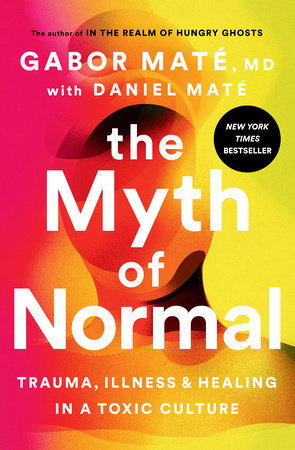
I bought Gabor Mate’s book The Myth of Normal to celebrate enrolment, because we got an advance payment from cLink and I bought myself a 5-subject lecture pad as well because hey, nerds like to live a little as well!
like all before me who travel the Path, I carry a torch that lights not just my way but others’ as well, and apart from being excited about my own increasingly consistent wellbeing I am excited about beginning to support others more on the Path.
I am starting to offer dana-based coaching so if you’re curious about that, get in touch at that link and we’ll arrange a time to catch up.












 Kokoro 心 Heart