on Exercising my Right to Hold a Shonky GP Accountable

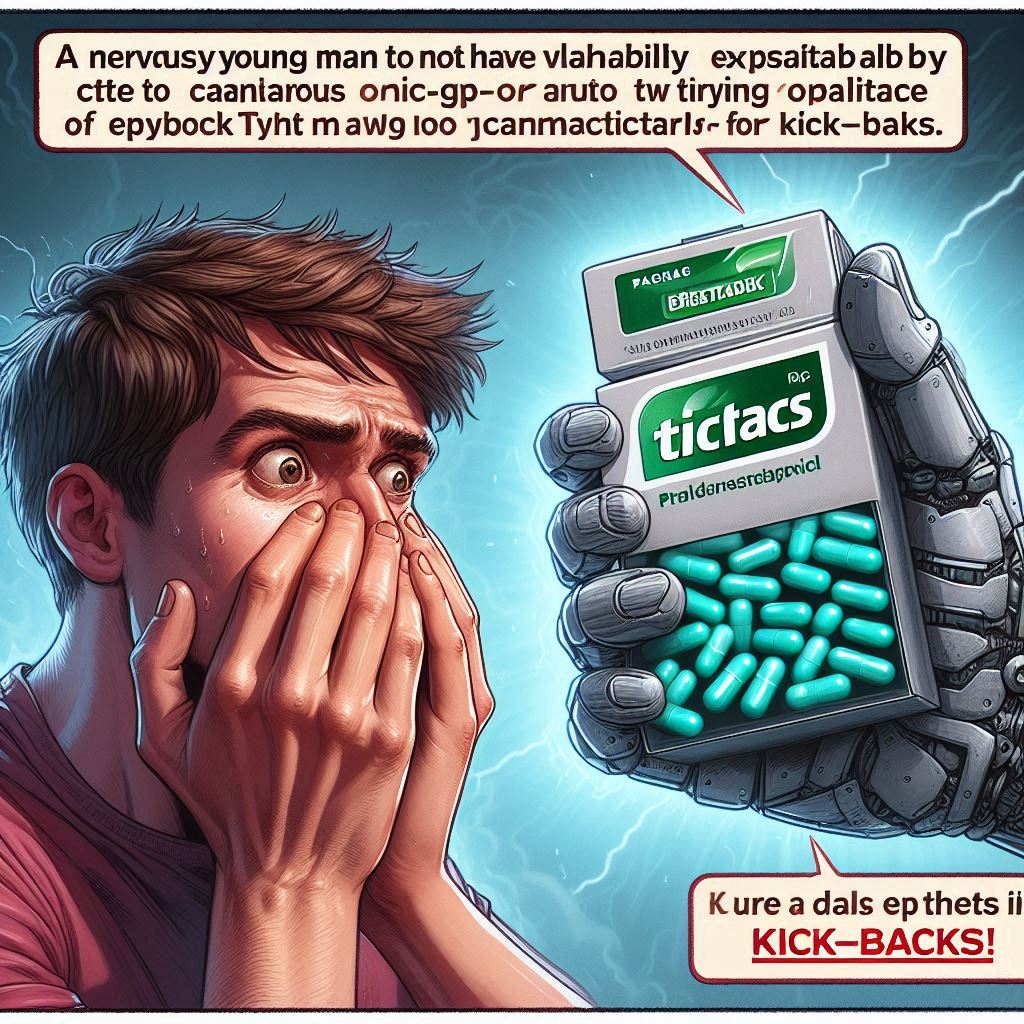
I am submitting a complaint to the Office of the Health Ombudsman today, after a shonky GP tried to swindle me into what I am calling “tic-tacs for kick-backs”, meaning anti-depressants I don’t want or need.

I have been meaning to do this for a while, but have had so much other shit going on lately (mostly good shit), but after a second sleepless night filled with pre-occupations about said shit, I decided while making coffee that this is what I would spend my pre-meditation time doing, because:

  1. maybe it will leaven the burden of carrying this complaint-intention around and begin to lift the resentment I feel every time I remember that this situation happened
  2. as a bystander and citizen, I feel a duty to report this knuckle-head so that other vulnerable people might not become his prey in future
  3. after doing this I might be able to start working on letting-go of some of the shit language I use to think about and describe this fellow, who I understand is just trying to find happiness, albeit in the “wrong objects”, namely, financial wealth ~ and then sometime later I might be able to start opening myself to more-generous assumptions through the diligent application of forgiveness

I was going to link here to my Google Review of this GP, but for now I think it’s prudent to not point so blatantly at his privacy (does he get the benefit of privacy if he is running a public private practice?), lest I pull an avalanche of defamation bullshit onto my own head.

I am so legally naive that I don’t even know the differences between things like defamation and slander. My intention here is not to unnecessarily injure this GPs reputation, but to make people aware that they might want to exercise caution if approaching this GP. I formerly identified as something of a citizen journalist, and this activity and post is I guess a hangover from those days.

I am not going to post here my cautionary-tale Google Review, but I am going to post my (de-identified) complaint to the ombudsman, because I’m curious to know what others think of the reasoning I’m doing here.

I am 99% convinced that this bloke has a whole-arse method that he rolls out whenever he sees a vulnerable person walk into his clinic, and yet I am clinging desperately to the idea of holding my convictions tentatively because:

  1. I like what Bertrand Russell said about not being opinionated
    1. The essence of the liberal outlook lies not in what opinions are held, but in how they are held: instead of being held dogmatically, they are held tentatively, and with a consciousness that new evidence may at any moment lead to their abandonment.
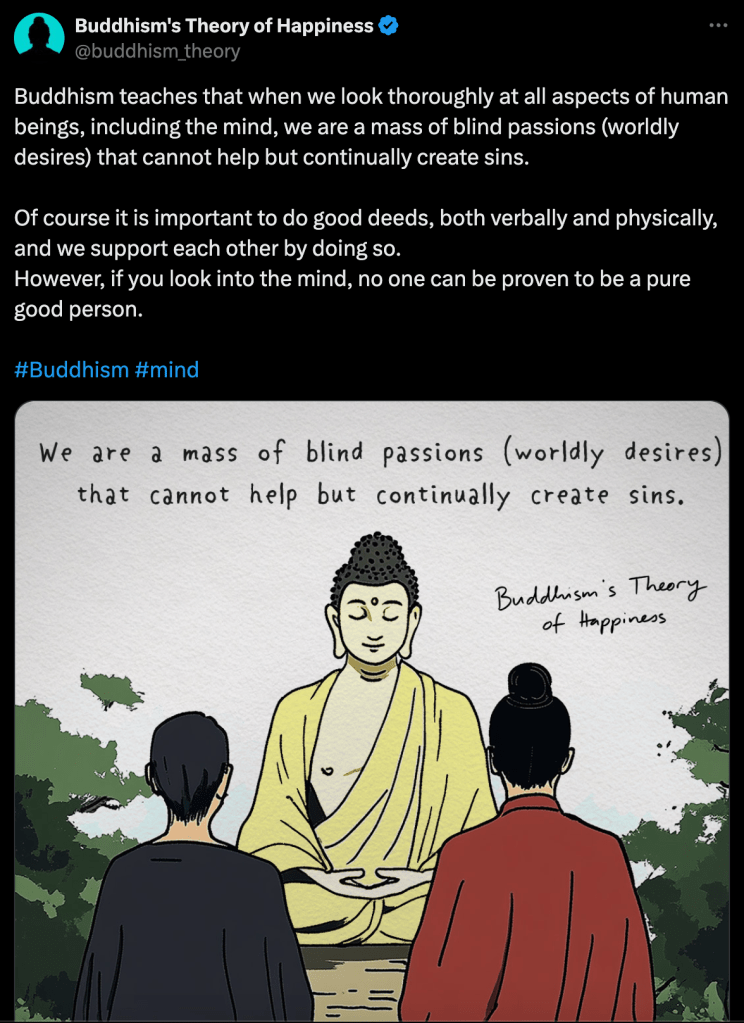
  2. I want to retain my belief, for now, that humans are inherently good, despite this illuminating post I found on Twitter recently, which challenged this belief in a way that sounds legit
So here is the guts of the complaint:

I am new to the Logan/Springwood area, and needing a new regular GP, I went to Dr Doo-not-much for sleep support, expecting a melatonin prescription perhaps.

He tried to prescribe me anti-depressants, without answering my questions about what the prescription actually was (I had to ask a nearby pharmacist to explain what he had prescribed me).

I also asked to start a Mental Health Care Plan (which I maintain with all my GPs as a preventative measure) and he tried to tell me that a MHCP was pointless because I would just get “talk therapy” and what I really needed was a diagnosis.

This is untrue ~ my last MHCP therapist is a Somatic Experiencing practitioner, but Dr Doo-not-much wouldn’t listen to my experience of finding my own Medicare registered therapists.

He referred me to a nearby psychiatrist, and explained to me that he has a “deal” with them to get cheap diagnoses.

The biggest red flag though: on my second and final appointment, Dr Doo-not-much knocked a whole stack of inbox trays off his desk and proceeded to blame everything except his own elbow for the stack falling.

This guy is super dodgy, and really shouldn’t be practising. If he cannot accept accountability for knocking something off his desk, how can I trust him to be responsible for the known side-effects of the powerful pharmaceuticals he tried to swindle me into taking!?

He told me to take those anti-depressants (without telling me that’s what they were) for a couple of weeks until my sleep stabilised!

If I hadn’t had the wherewithal to enquire with the pharmacist or the confidence to self-advocate, I would have been sucked into this guy’s ruse to get me hooked on anti-depressants for kickbacks, and would have had to taper.

I have been managing depression symptoms for 20+ years with lifestyle changes and have never needed pharmaceutical medication.

I know my health history, and I know my needs.

This guy was so frenetic and conceited that he wouldn’t listen to me when I tried to tell him I know my own history of recovery from mental illness.

He has also not released my results from tests performed for a foot injury after nearly 3 weeks of waiting after another GP requested them.

I am genuinely concerned that this guy is harming patients by prescribing them anti-depressants without proper education: if he prescribed them to me within 2 visits, without conducting so much as a mental-health questionnaire, then who else is he prescribing them to!

On the complaint form the Office of the Health Ombudsman ask “What do you want to happen?”, so I said:

I would like Dr Doo-not-much to be investigated to see what he means by having a “deal” with a local psychiatrist, because if this man is funneling people through a dodgy psychiatrist to get them diagnosed and prescribed unnecessary pharmaceuticals for profit, then this is serious malpractice and he could be causing a lot of short- and long-term harm for his own financial gain.

And I am attaching a second PDF with the formal complaint form, documenting reflections that occurred to me after completing that form:

I went to Dr Doo-not-much for both sleep support and to start investigating why my foot injury was still giving me trouble after getting stitches for a laceration resulting from stepping on a sharp rock. 

When I told him the symptoms (pain and swelling, some months after the stitches were removed) he tried to prescribe me anti-biotics before even beginning to print the referral for blood tests that I had asked for, to see if there was an infection.

I informed Dr Doo-not-much that I was reluctant to take anti-biotics unless absolutely necessary. When he asked me why, I informed him that I didn’t want to mess with my gut bacteria unnecessarily.

Dr Doo-not-much brushed this off, and told me that anti-biotics were a good preventative measure against infection. 

A preventative measure against infection forming inside a wound that had already healed on the outside?

This just didn’t make sense to me, and after completing the accompanying PDF I began to suspect that this might be part of Dr Doo-not-much’s nefarious method: prescribe anti-biotics to ruin a patient’s gut bacteria, making them susceptible to depression, and attempting to render them dependent on powerful mind-altering pharmaceuticals by simultaneously prescribing them anti-depressants. 

I am trying (not very hard) to avoid emotive language here, but the truth is I felt and still feel that my trust was profoundly violated by this doctor, and I am genuinely concerned that he is rolling out this method on the daily to people who are less able to self-advocate than I am. 

I have been similarly coerced in psychiatric wards and it’s just really not cricket ~ this kind of practice is profoundly unethical and harmful, and I hope that this complaint will be investigated thoroughly by an objective party who is not so thoroughly embroiled emotionally in whatever is going down at this GP clinic. 

I am genuinely open to suggestions that I am just being paranoid here, but I am equally open to hearing whether others observing this post would draw the same conclusions from the behaviours I observed.

I know that “tic-tacs for kick-backs” is a thing, but I always held the belief that something like this would never happen to me.

Let me know in the comments below, or contact me directly through this website or the socials.

Much appreciated if you got this far through the post!

are you a people-pleaser?

Are you a people-pleaser and would like to reclaim some of the energy you often syphon off to others?

I found this article from Very Well Mind to be helpful, with tips for identifying these traits and how to move away from them if they are a problem for you.

I know for me that I’m not a chronic over-pleaser who gives and gives and gives until I’ve been sucked dry, but I do tend to be hesitant about asserting my needs, in particular for space and solitude.

These are attachment-trauma issues: I worry that if I assert these needs, the other will feel like I don’t want to spend time with them.

Truth is, that as an introvert, I cannot be fully present to share my company and enjoy theirs unless I am re-charged from any extroversion my day has demanded.

I am a much better person to be around (more available, more present, more able to listen without being distracted) once I have met my need to spend time with myself.

Refusing to meet this need in myself might only be a mild form of people-pleasing but it’s people-pleasing nonetheless and I’d like to be rid of it.

The main tips I got from the article are about setting boundaries and understanding my own goals and priorities, so I have a reference point when I’m considering the choice to sacrifice my time for another.

Let me know what you think 🤔

mental-health conditions 

Busting the myth of psychopathology using … semantics!
(The pen is a mighty tool.)
And reflections on understanding what
mental-health recovery means for me. 

An insight that is percolating in me at the moment …  

… after confirming with my therapist and the work of Gabor Maté that my condition is relatively normal and healthy (‘understandable’ is Maté’s term1) and our family dysfunction within the range of healthy …  

… and while studying and practising peer work …  

… is that “recovery” (from mental-health conditions or substance misuse or whatever) does not necessarily mean the absence of symptoms.  

👆🏼That right there is a powerful insight for me! 

The insight started with some unexpected reflection on my attachment style (disorganised) and the recognition that I don’t need assurance that my attachment with Nikki (or any significant other) is secure. In that mood I can safely practise the health-giving practice of authenticity. 

a digression about boundaries 

It is about authenticity: not needing that assurance that our survival depends on attachment.  

A disorganised attachment style is a symptom, and “recovery” doesn’t necessarily mean living symptom free but means living in harmony (in good relationship) with the manifestation of the best response we know for these unnatural circumstances2.   

An instance that illustrates this is the tussle between anxious and avoidant attachment styles (that tussle being called the disorganised attachment style): by knowing my symptoms as they manifest in certain traits and tendencies and reactive patterns, I can live with them and not worry that their occurrence means I have some problem. And without living in fear that if I’m triggered these maladaptive habits will over-run me before I can regulate. Which generally prevents me from engaging with certain important relationships because I’m anxious that I’ll fuck it up and further exacerbates symptoms.

They (the patterns) were how I adapted and they don’t need to dominate my interpretation and/or be maladaptive. I can see them for what they are, the same as when I know the types of cognitive distortions that tend to emerge when I am triggered.

I can see them as trauma responses and let them go, thereby exhausting the negative karma that caused them, reducing suffering and pointing me toward wholeness.  

These models (such as attachment styles) help develop emotional and psychological granularity and vocabulary, enabling us to imagine and articulate a more nuanced inner landscape, helping us to navigate the experience of living with and thriving from/through the mental-health conditions that are an understandable response to the culture and world we live in today.  

I like that phrase as it comes out now, and that’s where the insight really landed for me: mental-health conditions is good terminology because it clearly connotes illness but literally just means (denotes) the condition of health.  

It puts our mental condition on a health spectrum, meaning it’s just varying degrees of health we’re talking about – eliminating and preculding the very concept of psychopathology.  

I have a mental-health condition – I am in a condition of mental health.  

It doesn’t sound like much, but it means something to me right now.  

the Buddhist connection 

Reflecting on this again after another shift at work, I really do like this phrase mental-health condition, and the acceptance that I live with symptoms, because mental-health symptoms are a natural consequence of the human condition, the human condition being characterised by suffering, delusion. 

The Buddhist view puts mental health in an interesting context and on a spectrum (of illness), saying the human condition itself is a form (the ultimate form!) of mental illness. This sits nicely for me because it says all human experience is a spectrum of illness and the phrase ‘mental-health condition’ offsets this with its opposite: that all human experience is on a spectrum of health.  

The one precludes all psychopathology altogether, the other precludes the hope for health (bleak!) by precluding health altogether! And as a paradox they collapse duality and leave me with an acceptant contentment that the symptoms I live with are understandable, manageable and meaningful, I can live a happy and constructive and meaningful life in their presence.  

I do not need these symptoms to be absent for me to feel healthy.  

That’s recovery for me. 

For me (with attachment/relational trauma) much of the work of staying healthy among these symptoms involves understanding my attachment style.  

So there you have it! A solution to all the world’s mental illness in one short blog post 🤣 

I’d love to know what you think — drop me a comment or write me a DM.  

footnotes

  1. meaning, ‘a natural consequence of our toxic culture’ as well as ‘able to be comprehended’  ↩︎
  2. those circumstances being our toxic culture (Maté, 2020)  ↩︎

concentration depends on a healthy ego

After a meditation recently where I was very easily distracted, unable to concentrate for long, I started wondering about the defilements and/or the Five Hindrances, and ethics (vinaya or virtue, in Buddhism). The Five Hindrances are a traditional categorisation of obstacles to concentration ~ ultimately, obstacles to self-mastery: 

desire
aversion
sloth and torpor
restlessness
doubt

Honestly, I think itchiness should be the Sixth Hindrance! 

While the Hindrances are obstacles to concentration, we practise virtue to protect and support our concentration. The timeless example is that it’s hard to have a clear mind in the afternoon when we’ve committed murder in the morning. And we practise concentration on the present to allow insight to penetrate illusion …

👆🏽 in this sense, concentration meditation is a transpersonal practice, and therefore everything that supports concentration is a therapeutic practice ~ this might seem like an arbitrary distinction (and isn’t duality precisely what we are trying to escape!?) but it’s a helpful dichotomy for me at the moment.

During that very-distracted meditation, I thought, The mental content doesn’t seem to be about any obvious breach of ethics, so why is it that I am especially disturbed today?

Maybe it’s just that I wasn’t aware of how my conduct compromises one of the less-obvious ethical precepts, such as ‘do not extol self over others’ or the one about not harbouring ill-will. 

Maybe a distracted mind is just something a student needs to accept ~ radical acceptance of that fourth Hindrance, restlessness.

It certainly seems that access to consistently strong concentration is dependent on factors outside my control, but also I’m not sure about that. 

There must be things we can do that support concentration.

I don’t know ~ I’m trying to understand what to do with distraction in meditation, with what has been called kapicitta since Buddha’s time. Monkey mind! It’s old school.

In the concentration basket of the Eightfold Path, with right mindfulness (samma sati) we notice our mind has wandered, and with right effort (samma vayama) we bring the mind back to right concentration (samma samadhi). Over and over again, and gradually we become more content among suffering. 

I had to look up ‘defilements’ again, and read about the kleshas ~ rooted in the Three Poisons of ignorance, attachment and aversion, the defilements or afflictions are the 108 mental states that disturb the mind and result in unwholesome actions.

So yeah, I was right in my wondering, even if I was supposed to be concentrating at the time and allowing thoughts to come, dwell and fall away 👈🏼 that is the practice, the whole practice and nothing but the practice. 

And yet, I was compelled to scrounge around for a pen and scribble on the nearest piece of paper (my precepts sheet), “I am enough”, because I felt I had arrived at some insight that would continue to bug me until I made a note and allowed myself to forget the idea while I continued concentrating.

As I currently understand it, the whole practice in Zen is to concentrate on an object of meditation that keeps us from indulging the monkey mind (kapicitta), and we concentrate some more until some kind of non-cognitive insight penetrates illusion. 

Yes but there are other things, such as ethics, which support the practice of concentration. Concentration is but one aspect of the Eightfold Path ~ surely the other aspects of the Path are complementary to concentration (samadhi). 

Let’s see if I can remember the others, and see if what I’m thinking about here fits among any of those: 

  1. right concentration 
  2. right mindfulness
  3. right effort
  4. right speech
  5. right action
  6. right livelihood
  7. right view
  8. right resolve

Maybe it falls within right view (samya dristi), but I’m guessing here ~ wondering whether our perception of self is an aspect of right view. If I have an unhealthy view of self, will that compromise concentration? I think so, yes.

Because it seemed a lot of the mental content (kleshas or afflictions) were about how I could be better: more loving, more organised, more efficient, more available, less distracted all the time, more able to concentrate, and I thought, We may need to complement our (transpersonal) concentration practice with the (therapeutic) practice of treating the health of our ego. 

If we cultivate healthy ego, our ego is not always going to be popping up and saying, “Do this!” or “Do that!” when we’re already damn-well trying to do exactly what we’re supposed to be doing, which is concentrating!

This is not a new insight for me ~ it’s been percolating for a while and keeps coming up in my reflections. Reflecting on it has been helpful if only because it colours in the details of my own practice. 

And these reflections may also illuminate beyond the lines of what I feel like calling “the original Buddhism” ~ I mean, we might need to elucidate other Hindrances or nuances of the kleshas to accommodate the mental state of humans in the twenty-first century, compared with the mental state of humans when the Buddha was alive and teaching. 

As I draft this today, I have been tinkering with the various documents where I am trying to track the development and expression of these ideas in a more coherent way that I can share with others, but for now this meandering post will have to do.

I love a good meandering post. 

I am distractedly curious and passionate about understanding and applying these ideas, and helping others to do so. As I move into the mental-health sector as a peer-support worker I hope to find opportunities to do so. 

Meanwhile, I have updated the Heartwards website where I am starting to publish ideas from a transpersonal perspective about mental-health peer work. And I have opened but not worked on a hypertext project I think of more often again lately, called Whatness. I would like to add something about the Hindrances there, because processing such ideas enough to be able to express them without reference to some other source means I have integrated them enough to apply them on the fly. 

Meanwhile, if you’re reflecting on things that support concentration in meditation, I’d love to hear about in the comments. 

Legend 🤙🏼

an open letter to men who think they are shit dads

Canva generated AI art depicting “dad feeling self-compassion and trying to pull himself together so he can be there for others on father’s day trauma recovery reintegration” looks uncannily like myself embracing my wounded inner child

To all the men today who think they are a shit dad, I see you through me. 

I see what constraints you are living with, between your childhood trauma and the toxic culture that has relegated us to the dustbin of the heartless-provider1. It’s very fucking hard to be compassionate and kind and patient with our kids today when generations behind us were not these things: we didn’t have the role models. 

I understand, as you do, that not having the role models doesn’t excuse us from the responsibility to be the good-hearted men we know our kids need. We understand it’s not our fault that our parents didn’t love us the way we needed, but we also understand it’s our responsibility to find the love we need to give ourselves and our kids. 

That though, is so fucking hard, especially in our culture, alone, divided, “the village” now a legend we hear about from traditional societies and pre-industrial Europe. It’s really really hard to act and live from our higher true self (where compassion and kindness are the default reactions) when our conditioning and ego and trauma is running the show most of the time because our nervous systems are fried and our default reactions are non-constructive, damaging, traumatising. 

It’s very fucking hard to be aware enough, awake enough, and self-compasionate enough to not pass on the trauma we are carrying from generations past. It takes work to reconnect with our true self enough that our default reactions transform out of destructive habitual maladaptions into constructive and compassionate active responses.

On the journey of trauma recovery and conscious evolution, we are gradually ascending in a spiral that brings us inexorably closer to reacting with compassion as a default because that’s all our true self knows. But it’s a journey and a spiral, meaning we have to go through the same tests and lessons over and over again, learning something new each time, and evolving if we are aware of where we tripped up last time. 

If you’re doing this, then you’re on the right track and you’re a much-better dad than you are probably giving yourself credit for.

Taking responsibility for your own love and healing and evolution is the absolute best fathering a man can do, because without that our kids are just getting some performance of what we think a father should be and that’s only ever going to be disingenuous, dishonest, not real. 

Be your flaws and do the work of overcoming them, of recovering from and transforming trauma and becoming whole again, and know that you’re setting an example of a man who takes genuine happiness seriously and will not settle for some performance of happiness we copied from a fucking beer ad or something.

.

.

.

I made a video of this post because I know that some folk out there just can’t do reading sometimes and I wanted this compassion missive to reach as many as possible 👇🏼

  1. What I mean by this is that we have been conditioned to provide materially for our families, at the expense of our own hearts and we are now expected to be loving and compassionate fathers despite having those parts of us conditioned out of us by culture. We were made into worker drones to serve the industrial economy and now we are trying to find our hearts again. ↩︎

hope, a “symptom” of recovery

I love a good paradox!

Regulating an excess of joy and optimism is not something I, a “depressive”, ever thought I’d have to deal with and let’s face it ~ it doesn’t fit the stereotype, but in my experience(s) of recovering from depression, this need to regulate an unfamiliar energy of hope and empowerment has become one of the first hurdles I encounter

to such an extent that when I had “my episodes” they were, largely, a consequence of not being able to manage a rapid ascent out of the depressive spiral ~ something my wife and I came to call “escalation”.

A clinical term? Seems very broad and non-specific, not very sciencey, but might explain why the appointed psychiatrist started wondering whether I would qualify for the bipolar box.

Surprise! You don’t get the grand prize of genuine happiness but here, have this booby prize ~ it’s like the high-fructose corn syrup of happiness: very intense and very bad for your health longterm, and only a synthetic facsimile of genuine happiness.

Lift Your Skinny Fists Like Antennas to Heaven | Godspeed You! Black Emperor

But I’m getting there, and pleased that I now have healthier ways of responding when this “symptom of recovery” manifests in the middle of the night in the form of All The Things I’d Like To Do With My Life Now That I’m Not Incapacitated by Despair.

Sounds like a post-rock album!

I no longer jump out of bed to drink coffee and smoke cigarettes and attempt to complete a 5000-word essay from scratch. After a profoundly inspiring day at TAFE yesterday, I got myself to sleep last night with some guided yoga nidra and even when I woke through the night, I remembered my tools, directed my attention away from the mind and into the body, got back to sleep.

Success!

Then I woke again, as though by the sheer pace and volume of mental formations.

And after some deliberation, decided, Hey, it’s okay: I’ve been sleeping pretty well lately, I’ll cope with being tired through a day of working bees, I’ve got this.

I backed myself.

Who knew though, that needing to regulate joy would ever be a thing. I learnt that from Filipe Rocha at The Center for Human Flourishing, and will be ever-grateful because now I know what I’m responding to, not some broadly unhelpful term like ‘mania’.

I’m excited about the future! Good for me.

I can highly recommend Filipe’s course by the way, Cultivating Emotional Balance. Emotional balance and fluidity, nervous-system regulation and a general awareness that we are nothing more and nothing less than a spirited collection of environment-sensing cells a few billion years into evolution. Perspective, BOOM! We got this!

reporting on recovery, and offering support

I’m really proud of myself and very excited because I feel I can say I am in recovery from mental illness, which is no small deal.

Trigger warning though:

I have been debilitatingly depressed for months at a time in the last 10 years or so. I have experienced heart-breaking bouts of acute suicidal ideation and a deep sense of alienation from my self and my worth. (This is a trauma response I have learnt about and am able to see for what it is: no more and no less than fight-or-flight, my nervous system trying to protect me from acute and sometimes chronic emotional pain and suffering.) I have been through 2.5 episodes of spiritual emergenc(y) and about .5 episodes of full-blown acute episodic stress-induced psychosis. I have been dependent on drugs and alcohol and various behavioural addictions since my early teens. I am now 39! Apart from a bit of mild binge-eating or a dose of half-mindless entertainment, I am now nearly addiction free. (The final addiction to drop is our attachment to false ideas about reality.)

I no longer get floored by depression ~ I have learnt and am teaching myself how to respond to life in way that doesn’t result in debilitating overwhelm. I am able to see when my nervous system has been triggered and know that any thoughts (say, of worthlessness) are cognitive distortions. Most days I experience micro-mystical states of deep peace and contentedness that are dependent on no external source ~ due to the self-work I am doing, these moments of genuine happiness are the result of being in relationship with my true self and with reality as it is, compared with wishing reality were how I think it should be.

I am reporting this after an exchange with Zane tonight that previously would have totally derailled me. A minor (but vaguely problematic) exchange that remained minor because I saw what was happening: we were triggered = responding half-consciously from dysregulated nervous systems that believed we were in the past, not the now. I saw what was happening, and exited the situation instead of trying to make Zane see reason (read: instead of trying to make reality or Zane behave as I think they should). Earlier in the evening I had self-regulated after Zane had been pushy and rude. Then we had the exchange where we were triggered and I co-regulated with Nikki. And I have been at baseline ever since, whereas a year and a half ago I would have still been fuming.

In fact I now need to regulate joy because I am so excited about other positive things going on!

Previously I wouldn’t have been able to enjoy these positive things because once I was triggered it would sometimes take me days to come back to baseline. I would let triggering situations hijack my happiness and I would feel so trapped in suffering that suicide felt like the only option.

I didn’t know how to respond to or cope with life in a healthier way, but now I do and am learning more all the time.

So I’ve come a long way!

Nikki is doing really well too and we were able to report to our relationship counsellor today that we each feel we are genuinely healthy ~ at least, as healthy as we can expect. (I’ve since re-encountered Gabor Mate’s idea that a lot of our mental and physical symptoms today are the reasonable responses of our whole organism to the toxic culture we are growing in.) Sometimes we are distressed and suffering acutely, but this does not mean we are unwell. It means we are human. It seems really obvious now, but it’s been a huge paradigm shift to feel that.

The cool thing is … the really fucking cool thing: this sense of wellness among suffering has not resulted from some miracle or fluke; it is the result of some 15+ years of (self-) inquiry, application, research, therapy, meditation, a bit more inquiry, some giving up, a lot of starting again, despair, triumphs, bum steers and mistakes and lessons and gradually a very solid deepening of self- and other-love.

It’s been a fucken journey! It still is. I’m finding my way. Makes my heart swell inside to think of it and report this here.

And like all before me who travelled the Path, I carry a torch that lights not just my way but others’ as well, and apart from being excited about my own increasingly consistent wellbeing I am excited about beginning to support others more on the Path.

I’m starting to offer dana-based coaching, so if you’re curious about that, get in touch at that link. I am starting to offer this in in the most ad-hoc fashion, making it up as I go along ~ join me if you’re ready to explore the Path together.

My enrolment at TAFE Qld was finalised today so it’s now official. I am going to study Mental Health (Peer Work) and I feel ready ~ ready to use my lived experience of recovery to help others move toward recovery and health and wholeness as well.

Did you know the word “wealth” is derived from weal, meaning good health? I find that weally intewesting.

I bought Gabor Mate’s book The Myth of Normal to celebrate enrolment, because we got an advance payment from cLink and I bought myself a 5-subject lecture pad as well because hey, nerds like to live a little as well!

On that note (book), go well and godspeed 🙂

👆🏽 This on the back of the following report that I may be the world’s newest card-carrying member of the mad pride movement. I am proud that I “went mad” at least 2.5 times and came back from the brink alive and well, bearing insights for the village.

And I repeat:

like all before me who travel the Path, I carry a torch that lights not just my way but others’ as well, and apart from being excited about my own increasingly consistent wellbeing I am excited about beginning to support others more on the Path.

I am starting to offer dana-based coaching so if you’re curious about that, get in touch at that link and we’ll arrange a time to catch up.

the crisis is the solution

I am very pleased to announce that I have been awarded a scholarship to complete a Cert IV in Mental Health (Peer Work)!

Round of applause! 👏🏽👏🏽👏🏽

Thank you! *bows*

I am at TAFE now, checking out the campus and enjoying the very quiet Level 3 of the library 📚🤓

I found the scholarship program a couple of months ago when I was talking to a friend about wanting to help others heal and grow and transform from mental illness. Because “a healthy world arises out of healthy minds”. My own and my family’s mental health has been patchy lately, so I’m proud of myself for making and finding and stealing the time to complete the application, network with some of the people administering the program, and land myself a scholarship!

From the course description, the Cert IV will

allow you to support people in their journey of recovery from mental illness, working in mental health services roles that support consumer peers or carer peers. Workers are employed in the mental health sector in government, public, private or community managed services.

For obvious reasons, I’m not mad-keen on the jargon in general, and in particular, the idea of referring to people as ‘consumers’. A lot of our mental-health concerns are the direct result of our consumerist society. But I’m excited about participating in the community to find ways of referring to these experiences in ways that are constructive and healthy. And I’m excited about getting involved in the lives of people who are actively working to recover through their mental-health challenges.

A lot of us are living with mental illness in a silent way, understanding that our challenges are a reflection of problems embedded in our culture, and we want to find ways of being that are more aligned with wholesome and holistic values. That’s where I would like to come in, helping others to recognise that each of our actions are what make up culture, and therefore it’s worthwhile making the effort to be the change we want to see in the world.

The scholarship was awarded by the Queensland Alliance for Mental Health (QAMH) and they have one of the shorter acronyms I have noted already in the sector. It’s going to be strange working in something called a ‘sector’, using sector jargon and trying to navigate the unwieldy institutions I have encountered already. But I’m hoping I can find a nice and chilled place to work where people understand that the symptoms of mental-illness nuances of humanity cannot be squared into a box, neatly labelled and promptly disregarded as abnormal or pathological because their presentation doesn’t match the checklist of the biopsychosocial model.

I am very much interested in representing the spiritual dimension of the holistic approach to mental-health treatment, especially since I experienced my own acute spiritual crisis in 2017. In fact, since that experience (despite a few tangents) I have been trying to find ways to help in this area, and I feel like it is now starting to come together.

When I look back even further, I remember that in my late 20s when I was moving away from my publishing career, a big part of the motivation for that shift was the desire to help make change in our society and culture in a way that was more direct than publishing alternative ideas. I loved working in publishing and I still cherish the value of literature to help move society in a more wholesome direction. However, at the time (and still now) I felt that the urgency of the need for change was such that I couldn’t rely on the ideas percolating through into action fast enough.

I had also discovered Buddhism in my mid-20s and what I saw there was already motivating me to find a way I could work in the world that leveraged and served the deep metaphysical curiosity that was goaded by my research and practice in Buddhism.

I am in my late 30s now, and a lot of the time in between has been spent travelling and/or haphazardly searching for a way of being that is alternative to the mainstream offering. On that journey I have experienced periods of debilitating depression, various manifestations of addiction and a deep sense of alienation from my self and the truth, and I believe that similar unmet curiosities are leading others into similar conditions, which is why I would like to help.

The mental-health conditions resulting from these blocked metaphysical curiosities are an opportunity to explore new territories of existence and consciousness, and it’s coming to the time when it’s no longer appropriate to just slap on a pathology label and throw away the key.

It’s time to start mixing metaphors!

It’s time to start unlocking the root causes of these conditions and to help others see how the crisis is the solution.

That’s a permaculture idea, the problem is the solution, and it applies well here to life and health, as many permaculture ideas do. I believe the epidemic of mental illness that we are experiencing as a global community is the result of a collective spiritual crisis. Since God is dead and his throne has been filled by bankers and CEOs, the rest of us are left wondering WTF is going on.

I’m reluctant to get too new-agey here, but as we move into the Age of Aquarius, one of the things changing is that we no longer need priests and gurus and other middlemen to mediate our phone calls to God. We no longer need to suffer alienation from the source of creation ~ we can take our spiritual practice and alchemical transformation into our own hands. We don’t need the approval of a church or the authority of any external source.

🤣 maybe we just need more holistic peer workers enabling individuals to step into their agency and map the path of recovery from alienation on their own terms

Here’s to that, and to new beginnings!

Becoming a peer worker means I will have the formal training and qualification to work in roles supporting those in our community who are experiencing difficulties maintaining their mental health. These are non-clinical roles, where the value is in the peer worker’s lived experience of recovery from mental illness.

I do have plans to study psychology in the future and perhaps move in to clinical and research roles, but for now it’s looking like I’ll be studying 3 days a week at TAFE Qld South Bank for the next 12 months or so.

The Cert IV requires students to complete 80 hours of work placement, and due to the skills shortage in this area it is common for work placements to become paid employment after the Cert IV is completed.

So it’s going to be an interesting part of the journey to helping others through transpersonal crises, which is my longterm goal.

As you can probably tell, I’m pretty excited about this. If you’re curious about peer work or have some experiences to share, please drop a comment below or otherwise get in touch, I would love to hear from you.

concentration depends on a healthy ego

Ah, clarity!
Photo by Francesco Ungaro on Pexels.com

After a meditation this morning where I was very easily distracted, unable to concentrate for long, I am wondering about the defilements and/or the Five Hindrances, and ethics (vinaya or virtue, in Buddhism). And the importance of a healthy ego in our practice.

We practise virtue to protect and support our concentration (the old example being that it’s hard to have a clear mind in the afternoon when we’ve committed murder in the morning), and we practise concentration to allow insight to penetrate illusion …

👆🏽 in this sense, concentration meditation is a transpersonal practice, and therefore everything that supports concentration is a therapeutic practice ~ this might seem like an arbitrary distinction (and isn’t duality precisely what we are trying to escape!?) but it’s a helpful dichotomy for me at the moment

… I thought, The mental content doesn’t seem to be about any obvious breach of ethics, so why is it that I am especially disturbed today?

Maybe it’s just that I wasn’t aware of how my conduct compromises one of the less-obvious precepts, such as ‘do not extol self over others’ or the one about not harbouring ill-will ~ one of the reasons I don’t meet Zane’s needs as a father is that I am still working on how to relinquish resentment. 

Maybe a distracted mind is just something a student needs to accept ~ radical acceptance.

It certainly seems that access to consistently strong concentration is dependent on factors outside my control, but also I’m not sure about that. 

There must be things we can do that support concentration.

I don’t know ~ I’m trying to find my way around understanding what to do with distraction in meditation, with what has been called kapicitta since Buddha’s time. Monkey mind! It’s old school.

Maybe the content was among the Hindrances (I desire to be more loving or a better dad). 

I had to look up ‘defilements’ again, and read about the kleshas ~ rooted in the Three Poisons of ignorance, attachment and aversion, the defilements or afflictions are the 108 mental states that disturb the mind and result in unwholesome actions.

So yeah, I was right in my wondering, even if I was supposed to be concentrating at the time and allowing thoughts to come, dwell and fall away. That is the practice, the whole practice and nothing but the practice. 

And yet, I was compelled to scrounge around for a pen and scribble on the nearest piece of paper (my precepts sheet), “I am enough”, because I felt I had arrived at some insight that was bugging me and would continue to bug me until I made a note and allowed myself to let go of the idea while I continued trying to concentrate.

As I currently understand it, the whole practice in Zen is to concentrate on an anchor that keeps us from indulging the monkey mind, and we concentrate some more until some kind of non-cognitive insight penetrates illusion. 

Yes but there are other things, such as ethics, which support the practice of concentration. Concentration is but one aspect of the Eightfold Path ~ surely the other aspects of the Path are complementary to concentration (samadhi). 

Let’s see if I can remember the others, and see if what I’m thinking about here fits among any of those: 

  1. right concentration 
  2. right mindfulness
  3. right effort
  4. right speech
  5. right action
  6. right livelihood
  7. right view
  8. right resolve

Maybe it falls within right view (samya dristi), but I’m guessing here ~ wondering whether our perception of self is an aspect of right view. If I have an unhealthy view of self, will that compromise concentration? I think so, yes.

Because it seemed a lot of the mental content (kleshas or afflictions) were about how I could be better: more loving, more organised, more efficient, more available, less distracted all the time, more able to concentrate, and I thought, We may need to complement our (transpersonal) concentration practice with the (therapeutic) practice of treating the health of our ego. 

If we cultivate healthy ego, our ego is not always going to be popping up and saying, “Do this!” or “Do that!” when we’re already damn-well trying to do exactly what we’re supposed to be doing, which is concentrating!

This is not a new insight for me ~ it’s been percolating for a while and keeps coming up in my reflections. Reflecting on it here has been helpful if only because it colours in the textures of my own practice. And these reflections may also illuminate beyond the lines of what I feel like calling “the original Buddhism” ~ I mean, we might need to elucidate other Hindrances or nuances of the kleshas to accommodate the mental state of humans in the 21st century compared with the mental state of humans when the Buddha was alive and teaching. 

As I draft this today I have been tinkering with the various documents where I am trying to track the development and expression of these ideas in a more coherent way that I can share with others, but for now this meandering post will have to do.

I love a good meandering post. 

I am distractedly curious and passionate about understanding and applying these ideas, and helping others to do so. As I move into the mental-health sector as a peer-support worker I hope to find opportunities to do so. 

Meanwhile, I have updated the Heartwards website where I am offering coaching services from a transpersonal perspective to help others recover from trauma and addiction. And I have opened but not worked on a hypertext project I think of more often again lately, called Whatness. I would like to add something about the Hindrances there, because processing such ideas enough to be able to express them, without reference to some other source, means I have integrated them enough to apply them on the fly. 

Meanwhile, if you’re reflecting on things that support concentration in meditation, I’d love to hear about in the comments. 

Legend 🤙🏼

envisioning a culture of happiness instead of productivity

I’m taking a Mental Health Day today because I started to notice my window of tolerance was narrowing – I was becoming easily irritable, easily triggered and generally just unhappy and stressed. A lot of shit’s been going down lately, and we can’t seem to get a break lately, so I decided to take one. I’m starting a small business, and part of the reason for doing this was so I could keep my own hours – what’s the sense of starting that and then doing 40 hours weeks because my conditioning says so!?

I have a vision for our culture where taking such Mental Health Days is normal and encouraged, more important than the days we are being productive at work. What’s the point of being productive if we’re fucking hating ourselves for it!? This is something like GNH instead of GDP but I don’t want to unpack that now.

A lot of sadness was near the surface for me yesterday and I figured something must be going on or coming through and I want to stop and be present for that.

Also, I need to fill my cup.

As I mentioned the other day, we are living with complex trauma and expecting ourselves to be “on” all the time is a bit silly – we need downtime, time to rejuvenate. By “we” I mean “Nikki and I” but also pretty much everyone in our whole culture, considering everyone is living complex trauma due to the nature of our society, which is pretty fucked up when you think about it, but that’s how it is and we need to see that in the face. 

I can’t remember what triggered the sadness orginally, but I know it had something to do with Zane. I had it affirmed by a Blue Knot counsellor that as parents we are often triggered easily during the time our children are the age we were when we were traumatised. 

I know it is this because of the emotions that came up when Zane came out while I was drafting this and said good morning, asked how my sleep was. I told him not good and he apologised, knowing that the sleeplessness was partly due to our concern around catching him smoking bongs in his room last night. I was doing the same thing at his age, and the subsequent heavy pot habit left me with a lot of unprocessed emotional pain. I told him (in not quite these words) I just want him to look after his brain, and it’s upsetting to watch him go down the path of self-harm but I have to trust that he’ll learn for himself.

He looked remorseful and/but said thank you, and it’s a weird thing because maybe his unexpected gratitude made me sad because trust is all I needed at his age (instead of the weird manipulative controlly things Mum used to say), or maybe it’s because she did say things like “I trust you” and going through this now as a parent is just too close to home. 

I want him to avoid the future pain I know is on the path of self-medication he’s on. 

But I’m not so naive that I believe I can actually prevent this for him – and when I really think about it, I wouldn’t want to deny him the opportunity to learn from his own karma. 

But that’s not even the guts of it. 

The guts of it is, I think, I’m sad because I don’t know which of the above I’m sad about, if any – I’m sad because I don’t remember those years of my life at all and that means I’ve lost something, a big part of myself and my history and that continuity of self we depend on for having a safe sense of being. 

Something like that. 

There’s a break in the narrative I use to understand and connect with my self.

Seems I repressed a lot of my adolescence – or I went somewhere else during that time because the pain was too much. 

I still do this, living in my head because being present in the body is too … unsatisfactory? Too much dukkha, not enough skill for coping with the suffering of samsara, much less the readily accessible capacity to transmute that suffering into joy.

That sort of alchemy is still a possibility though, which is nice to remember.

Yes, that’s why I’ve taken this Mental Health Day: to remember and spend some time with the “base metals” we transmute into “gold” through doing the work of accepting reality as it is.

That might not make a lot of sense off the bat – or it might … it might make perfect sense to you. Either way, here’s a button if you’re curious about it and would like to connect around this idea: 

Meanwhile yes, back to what the Blue Knot counsellor was saying: there is trauma in there and a shadow of course and the sadness is a healthy indication that this trauma is presenting itself to be seen, acknowledged, recognised, embraced, loved. 

One of the few things I am confident about is that by not resisting these things that come up from our wounds, the wounds express themselves (in the sense a wound expresses puss) and in doing so, the wound self-heals. 

Humans are self-correcting, like everything on Gaia. We just need to allow the process without interrupting it, without distracting ourselves, without self-medicating or working ourselves into the ground or whatever we do to avoid the pain.

If we resist what’s coming up, then we just push it back down into the unconscious where it continues to fester and it will inevitably come up again, only worse and more vague and difficult to understand because each time we push it down it becomes more and more muddled with that big amorphous painbody inside us, like a huge blob of secondhand bluetac we’ve accumulated from every house where we ever hung a poster. 

We can learn to be non-resistant by embracing what I am choosing to refer to as ahimsa, which is the classic Sanskrit word for “non-violence”.

Our resistance to reality (including … especially … the reality of the pain that wells up from our unconscious on the daily) is a form of violence. 

Metaphysical violence if you will. Psychological self-violence. Through the force of habituated will, we push away what we don’t like about reality. 

We can train ourselves to not do this, and if you’d like to learn this with me, get in touch for a 

Because that’s a huge part of what I’m doing at Heartwards as a trainer and coach in psychological fitness and integrative wellness: I am training myself in ahimsa, so that I suffer less and can help others to suffer less.

Thereby unleashing happy, healthy and empowered individuals who are resourced enough to do their good service in the world. Because resistance drains a lot of energy, and literally gets us nowhere. 

Suffering = Reality x resistance

Happiness = Reality x acceptance

And I envision a culture where we are all able to do this. Where it is respected to take Mental Health Days so we can check in with where our resistance is at because, for example, Gross National Happiness is more valued than Gross Domestic Product in this new culture.

Because what’s the point of being productive all the time if we’re hating ourselves while we’re at it!?