I am very grateful to have had a call with my Peer Support Worker from Neami National today. I cancelled a number of appointments to clear my desk for three days of downtime during the TAFE holidays, but wanted to have this check-in, and I’m very glad I did.
She reminded me that recovery is not a thing we get to and then is over, finished, mission accomplished. It is a process, a journey, and it is important that I don’t become complacent when I am doing well. I need to remain vigilant, within reason ~ the cost-benefit scales are going to tip if I spend all the time I feel well just anticipating the next trigger and stumble.
She also helped me find some direction in navigating my path of trauma recovery, specifically. I am going to ask a Family Constellations practitioner if I can see them under Medicare on a Mental Health Care Plan. Circle of Security might also be an option, and Neami themselves ran a program of this ~ Nikki participated, and I understand there is a lot to be learned about how we can work with the attachment styles that resulted from attachment trauma, which is certainly a big factor in the constellation of things that trigger me.
When I am triggered, sometimes I get derailed from the wellness train for days at a time, and if things are going especially unwell, I can stay derailed for weeks, heavily dysregulated. It’s not okay. I can do my sadhana all I like and it does work, I am making slow but sure progress toward more-consistent wellbeing by applying myself to the modularity sadhana. But my sadhana is for the long-game and I need something more direct or immediate that’s going to help with the trauma so I don’t get so easily triggered.
After a wake-up call recently, wherein I spent a whole night feeling triggered and acutely suicidal, I am taking the process of trauma transformation seriously again ~ for one thing, I am seeing a friend who does Root Cause Therapy (RCT) at Creative Roots Breath Therapy. I never gave up the process altogether, though I have not done much Somatic Experiencing with Tracey lately. It’s definitely time to take deeper dive.
But yes, it was good to check in with my Peer Support Worker again. They provide a great (if little-known) service to the community, and if you’re curious about that, let me know. Or check out Neami here.
This is the EP version of this idea that if we don’t have connection with self (which is the definition and consequence of trauma), there is a tendency to seek that connection with other, either other people or other stuff, things external to the self, and wind up sucking the other dry.
Insights are emerging out of some tension that has been plaguing the family for the last week or so1, and a very valuable lesson:
when we don’t have connection with self (which is the definition and consequence of trauma) there is a tendency to seek that connection with other, either other people or other stuff, things external to the self;
knowing our needs is a function of connection with self, meaning that we meet our psychological needs by connecting with self and to connect with self we need to be meeting our needs;
when we give to, serve, or try to help others (without connection with self), we often end up doing the opposite of giving, which is sucking, taking, draining …
We end up sucking from others when we are trying to give, or when we think we love them, because instead of giving we are taking, sucking, a natural metaphysical consequence of there being a void or vacuum where our connection with self once was ~ we become a psychological blackhole, syphoning from others what we can only truly get from connection with self.
The formal term for this is “being an existential suckhole”.
I don’t mean to sound so obtuse ~ I’m just trying to work this out.
We reconnect with self by recovering from or releasing trauma, and through contemplative transpersonal practices (because by ‘self’ I actually mean ‘the part of us that transcends personal identification’).
How do we release trauma and integrate the parts of ourselves that we exiled during events we found traumatising? I cannot articulate that right now but it’s a central aspect of the Heartwards modularity.
I’m sure there’s literature around this and it sounds very much like something Buddha would say (I’m thinking of the “wrong objects” here) and I am interested in seeing that documentation but for right now the insight feels real enough to not need validation.
I drafted a lot more for this post and have hacked it back to the above so I can get something up here for the day. More to come.
It has come to my attention that there is an opportunity to trade in crypto, and I don’t know what that means beyond a few ill-informed thoughts and half-considered assumptions:
crypto is gambling
shuffling currency around the market is just ‘skimming value’ off the top without actually contributing to society, and it’s immoral to make money without making value ~ to profit from merely shunting other people’s values around
I deserve to die poor
you need to be able to maths
I am not great at mathing.
The opportunity might be an opportunity to challenge a few of these beliefs.
At this stage I don’t know the difference between the terms “crypto” and “bitcoin”, I thought they were the same thing, but I do have a sense the ideology will resonate with me this time.
I think the opportunity has arisen due to a shift internally resulting from the work I’ve been doing to change the way I relate to myself and the world ~ these things present themselves when we are ready to embark on understanding them, in the same way we can try to read a certain book and not resonate or get anywhere with it, until one day it just does.
I’m thinking of The Prophet, which I just couldn’t get into despite many attempts until one day I found myself reading the whole thing aloud by the fire with the pet dog of a guy who had taken me in one winter when I was adrift on my bike for a while.
Another thing about crypto is it might change my relationship with money/currency and how it “should” be gained. After hearing maybe 15 years ago that money should only be made by trading goods and services that bring value to the community ~ shuffling existing value around (such as renting property or trading shares or currencies) was just ‘skimming’ off the top of what others contributed to society ~ I latched on to this belief. I still of course value bringing value and being of service and am now just wondering whether the “game” of crypto might be legitimised by the intention to use any proceeds for supporting services to community psychospiritual health, namely the activities falling under the umbrella of Heartwards.
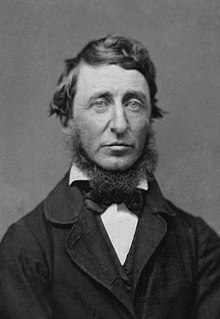
HDT, the OG of tiny homes!
Along the way, if it changes my relationship to the sort of abundance I need and deserve, then great. Because yes I’ve got some big plans and they’ll need more resources than I am accessing by through welfare.
I remember a fragment of a dream now, where a woman I knew was proudly declaring she was free of the welfare system.
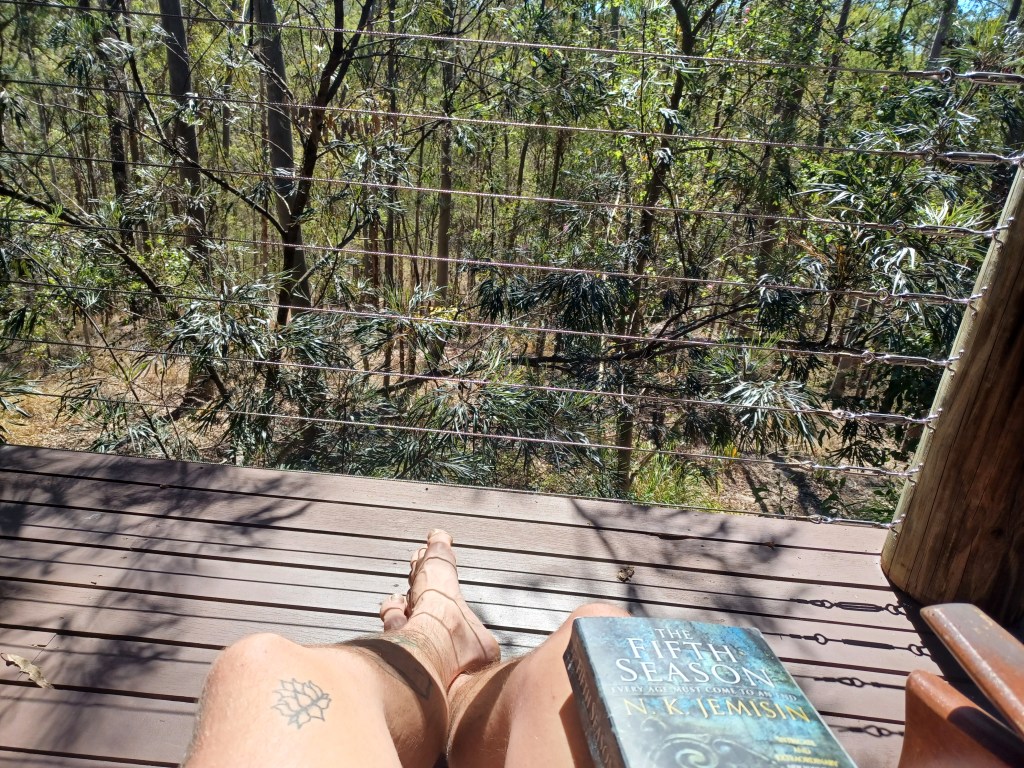
Free of the waged-employment system is also important, which makes me want to read more of the Transcendentalists like Henry David Thoreau and explains my curiosity about crypto. It was N K Jemisin’s Broken Earth trilogy that got me going about this in the morning when I was enjoying the back deck on a Sunday.
The first in the series, The Fifth Season, is a very powerful indictment of imperialism, slavery and exploitation that has got me thinking again about modern wage slavery.
There is no way to get ahead in our economy as someone who sells their time in physical or intellectual labour.
I want to make products and services that are valuable ~ products that sell themselves and services/programs that are replicable, maintaining a turnover of income. One thing that may not sell but would promote the training services and products would be a webinar perhaps about the modularity. People could then buy a self-paced course or recruit me as their trainer. That’s what I’m imagining and I feel it’s practical these days ~ not right now during TAFE but in the present as in the continuation of the future from here.
I’d like to have passive income, to work smarter not harder, but this requires undoing the coding that was written in me by my parents and their generation.
thoughtlogging
A blogging style has been inspired by Dave Winer, one of the OG bloggers from way back when the practice was about logging the web. Thought bubbles dropped in the browser throughout the day are then released at night, just a flow of thoughts and links, if only to keep my browser tabs from overflowing.
humility
Something else alive right now that I just want to note and would like to add to my somewhat daily recitals is that I have an opportunity to make some good connections at TAFE and do some good professional peer work. People are respecting me and valuing me (one of my fellow students even PMd to say so!) and I want to make sure that as I become more confident, because I am getting such positive feedback, that I don’t tip over too much into arrogance.
The risk of sarcasm and irony is high as well, because there is a lot of joking in class and we’re all mucking around a bit because the content is not very challenging and folk are a bit bored.
And hopefully if something happens and I fall from someone’s high-esteem (say I get too sarcastic and hurt someone’s feelings, as I’ve worried about with one classmate in particular who I like a lot and feel respect for but whose ideology is very different from mine) I am not too hard on my self, recognising that mistakes happen and I’m trying to keep my humility about me as my confidence grows again.
I’ve been through this before when I moved from Adelaide to Melbourne to work as a journal editor in my early 20s and suddenly meet with a peer group who valued and respected me. I didn’t know what to do with that feeling, but I think I did pretty well at not treading on too many people’s toes.
It’s related to something I’ve written about before, where I have an excess of joy to regulate when I come out of the depressive cycle, short of being manic-depressive.
wellness + recovery
I appreciated a peer practitioner saying in a video I cannot find right now, that
You don’t have to be perfectly well, to be in recovery
and, I would add, to hold the lamp for someone else on the path. I found the video👇🏼
I’m really proud of myself and very excited because I feel I can say I am in recovery from mental illness, which is no small deal.
Trigger warning though:
I have been debilitatingly depressed for months at a time in the last 10 years or so. I have experienced heart-breaking bouts of acute suicidal ideation and a deep sense of alienation from my self and my worth. (This is a trauma response I have learnt about and am able to see for what it is: no more and no less than fight-or-flight, my nervous system trying to protect me from acute and sometimes chronic emotional pain and suffering.) I have been through 2.5 episodes of spiritual emergenc(y) and about .5 episodes of full-blown acute episodic stress-induced psychosis. I have been dependent on drugs and alcohol and various behavioural addictions since my early teens. I am now 39! Apart from a bit of mild binge-eating or a dose of half-mindless entertainment, I am now nearly addiction free. (The final addiction to drop is our attachment to false ideas about reality.)
I no longer get floored by depression ~ I have learnt and am teaching myself how to respond to life in way that doesn’t result in debilitating overwhelm. I am able to see when my nervous system has been triggered and know that any thoughts (say, of worthlessness) are cognitive distortions. Most days I experience micro-mystical states of deep peace and contentedness that are dependent on no external source ~ due to the self-work I am doing, these moments of genuine happiness are the result of being in relationship with my true self and with reality as it is, compared with wishing reality were how I think it should be.
I am reporting this after an exchange with Zane tonight that previously would have totally derailled me. A minor (but vaguely problematic) exchange that remained minor because I saw what was happening: we were triggered = responding half-consciously from dysregulated nervous systems that believed we were in the past, not the now. I saw what was happening, and exited the situation instead of trying to make Zane see reason (read: instead of trying to make reality or Zane behave as I think they should). Earlier in the evening I had self-regulated after Zane had been pushy and rude. Then we had the exchange where we were triggered and I co-regulated with Nikki. And I have been at baseline ever since, whereas a year and a half ago I would have still been fuming.
In fact I now need to regulate joy because I am so excited about other positive things going on!
Previously I wouldn’t have been able to enjoy these positive things because once I was triggered it would sometimes take me days to come back to baseline. I would let triggering situations hijack my happiness and I would feel so trapped in suffering that suicide felt like the only option.
I didn’t know how to respond to or cope with life in a healthier way, but now I do and am learning more all the time.
So I’ve come a long way!
Nikki is doing really well too and we were able to report to our relationship counsellor today that we each feel we are genuinely healthy ~ at least, as healthy as we can expect. (I’ve since re-encountered Gabor Mate’s idea that a lot of our mental and physical symptoms today are the reasonable responses of our whole organism to the toxic culture we are growing in.) Sometimes we are distressed and suffering acutely, but this does not mean we are unwell. It means we are human. It seems really obvious now, but it’s been a huge paradigm shift to feel that.
The cool thing is … the really fucking cool thing: this sense of wellness among suffering has not resulted from some miracle or fluke; it is the result of some 15+ years of (self-) inquiry, application, research, therapy, meditation, a bit more inquiry, some giving up, a lot of starting again, despair, triumphs, bum steers and mistakes and lessons and gradually a very solid deepening of self- and other-love.
It’s been a fucken journey! It still is. I’m finding my way. Makes my heart swell inside to think of it and report this here.
And like all before me who travelled the Path, I carry a torch that lights not just my way but others’ as well, and apart from being excited about my own increasingly consistent wellbeing I am excited about beginning to support others more on the Path.
I’m starting to offer dana-based coaching, so if you’re curious about that, get in touch at that link. I am starting to offer this in in the most ad-hoc fashion, making it up as I go along ~ join me if you’re ready to explore the Path together.
My enrolment at TAFE Qld was finalised today so it’s now official. I am going to study Mental Health (Peer Work) and I feel ready ~ ready to use my lived experience of recovery to help others move toward recovery and health and wholeness as well.
Did you know the word “wealth” is derived from weal, meaning good health? I find that weally intewesting.
I bought Gabor Mate’s book The Myth of Normal to celebrate enrolment, because we got an advance payment from cLink and I bought myself a 5-subject lecture pad as well because hey, nerds like to live a little as well!
like all before me who travel the Path, I carry a torch that lights not just my way but others’ as well, and apart from being excited about my own increasingly consistent wellbeing I am excited about beginning to support others more on the Path.
I am starting to offer dana-based coaching so if you’re curious about that, get in touch at that link and we’ll arrange a time to catch up.
I am very pleased to announce that I have been awarded a scholarship to complete a Cert IV in Mental Health (Peer Work)!
Round of applause! 👏🏽👏🏽👏🏽
Thank you! *bows*
I am at TAFE now, checking out the campus and enjoying the very quiet Level 3 of the library
I found the scholarship program a couple of months ago when I was talking to a friend about wanting to help others heal and grow and transform from mental illness. Because “a healthy world arises out of healthy minds”. My own and my family’s mental health has been patchy lately, so I’m proud of myself for making and finding and stealing the time to complete the application, network with some of the people administering the program, and land myself a scholarship!
From the course description, the Cert IV will
allow you to support people in their journey of recovery from mental illness, working in mental health services roles that support consumer peers or carer peers. Workers are employed in the mental health sector in government, public, private or community managed services.
For obvious reasons, I’m not mad-keen on the jargon in general, and in particular, the idea of referring to people as ‘consumers’. A lot of our mental-health concerns are the direct result of our consumerist society. But I’m excited about participating in the community to find ways of referring to these experiences in ways that are constructive and healthy. And I’m excited about getting involved in the lives of people who are actively working to recover through their mental-health challenges.
A lot of us are living with mental illness in a silent way, understanding that our challenges are a reflection of problems embedded in our culture, and we want to find ways of being that are more aligned with wholesome and holistic values. That’s where I would like to come in, helping others to recognise that each of our actions are what make up culture, and therefore it’s worthwhile making the effort to be the change we want to see in the world.
The scholarship was awarded by the Queensland Alliance for Mental Health (QAMH) and they have one of the shorter acronyms I have noted already in the sector. It’s going to be strange working in something called a ‘sector’, using sector jargon and trying to navigate the unwieldy institutions I have encountered already. But I’m hoping I can find a nice and chilled place to work where people understand that the symptoms of mental-illness nuances of humanity cannot be squared into a box, neatly labelled and promptly disregarded as abnormal or pathological because their presentation doesn’t match the checklist of the biopsychosocial model.
I am very much interested in representing the spiritual dimension of the holistic approach to mental-health treatment, especially since I experienced my own acute spiritual crisis in 2017. In fact, since that experience (despite a few tangents) I have been trying to find ways to help in this area, and I feel like it is now starting to come together.
When I look back even further, I remember that in my late 20s when I was moving away from my publishing career, a big part of the motivation for that shift was the desire to help make change in our society and culture in a way that was more direct than publishing alternative ideas. I loved working in publishing and I still cherish the value of literature to help move society in a more wholesome direction. However, at the time (and still now) I felt that the urgency of the need for change was such that I couldn’t rely on the ideas percolating through into action fast enough.
I had also discovered Buddhism in my mid-20s and what I saw there was already motivating me to find a way I could work in the world that leveraged and served the deep metaphysical curiosity that was goaded by my research and practice in Buddhism.
I am in my late 30s now, and a lot of the time in between has been spent travelling and/or haphazardly searching for a way of being that is alternative to the mainstream offering. On that journey I have experienced periods of debilitating depression, various manifestations of addiction and a deep sense of alienation from my self and the truth, and I believe that similar unmet curiosities are leading others into similar conditions, which is why I would like to help.
The mental-health conditions resulting from these blocked metaphysical curiosities are an opportunity to explore new territories of existence and consciousness, and it’s coming to the time when it’s no longer appropriate to just slap on a pathology label and throw away the key.
It’s time to start mixing metaphors!
It’s time to start unlocking the root causes of these conditions and to help others see how the crisis is the solution.
That’s a permaculture idea, the problem is the solution, and it applies well here to life and health, as many permaculture ideas do. I believe the epidemic of mental illness that we are experiencing as a global community is the result of a collective spiritual crisis. Since God is dead and his throne has been filled by bankers and CEOs, the rest of us are left wondering WTF is going on.
I’m reluctant to get too new-agey here, but as we move into the Age of Aquarius, one of the things changing is that we no longer need priests and gurus and other middlemen to mediate our phone calls to God. We no longer need to suffer alienation from the source of creation ~ we can take our spiritual practice and alchemical transformation into our own hands. We don’t need the approval of a church or the authority of any external source.
🤣 maybe we just need more holistic peer workers enabling individuals to step into their agency and map the path of recovery from alienation on their own terms
Here’s to that, and to new beginnings!
Becoming a peer worker means I will have the formal training and qualification to work in roles supporting those in our community who are experiencing difficulties maintaining their mental health. These are non-clinical roles, where the value is in the peer worker’s lived experience of recovery from mental illness.
I do have plans to study psychology in the future and perhaps move in to clinical and research roles, but for now it’s looking like I’ll be studying 3 days a week at TAFE Qld South Bank for the next 12 months or so.
The Cert IV requires students to complete 80 hours of work placement, and due to the skills shortage in this area it is common for work placements to become paid employment after the Cert IV is completed.
So it’s going to be an interesting part of the journey to helping others through transpersonal crises, which is my longterm goal.
As you can probably tell, I’m pretty excited about this. If you’re curious about peer work or have some experiences to share, please drop a comment below or otherwise get in touch, I would love to hear from you.
*TRIGGER WARNING* This post discusses childhood abuse, neglect and abandonment. If you feel distressed at anytime, try reaching out to one of the support lines listed here.
I rang Blue Knot yesterday because I found them when I searched online to find a hotline for people whose loved ones live with CPTSD. Nikki’s not been doing so well lately and it’s beginning to take its toll on me. This is something that is hard for me to say and has been hard for me to accept: it’s taking its toll on me; my wife is living with complex trauma, and mostly we manage but sometimes I run out of the capacity to cope with the challenges that come with loving and living with someone who has experienced complex trauma. Our son Zane is also living with complex trauma from being in the womb when Nikki was being abused by his biological father.
On top of that, as I was reminded by the counsellor at Blue Knot, I have my own complex trauma to live with.
I called them to get support as someone whose loved ones have complex trauma in their background, and was reminded that I need support for the complex trauma in my own background.
There is a new-paradigm understanding of trauma emerging – thanks to the likes of Peter Levine and Gabor Mate – and in this view we understand that developmental and relational trauma can result from early-life experiences that were normalised in the suburban 80s when I was being raised:
abandonment, emotional neglect and/or emotional incest, being abused and belittled by your siblings, bullied at school, bashed by thugs as a teenager … these are all experiences in my background, and this list doesn’t even account for the birth trauma itself and the trauma of industrial postnatal care for babies.
Blue Knot reminded me that all of this is real. The symptoms I described on the call were confirmed as trauma related, and I recall ticking many items on the symptoms checklist when I read Levine’s Waking the Tiger. It was affirmed on the call that as parents, we are often triggered when our children go through the age we were when we were traumatised, which is definitely happening as Zane goes into the early teenage years.
It surprises me that I know I live with complex trauma myself, yet it took me feeling my wits’ end in supporting someone else through trauma recovery to remember or have the fact of my own trauma validated. (I think there might be a spectrum distinction between “complex trauma” and CPTSD and I certainly don’t feel like my lived experience of trauma amounts to a disorder, but I certainly exhibit many of the traits.)
That’s how it goes I guess. The call with Blue Knot reminded me that the trauma I’m living with is very innocuous and hard to detect because the causal events are so normalised in our culture. On top of that, there are no physical scars I can show to prove my trauma is real, and no single causal event that resulted in traumatisation … that’s one of the things about complex trauma: there’s no single event we can pin down as the cause. I wasn’t abused in the sense that is typically understood to result in trauma – a lot of us weren’t, but still we are traumatised. Says something about our culture.
For these reasons, this kind of trauma often flies under the radar, causing a low hum of very subtle misery that is difficult to detect. The lack of self-love and -worth that results from such trauma has also been normalised, like it’s the only way of being we’ve ever really known anyway.
A similar phenomenon is operating when we compare workaholism to heroin addiction: the latter is very obviously a harmful maladaptive coping mechanism that warrants treatment and is probably a symptom of trauma; the former is a harmful maladaptive coping mechanism that warrants treatment and is probably a symptom of trauma, but fails to be recognised as such because work addiction is normalised, even celebrated, yet it can rob someone of their life the same as heroin addiction can.
So a thing that I pledge as a central purpose of Heartwards is to help shed light on this emerging new-paradigm view of trauma, and to help individuals recognise and treat the symptoms of complex trauma they notice in themselves.
If we keep just fumbling along with our pain buried in the unconscious like hands into pockets in the depths of winter, we are going to just continue running ourselves and the planet into the ground as we seek to numb the pain or fill the void by sucking the world dry in our pleasure-seeking avoidance.
The counsellor on the Blue Knot call said something about the unconscious: how we repress our pain and shame and try to hide from it.
We cannot run from it forever. I believe that if we do not embrace and heal it in this lifetime, we will just come back for another round, again and again until we learn.
Even in this lifetime, if we retain the trauma in our body because we don’t learn how to release it, we can think we are successfully avoiding it until it recurs again through a phenomenon described by Levine as “re-enactment”.
I don’t properly understand what re-enactment is or how it works, but I’m going to ask when I call Blue Knot back.
They are a team-based counselling hotline, which means I won’t get the same counsellor each time but apparently they keep good case notes to make up for this, and it means I’ll get diverse perspectives. Their catchphrase is “empowering recovery from complex trauma”.
The person I spoke to was really great, and I recommend getting in touch if you’re living with complex trauma or someone who is. Even if you’re not sure but you have a vague suspicion that something was a bit off in your early development or upbringing, I reckon it’s worth a call. You might find explanations for symptoms that have been bothering you for ages but were just kind of resigned to living with. The number I called was 1300 657 380.
The main thing I got from the call today was that we can’t support our loved ones through recovery from complex trauma when we do not have enough internal resources left in our reserves. The analogy the counsellor used was from a teacup: we cannot share tea from an empty cup. This backs up my oxygen-mask analogy: we can’t help others if we’re dead.
I have only recently been able to start refilling my teacup after a very challenging 18 months or so, especially in the last 6 months while we were living with the abuser who triggered Nikki’s trauma, which I wrote about in other posts. We resolved that we would not leave anyone alone with the perpetrator, in case she caught someone alone and took the opportunity to manipulate or concoct a story while there were no witnesses around.
The main advice from the call today was that the best way for me to support Nikki is by first taking care of myself.
This is not indulgent or selfish, anymore than putting on the oxygen mask is selfish before we start helping others in a plane crash.
We cannot help others when we’re dead – or when our own nervous system is so frazzled that every minor tension creates a flee response.
As I continue doing the work of healing my child self, I will become more able to be available for Nikki and others when needed.
If I neglect the work of healing my own trauma, I will continue fucking out when others need me most,
and worse – I will continue attracting myself to situations where the original trauma response is seeking to exhaust itself. (I think that’s the gist of re-enactment.)
Not “fucking out” … that’s the wrong language, when falling to my knees in despair is really what’s happening each time my own and others’ trauma feels overwhelming.
If I neglect the work of healing my own trauma, I will stagnate among the low hum of misery that expresses itself like puss from the unconscious, and my purpose to help others flourish will languish unrealised.
Yours too maybe.
If any of this resonates with you, get in touch or have a look around at Kokoro 心 Heart, where I’m working to promote a healthy world arising out of healthy minds.
This page of resources might also interest you meanwhile.
I’m curious to know what you think of Peter A Levine’s theory of trauma.
I’ve been listening to Waking the Tiger: Healing Trauma and I appreciate most of all that trauma should be diagnosed and treated on the basis of symptoms rather than the events that caused the trauma. One person may be traumatised by events that are not necessarily considered traumatic by others.
What do you think?
I think it’s imperative we have a holistic, integral, new-paradigm understanding of trauma because the symptoms of trauma keep us dis-integrated and leave us more prone to dis-regulation and dysfunction.
To become awakened or fully potentialised, we need to first be whole and healthy on the mundane-psychological level, otherwise in our practice(s) we’re going to be always bombarded by those aspects of our unconscious that are always bubbling up from those parts we keep compartmentalised, trapped away in the skeleton closet.
That’s just my view though. I’m curious to know what you think.
Can we awaken or become whole without first healing our wounds?
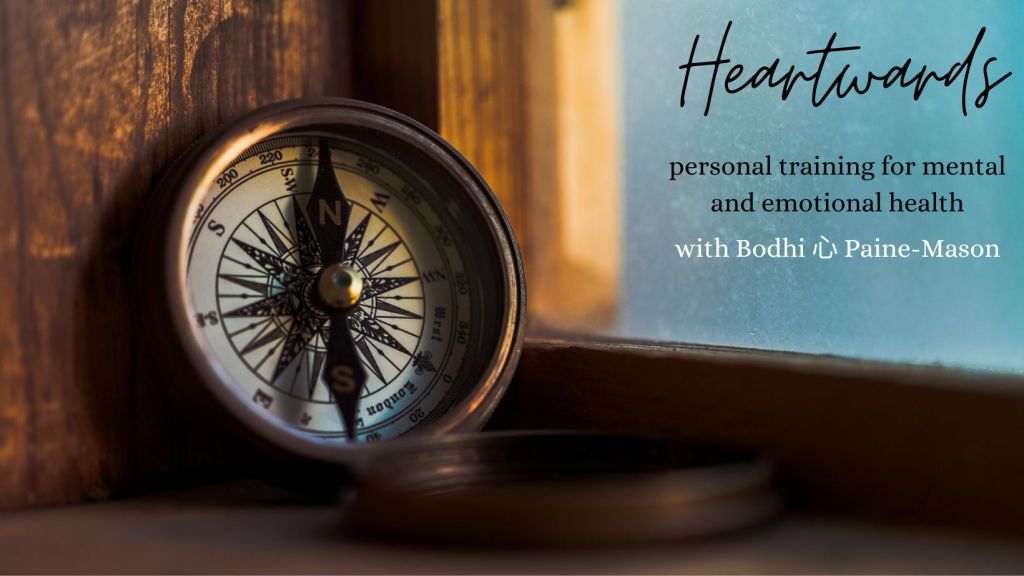
I’m starting a venture called Heartwards, a small business offering personal training for integrative health and wellness.
This is the first time I’ve mentioned it here. I’ve mentioned it to a few friends and others in my networks, but otherwise it’s a very nascent thing.
Now I can mention it elsewhere on the socials and Kokoro 心 Heart and feel like it’s been mentioned before. It won’t be weird if you hear me refer to ‘Heartwards’.
I’m definitely not yet at the stage where I’m doing anything like formal marketing, but it definitely won’t fly if I don’t tell anyone about it. So here’s a banner, which is already out-dated as I develop and re-develop content trying to explain exactly the service I want to provide:
It feels weird, to be honest – starting something like this. I’m doubting myself, wondering why I think I should or could be someone to offer these kinds of services to others. I’m not the healthiest Jimbo on the block. I mean, I’m pretty healthy – much healthier than I was 20 years ago. I’m healthier than many, and less healthy than many others.
The answer(s) I always come back to are:
by supporting others to step into ownership of their wellness, I will strengthen the sense of accountability for my own wellness;
by teaching others, we deepen our own learning;
to be of service doing something I feel passionate about
by developing holistic-lifestyle training plans for others, I will be able to develop one for myself
Another reason for doing this is that I’m developing the sort of service I wish I could find and afford. Kind of like an author writing the book they want to read. I haven’t been able to find or afford a service like this, so I’m developing it myself – it’s easier to justify developing it for others than it is to justify developing it solely for myself.
There’s a lot more to it than that, but this is just my first public mention of the idea. I won’t go into much more detail here-now, because a) I’m giving up nicotine today and therefore am feeling super vague and fuzzy and weirdly noncommittal and b) I don’t intend to publish a lot about this until it’s more developed. I will publish here if doing so motivates me or helps to justify developing the content, structure, ideas – because publishing here will mean I feel less like I’m operating in a vacuum.
Otherwise, I’m really just mentioning it here so it doesn’t feel weird for me when I reference it in future posts.
I can share a bit of the content I’ve been developing for the business plan.
Vision
Our vision at Heartwards is a healthy and sustainable world, where every individual, group and institution is able to cultivate and promote genuine happiness and wellbeing, no matter the challenges we face. We believe a healthy world arises out of healthy minds, and that everyone can reduce suffering and increase happiness.
Mission
Our mission at Heartwards is to help facilitate this healthy and sustainable world by equipping individuals, groups and institutions with the resources, knowledge, means and support to cultivate the holistic/integrative health and wellness we need to cope in a world that seems increasingly difficult to navigate. Based on the Pillars of Wellness, we do this by providing one-on-one coaching and accountability support, workshops for groups, in-person and online courses, and resource packages for groups and individuals wanting to develop and maintain lifestyle practices that support their holistic/integrative health and wellness. We help our clients consistently and sustainably prioritise eudaimonic wellness (flourishing) rather than continuing to pursue hedonic pleasure even though we know it leads to suffering rather than happiness.
Our “unique selling proposition” is that Heartwards takes the cliche, happiness comes from within, and turns it into applied eudaimonics. That means we provide clients with the tools and skills they need to actually connect with this elusive treasure that is already within us. By meeting clients where they are at in their busy lifestyles, we help them to become sustainably accountable for their most-important priorities.
Our work is underpinned by the belief that spiritual awareness and health is the foundation of all other experiences of health and wellbeing. Bodhi’s background is Buddhist, but there doesn’t need to be a label from Eastern theological philosophy for us to understand that every individual shares the same deepest aspiration:
to be free from suffering and meet with the causes of genuine (inner) happiness
It is our goal at Heartwards to support others in the spiritual journey that facilitates the sort of wellbeing upon which all other wellbeing is founded – and this is our USP: we don’t mince around and try to leverage the wish for riches or professional success or to live your full potential to entice clients to our products and services; we go straight to the source and help individuals to activate a yearning they already know is there but cannot quite yet identify … the wish the be happy and free from suffering.
I’ve been thinking about my niche here at Kokoro 心 Heart, because I hear affiliate marketing requires targeting a specific audience.
I feel kind of off about marketing and sales, but that may just be the starving-artist Aussie-battler austerity mindset in me. The ideas here are intended to benefit readers, and the products I recommend here have yet more of those ideas. I’m no Tyler Durden but I’m suspicious about promoting or encouraging wanton consumerism. If anyone feels they bought something through here because I tricked them into believing their desire was a (false) need, I can at least tell myself I was transparent.
And anyway, feeling compelled to focus on writing within a certain consistent frame is going to help me … well, focus. It will create pressure to stay on point like the essay question of a uni assignment.
By focusing on the theme of psychospiritual wellbeing I will be forced to refine my thinking about this subject, and parse more of my experience through the lens of holistic transpersonal wellness.
So I’m excited about that, because when I think about the priorities informing my purpose here on Earth, the one thing that consistently comes to mind is wholeness, psychospiritual wellbeing, transpersonal awareness, the realisation of our transcendental and interconnected nature — all words for the same pursuit. I’m reluctant to use the word “enlightenment” because it’s loaded with too much connotational baggage, but understanding the true nature of reality is something I aspire to and I believe this perceptual clarity is a prerequisite for the main goal here on Earth, psychospiritual wholeness.
And I believe the psychospiritual wholeness of each individual is a prerequisite for a sustainable and harmonious future on this planet. It’s root causes of suffering I’m talking about here: we cannot be truly well (as individuals or as a global community) while our minds are mired in ignorance. That’s a Buddhist perspective I suppose, but I’m curious to know how other spiritual traditions approach the same idea.
Let me know in the comments if that’s your thing. I understand the Gnostic Christians have a thing or two to say about this.
Meanwhile yeah, my niche.
I added a static home page to describe this yesterday, and managed to wrangle the backend of WordPress to run the blog posts through a menu in the header. That was immensely satisfying, figuring out a technical aspect of publishing here. The landing page has what I would call a blurb:
At Kokoro 心 Heart I am contributing to the vision that every individual have access to the resources, knowledge, means and support to nurture their psychospiritual wellbeing and treat the root causes of suffering.
I am doing this by publishing posts about books, music, life and culture through a lens that investigates what we can learn from these about our transpersonal nature and our complex psychology.
As I do my own inner work through meditation and other spiritual modalities, I hope to develop resources and training down the track. And I’m exploring the prospects of establishing a social enterprise called Causal Connections, facilitating access to holistic psychotherapies for low-income earners.
I believe the path to a sustainable and harmonious future on this planet is paved by creating a culture of individuals who are internally sustainable and harmonious. Because individuals create culture as much, if not more, than they are influenced by culture.
We are culture, and the future is determined by the state of our present.
For now I’ll be writing about books, music, life and culture to see what I can illuminate in these about psychospiritual wellbeing. At least the first two of these will lend themselves to products I can recommend.
I panicked a bit when I remembered the importance of having a niche, because psychospiritual wellbeing is a pretty broad subject and it’s hard to think of products that sell wellness. Products that aren’t dodgy, anyway — there’s a plethora of snake-oil sales people out there trying to exploit our vulnerability to sell us answers they don’t have.
Truth is, these answers can’t be sold — anything I’ll be recommending here is just a snippet of the multi-faceted path to answers. It’s you who’ll be doing the answering — anything here is just part of the spiritual-adventure travel-guide brochure you won’t find at Lonely Planet.
Every successful AF (affiliate marketing!) blog relies on products to recommend, but Kokoro 心 Heart is not just an AF blog — it’s a work of passion, and a place for me to publish ideas about questions I’m thinking about all the time anyway.
So welcome! I hope you enjoy what I’m doing here.
Leave some comments below if you’re also thinking about these ideas. I love comments, dialogue, conversation. I’m here to build community as well, because despite my frequent overwhelming desire for escape to a cave in the Himalayas, we cannot hope to realise the true nature of our being in isolation! Be the sangha you want to see in the world!






 Kokoro 心 Heart